News Summary
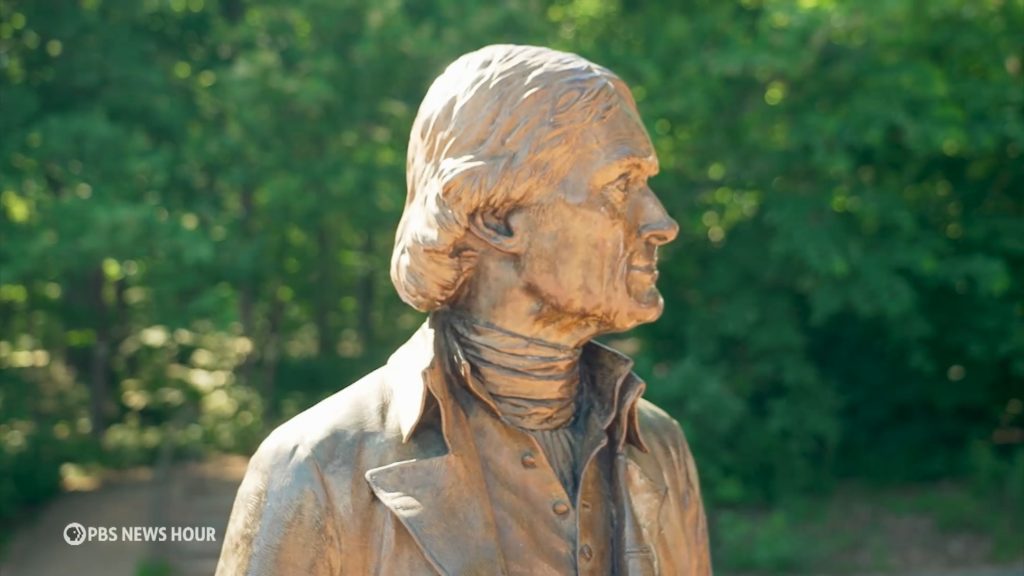
Facts: The PBS NewsHour segment marks 250 years since Jefferson drafted the Declaration of Independence; it states the Declaration asserted that 'all men are created equal' while 'hundreds of thousands' remained enslaved; Judy Woodruff visited Jefferson's Monticello; Jefferson served as the third U.S. president. Attributions/analysis in the piece: the report interprets Jefferson's personal contradictions as reflecting broader national contradictions; the segment is part of PBS's 'Crossroads: America at 250' series. Uncertainty: the segment summarizes longstanding historical interpretation but does not provide detailed primary-source evidence or multiple scholarly perspectives within the single piece.
Source and Framing Analysis
The report centers the moral paradox of Jefferson as both a champion of a universal ideal and a slaveholder; that framing is factually grounded but interpretive. The piece is concise and reflective rather than investigative; it relies on site-based reporting (Monticello visit) and narrative emphasis. Material uncertainties that affect interpretation—such as detailed data about the enslaved population at the time, Jefferson's private writings and relationships, and countervailing scholarly views—are not explored in depth in the single segment.
Biblical Reflection
The article recounts a well-established historical tension: a founding text that affirms equality was written and circulated while slavery remained embedded in American life. Christian reflection invites honest appraisal: the truth that God created people in the image of God calls us to recognize the dignity of every human even when national memory falls short. The piece's framing — focusing on Jefferson's contradictions — prompts necessary humility; Christians should resist hero-worship that ignores moral failures and also avoid reductive condemnation that erases complex realities.
Truth must be coupled with compassion and a commitment to repair. History shows how sin can be woven into institutions and celebrated narratives; the Christian response is to confess when our communal stories have denied neighbor-love and to work for restorative justice where possible. The report does not offer policy prescriptions, but it does demand moral clarity: the witness of Christ calls the church to name both truth and repentance, to remember victims, and to seek reconciliation that honors both truth and the vulnerable.
Scripture in context
- 1Isaiah 1:17 (prophetic call for justice) — Isaiah addresses a society where ritual religion has become disconnected from ethical life; the prophet calls Israel to learn to do right, defend the oppressed, and seek justice as the proper fruit of covenant faithfulness. — The passage calls Christians to align worship and memory with concrete actions that defend marginalized people and to expect that faithful communities confess and reform when their practices betray their stated values.
Faithful Response
Study the history honestly—read both the founding texts and the fuller archival record about slavery, including local histories tied to places like Monticello.
Practice confession and lament in communal worship for the ways Christian communities have been complicit in injustice.
Listen to descendants and historically marginalized voices, and prioritize their testimony when shaping collective memory and educational materials.
Support civic and charitable efforts that address ongoing inequalities rooted in historical injustice (education, legal aid, economic opportunity).
Reflection and Discussion
- 1How does the church confess and remember national sins without collapsing into cynicism or triumphalism?
- 2In what practical ways should Christian communities honor and listen to those whose ancestors suffered under systems our national stories helped sustain?
- 3How can we teach young people to love their country while still naming its failures and working for justice?
Sources
Reporting links are evidence inputs; Sanctuary News' biblical reflection is commentary.
This outlook currently relies on fewer than two linked sources. Broaden verification before teaching from it.
- 1.Thomas Jefferson's complicated legacy 250 years after the Declaration of Independenceprimary_reporting