News Summary
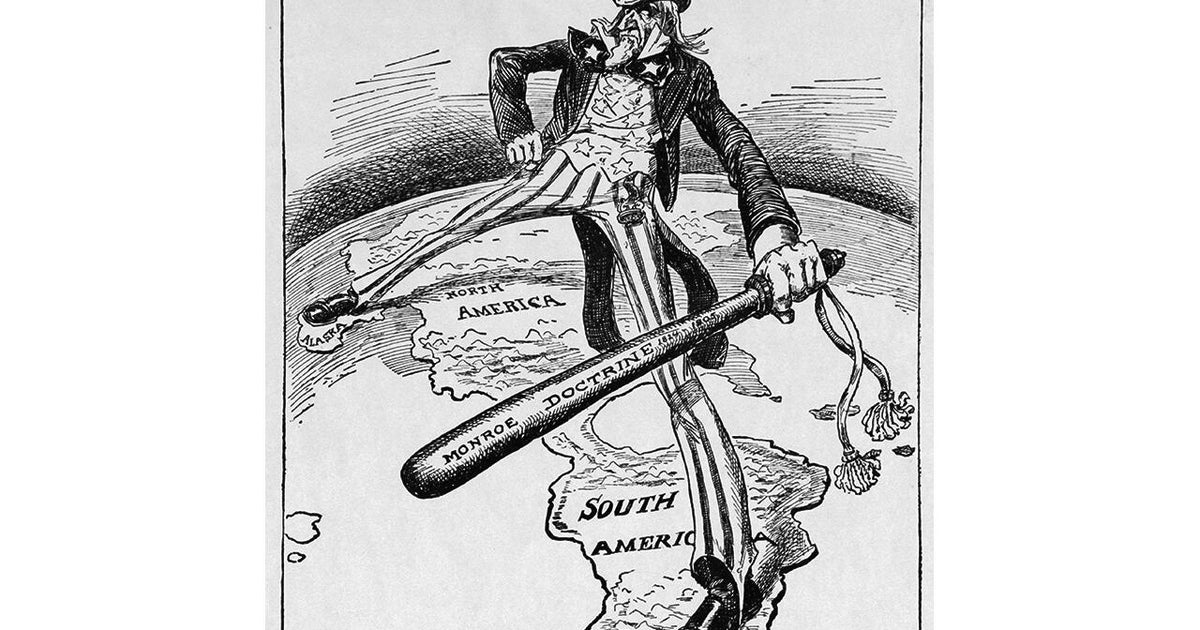
The article explores the historical legacy and recent resurgence of the Monroe Doctrine, first articulated by President James Monroe in 1823 as a warning to European powers to stay out of the Americas. Although not originally a formal law, the doctrine has been invoked repeatedly to justify U.S. interventions in Latin America, notably during President Polk's era to justify war with Mexico, President Theodore Roosevelt's 'Big Stick' policies, and U.S. military occupations known as the Banana Wars in the early 20th century, which protected American business interests but resulted in significant casualties and growing unpopularity. After World War II, references to the Monroe Doctrine waned, resurfacing only during major crises like the Cuban Missile Crisis. Recently, President Trump cited the doctrine in relation to U.S. actions in Venezuela, signaling its revival in American foreign policy discourse.
Biblical Reflection
From a Christian perspective, the story of the Monroe Doctrine and its evolving use as justification for intervention raises deep questions about the wielding of power and the ethics of national self-interest. Scripture calls believers to seek justice, mercy, and humility (Micah 6:8), warning against the pride that comes with unchecked authority and the exploitation of others for personal or national gain. The historical pattern revealed in this article is one where U.S. interventions, initially cloaked in ideals of protection and order, often turned into exercises of control and economic advantage, sometimes resulting in suffering for vulnerable populations. Christ's teachings call us to love our neighbors as ourselves (Mark 12:31) and to be peacemakers rather than aggressors. While nations have a duty to protect their people, the repeated use of power to dominate or exploit others stands in contrast to the biblical vision of servant leadership and stewardship. As the Monroe Doctrine returns to the political stage, Christians should prayerfully discern whether the motivations and outcomes align with Christ's call to justice, peace, and global neighborliness.
Scripture in context
This outlook does not yet include contextual Scripture citations. Do not treat a general biblical theme as an exegetical conclusion.
Faithful Response
No prescribed response is offered. Consider the reflection prompts below in your own church context.
Reflection and Discussion
- 1How do national policies and doctrines align—or conflict—with the biblical call to justice and mercy?
- 2In what ways might Christians speak out or act when government actions harm rather than help vulnerable neighbors?
- 3What role does humility play in international relations from a biblical perspective?
Sources
Reporting links are evidence inputs; Sanctuary News' biblical reflection is commentary.
This outlook currently relies on fewer than two linked sources. Broaden verification before teaching from it.
- 1.Original reportprimary