News Summary
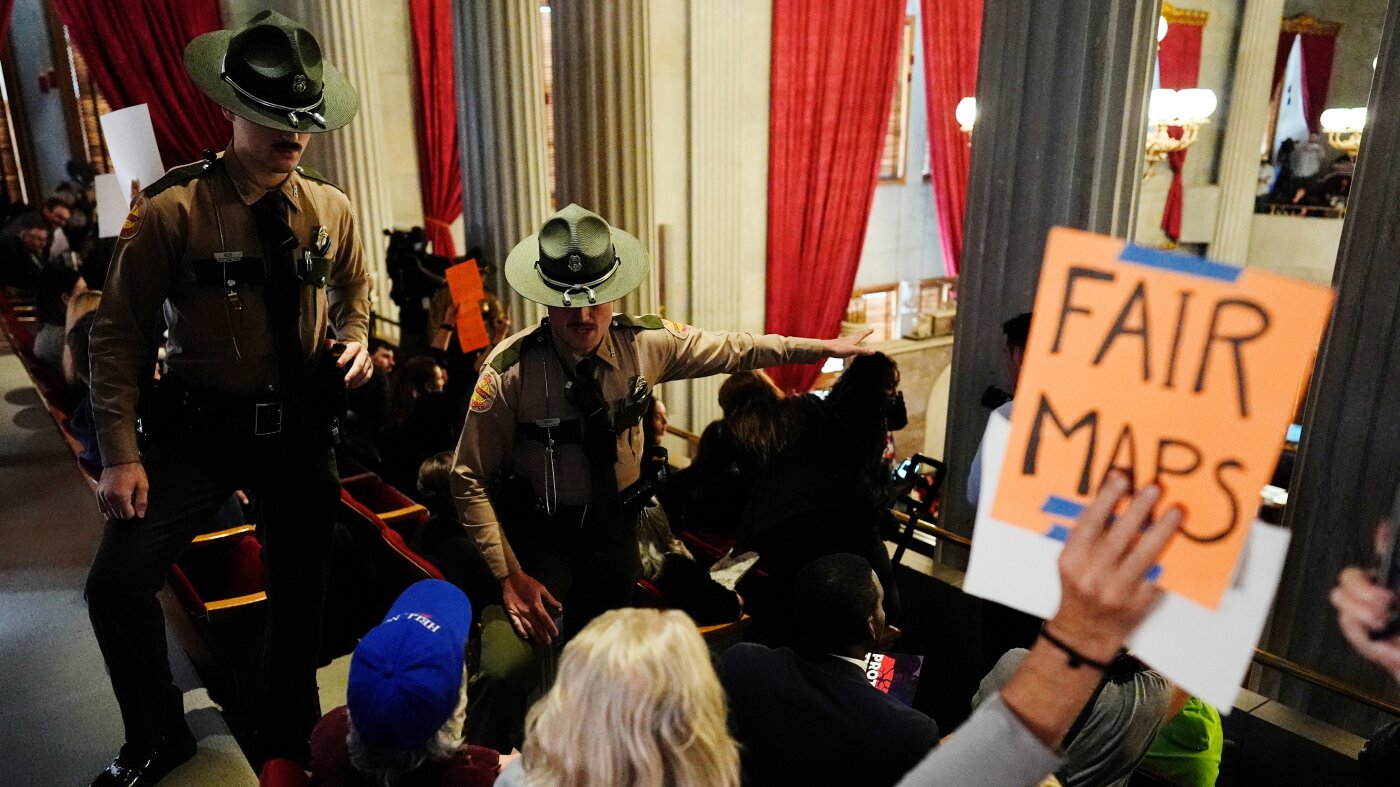
Tennessee Republican lawmakers approved a new congressional map during a special legislative session that splits Shelby County (home to majority-Black Memphis) into three separate districts. The change would eliminate the state's only Democratic-held U.S. House seat (the 9th District). The vote followed a U.S. Supreme Court decision that weakened certain Voting Rights Act protections related to redistricting, and Gov. Bill Lee earlier signed a law repealing a state prohibition on mid-decade redistricting. The session included protests at the state capitol and a Democratic walkout; state troopers removed people from the House gallery. Memphis state Rep. Justin Pearson criticized the plan as racist; Tennessee GOP leaders said the map is a partisan effort to produce an all-Republican congressional delegation. The state primary is scheduled for Aug. 6. The article also notes similar efforts in other GOP-led Southern states and analysis that the Supreme Court ruling could increase Republican opportunities for mid-decade redistricting.
Biblical Reflection
From a Christian perspective, this story raises questions about power, representation, and justice. The mapmakers' stated partisan aim — to convert a Democratic-held district into Republican-controlled districts — shows political self-interest and a focus on winning power rather than ensuring fair representation. Splitting a majority-Black county into multiple districts can dilute the political influence of a historically marginalized community; whether or not the designers frame the move as 'partisan' does not remove its disproportionate effect on a racial minority, and Christians should listen carefully when those affected raise concerns about injustice.
Scripture repeatedly calls God’s people to defend the vulnerable and pursue just institutions (e.g., Micah 6:8; Proverbs 31:8–9). So evaluate both the legality and the moral character of political actions: laws and court rulings can change, but the Christian obligation to seek justice remains. At the same time, Christians should avoid simplistic assumptions that motive is wholly monolithic; partisanship, electoral strategy, and genuine policy differences may all be in play. The underlying worldview shaping the legislative move prioritizes partisan advantage and electoral control; the biblical counter-witness prioritizes the flourishing and fair treatment of neighbors, especially those with less power.
Practically, this means pressing for transparent processes, independent safeguards against vote dilution, and careful listening to affected communities. It also means holding leaders — across parties — accountable to impartial standards of justice and treating civic participation as a calling to love neighbors, not merely win contests.
Scripture in context
This outlook does not yet include contextual Scripture citations. Do not treat a general biblical theme as an exegetical conclusion.
Faithful Response
No prescribed response is offered. Consider the reflection prompts below in your own church context.
Reflection and Discussion
- 1Whose voices are amplified or diminished by this map, and how does that align with the biblical call to defend the vulnerable?
- 2Does framing the change as merely 'partisan' obscure broader moral concerns about equitable representation and potential racial impacts?
- 3What institutional safeguards (legal, civic, or moral) should Christians advocate for to protect fair representation across changing laws and court rulings?
Sources
Reporting links are evidence inputs; Sanctuary News' biblical reflection is commentary.
This outlook currently relies on fewer than two linked sources. Broaden verification before teaching from it.
- 1.Original reportprimary