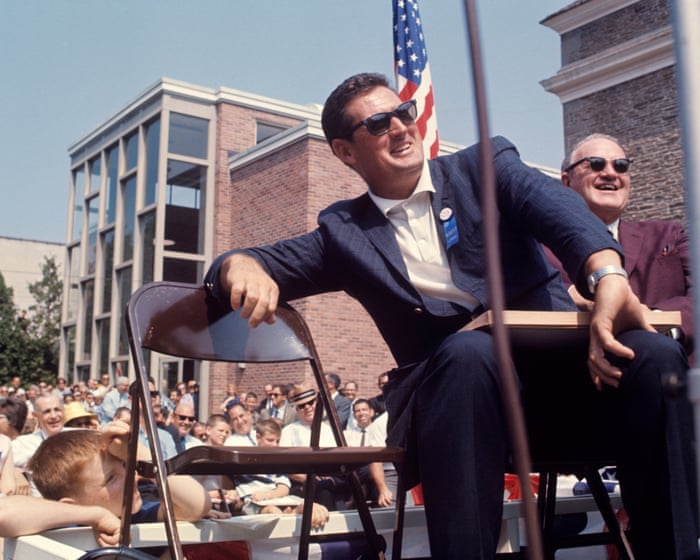
News Summary
The Guardian piece reports that at his National Baseball Hall of Fame induction on 25 July 1966, Ted Williams used part of his speech to advocate for Black players excluded by baseball’s color barrier, naming Satchel Paige and Josh Gibson and expressing hope their names would be added to the Hall as symbols of Negro League excellence; the supplied excerpt does not provide further historical detail about subsequent actions or outcomes.
Source and Framing Analysis
The supplied material is a focused excerpt highlighting Williams’ moral appeal rather than a full historical analysis. Important contextual information — such as the timing and mechanism of later Hall of Fame inductions for Negro League players, other advocates’ roles, and institutional responses — is missing. This framing emphasizes the moral moment and Williams’ stature but leaves institutional follow-through and broader movement history uncertain.
Biblical Reflection
Ted Williams’ use of a public moment of honor to speak for players denied opportunity resonates with core Christian commitments: to name injustice, to plead for the marginalized, and to seek historical truth. His public commendation of Satchel Paige and Josh Gibson is an example of using social influence to restore dignity to those who were excluded. Christians should recognize both the goodness in confessing and rectifying past wrongs and the need for humility — public gestures matter, but they must be followed by concrete acts of justice and remembrance.
At the same time, a faithful Christian response resists simple triumphalism: acknowledging past exclusion does not erase harm nor does it substitute for structural repair. The article’s framing invites Christians to hold together truth-telling about history, mercy toward those harmed, and a sober commitment to ongoing repair — honoring names, preserving stories, and ensuring present institutions do not perpetuate exclusion. We should praise efforts to set the record straight while pressing for sustained attention to how memory, recognition, and honor function in the life of communities.
Scripture in context
- 1James 2:1-9 — James addresses the early Christian community's tendency to show favoritism to the rich while neglecting the poor; he argues that such partiality contradicts faith in Christ and calls believers to impartial love and justice within the community. — This passage speaks against treating people differently because of status or identity; it presses Christians to challenge systems and honors that exclude or favor unjustly and to work so that communal recognition and care are not biased.
Faithful Response
Learn and teach: study the fuller history of the Negro Leagues and MLB integration and encourage congregational education so the church remembers and passes on the truth.
Honor and remember: support museums, memorials, or Hall of Fame efforts that restore names and stories of those excluded, and include those histories in public liturgies or teaching times.
Confront present prejudice: examine local institutions for ongoing exclusionary practices and advocate for fair recognition and participation for marginalized people.
Practice hospitality and listening: create spaces where those historically marginalized can tell their stories and be affirmed by the congregation.
Reflection and Discussion
- 1What does faithful repentance and repair look like when a community discovers it has honored the wrong people or overlooked the deserving?
- 2How should congregations balance celebrating symbolic recognition with pursuing concrete institutional change?
Sources
Reporting links are evidence inputs; Sanctuary News' biblical reflection is commentary.
This outlook currently relies on fewer than two linked sources. Broaden verification before teaching from it.
- 1.Ted Williams, Satchel Paige and the fight to induct Negro Leaguers into baseball’s Hall of Fameprimary_reporting