News Summary
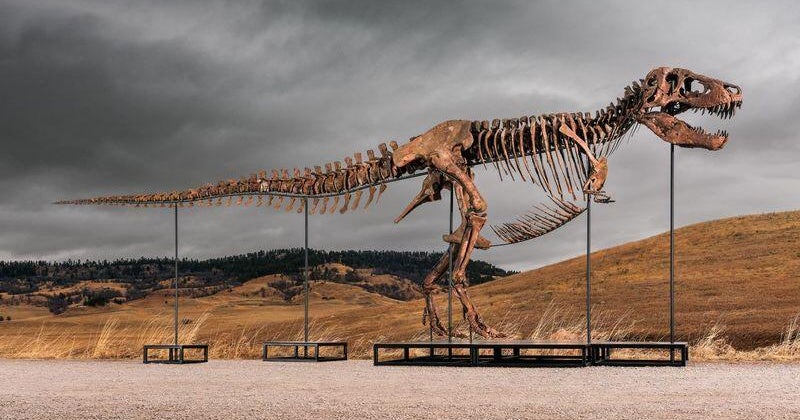
A mounted Tyrannosaurus rex skeleton nicknamed 'Gus' sold for $50.1 million at a Sotheby's auction in New York. Sotheby's described the skeleton as roughly 38 feet long and 12.5 feet tall, comprising 183 bones plus additional rib specimens and about 61% complete, including an exceptionally preserved skull. The bones were excavated in Harding County, South Dakota, from the Hell Creek Formation by a team led by Thomas Heitkamp; the specimen was named after landowner Gary 'Gus' Licking. Sotheby's had estimated a sale range of $20–30 million; seven bidders participated and the auction lasted about ten minutes. The sale set a new record for a dinosaur fossil at auction; previous high-value fossil sales include a stegosaurus called Apex sold nearly two years earlier. Sotheby's noted that only about 32 T. rex skeletons have been found since 1902 and that Gus is one of the relatively few that are at least roughly 60% complete. Statements from Sotheby's and the landowner's family accompanied the press coverage.
Biblical Reflection
This story highlights both human fascination with God's ancient creation and the modern market that assigns large monetary value to rare natural specimens. The article is fact-focused about the auction and sale price but emphasizes monetary and record aspects over scientific, ethical, or public-access considerations. From a Christian perspective, the purchase raises questions about stewardship and the common good: fossils are part of the created world that teach us about Earth’s history and can serve public education, scientific research, and wonder. When rare finds move into private hands through high-dollar sales, access for researchers and for the wider public can be limited unless the buyer loans or exhibits the specimen. The reporting leans into sensational price framing, which can obscure important issues—who benefits, whether scientific study was completed or prioritized, and whether local communities or institutions that steward heritage were involved. Christians should celebrate the discovery and the way it inspires awe at God’s works, while also asking whether systems for preserving and sharing creation reflect mercy, humility, and care for neighbor. Practical virtues here are transparency, generosity (making discoveries available for learning), and wise stewardship of resources and heritage.
Scripture in context
This outlook does not yet include contextual Scripture citations. Do not treat a general biblical theme as an exegetical conclusion.
Faithful Response
No prescribed response is offered. Consider the reflection prompts below in your own church context.
Reflection and Discussion
- 1Does highlighting the auction price more than the specimen’s scientific value change how we honor God’s creation?
- 2Who stands to gain or lose when important natural discoveries are sold privately rather than placed in public research collections?
- 3How might Christians advocate for stewardship practices that balance private ownership with public access to natural heritage?
Sources
Reporting links are evidence inputs; Sanctuary News' biblical reflection is commentary.
This outlook currently relies on fewer than two linked sources. Broaden verification before teaching from it.
- 1.Original reportprimary