News Summary
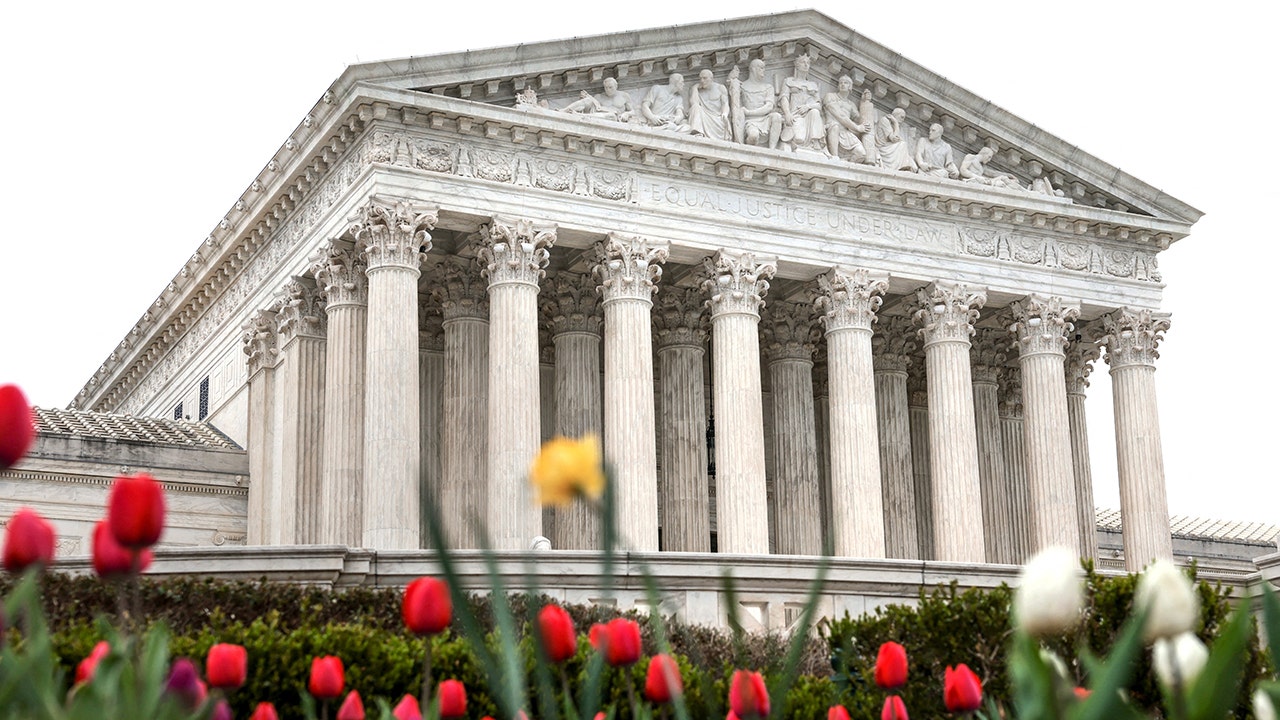
The U.S. Supreme Court issued a 6-3 opinion in Louisiana v. Callais holding that drawing congressional districts based on race to comply with Section 2 of the Voting Rights Act is not a narrowly tailored compelling governmental interest and therefore triggers strict-scrutiny problems. Justice Samuel Alito wrote the majority opinion; Justice Elena Kagan dissented. The Court applied existing statutes and precedent and did not announce an overruling of earlier cases. The opinion reaffirmed that Section 2 forbids denying or abridging the right to vote on account of race, but it also reiterated that the VRA does not require proportional racial representation or race-based quotas. The article argues that many media reactions that described the decision as “gutting” or “obliterating” the VRA are inaccurate, and it places Callais in continuity with prior cases such as Cooper v. Harris, Allen v. Milligan, and Shaw v. Reno. The author asserts that race may not be the dominant factor in mapmaking, that majority-minority districts are not the only path to minority representation, and that partisan gerrymandering claims remain nonjusticiable under Rucho v. Common Cause. The piece is an opinion commentary by legal scholar John Shu defending the Court’s reasoning and emphasizing adherence to the text and original intent of the VRA.
Biblical Reflection
This article is a partisan-leaning legal commentary defending a conservative Supreme Court ruling. Its central claims about the law — that the Court applied strict scrutiny and did not overturn prior precedents, and that Section 2 does not mandate proportional racial representation — are factual summaries of the Court’s holding. At the same time, the piece advances a particular interpretive and political frame: it stresses legal formalism and warns that accusations of racism are overblown or misguided. Christians should note two complementary concerns in this framing.
First, Christian commitments to justice and the equal dignity of every person (Genesis 1:27; Micah 6:8) incline us to uphold both the rule of law and protections against racial discrimination. A sound legal order that treats people equally under the law is consistent with biblical justice. If the Court truly applied narrow, principled limits on race-based decision-making while preserving remedies for intentional dilution or exclusion, that aligns with seeking just and impartial governance.
Second, Christians must be wary of two errors the article touches on but does not fully resolve: (1) minimizing the real-world consequences of legal doctrines for minority political voice and civic access, and (2) allowing partisan loyalties to shape how we judge motives and outcomes. The article critiques the media for overstating harm to the VRA; yet it downplays how changes in redistricting doctrine may affect representation even when not framed as explicit racial exclusion. Scripture calls us to defend the vulnerable and to pursue both justice and mercy (Micah 6:8). That means carefully weighing legal formalism against empirical outcomes for marginalized communities, and avoiding reflexive tribalism that assumes opponents are acting in bad faith.
In short: the legal reasoning summarized in the piece can be consistent with Christian principles of fair treatment and rule-bound government, but Christians should also interrogate whether policy and legal changes produce disproportionate burdens on vulnerable groups, resist simplistic racial stereotypes, and refuse partisan cynicism. Hold legal claims to truth and charity: insist on accurate description of law, demand honest accounting of likely consequences, and pursue remedies that protect both equality under law and meaningful political inclusion.
Scripture in context
This outlook does not yet include contextual Scripture citations. Do not treat a general biblical theme as an exegetical conclusion.
Faithful Response
No prescribed response is offered. Consider the reflection prompts below in your own church context.
Reflection and Discussion
- 1How does the article’s legal emphasis on formal equality (prohibiting race as a basis for decisions) square with the Bible’s command to advocate for the vulnerable — could a strict formalism leave real harms unaddressed?
- 2Where does the piece reflect partisan or institutional loyalties that might shape its interpretation of the Court’s motives and effects, and how can I discern facts from advocacy?
- 3Am I tempted to respond to this ruling as a tribal affirmation or condemnation rather than asking soberly what policies and practices will protect both equal treatment and meaningful political participation for all?
Sources
Reporting links are evidence inputs; Sanctuary News' biblical reflection is commentary.
This outlook currently relies on fewer than two linked sources. Broaden verification before teaching from it.
- 1.Original reportprimary