News Summary
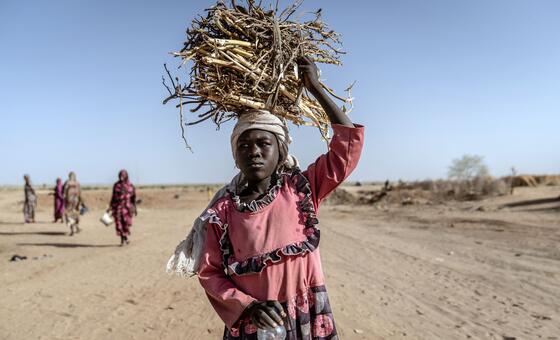
On 24 August 2026 the UN Security Council received live briefings from senior UN officials reporting an escalating humanitarian emergency across Sudan. The briefers described intensifying armed conflict, reports of drone strikes affecting civilians, large-scale displacement, worsening hunger and severe flooding affecting millions of people. UN agencies are attempting to deliver lifesaving aid amid constrained access and dangerous conditions. The account in UN News attributes these claims to UN officials at the Security Council briefing and does not supply independent casualty counts, precise geographic breakdowns, or forensic verification of reported attacks.
Source and Framing Analysis
Source: UN News live coverage of a UN Security Council briefing. Framing: urgent, high-level humanitarian alert based on statements by UN officials. Strengths: timely, attributed to senior UN briefers, emphasizes converging threats (violence, hunger, flooding) and the operational challenge of delivering aid. Limitations and uncertainties: the report is a situational summary rather than independent investigation — it lacks named eyewitnesses, precise casualty or displacement figures, geographic granularity, evidence cited for reported drone strikes or perpetrator identities, and details on which UN agencies are operating where. Readers should treat the piece as an authoritative summary of what UN officials reported at the Council, while recognizing important evidentiary gaps that require follow-up reporting and independent verification.
How sources covered this story
Sanctuary separately assesses reporting quality and alignment with Christian virtues. The virtues assessment considers truthfulness, dignity, compassion, justice, peacemaking, humility, and care for vulnerable people. It does not assess a publisher's faith or reward religious language.
Compare 1 reports
Reporting 75/100Virtues 82/100
- Distinctive contribution
- Confirms an active Security Council briefing by top UN officials and highlights the convergence of violence (including reported drone strikes on civilians) with large-scale displacement, hunger and flooding affecting millions — framed as simultaneous, compounding threats.
- Framing
- Concise, official UN-oriented framing emphasizing humanitarian emergency and multilateral response; uses urgent language ('war-torn', 'escalating', 'lifesaving aid') while attributing the information to UN briefings.
- Omissions or uncertainty
- No specific dates, casualty or displacement figures, geographic detail, named UN officials or agencies, evidence for 'drone strikes' or attribution of perpetrators, nor any Security Council decisions or statements. The term 'millions' is unquantified and sources for claims are not specified beyond 'top UN officials.'
- Why these scores
- Appropriate for a short live-update: clearly attributed to UN briefings, uses measured humanitarian language, and avoids sensational specifics. However it lacks concrete numbers, named sources, geographic or temporal precision, and details about perpetrators or evidence, limiting its utility beyond high-level corroboration. The excerpt centers human suffering and the delivery of lifesaving aid, demonstrating concern for vulnerable people and avoiding dehumanizing language. It attributes information responsibly to UN briefings and uses restrained wording. It would score higher if it contained more explicit attention to justice, accountability, or concrete protective measures for civilians.
Biblical Reflection
Christian response is shaped by truth, mercy, justice, peacemaking, humility, and care for the vulnerable. Truth: listen to reliable briefings, avoid amplifying unverified allegations, and press for independent investigation where civilian harm is alleged. Mercy: provide concrete help to those who are hungry, displaced, or flooded through vetted humanitarian partners and local church networks. Justice and peacemaking: pray for and advocate toward protection for civilians, accountability for abuses, and pathways to nonviolent resolution. Humility and dignity: resist simplistic partisan narratives, honor the dignity of affected people, and center their needs rather than our opinions. Practically, the church is called to steady compassion — prayer, informed giving, hospitality for refugees, and public advocacy for unfettered humanitarian access.
Scripture in context
- 1Matthew 25:31-46 (contextual reference) — In Matthew’s Gospel this teaching links final judgment to concrete care for hungry, thirsty, stranger, naked, sick, and imprisoned neighbors, framing social responsibility as integral to discipleship. — This passage reminds Christians that serving people harmed by war, hunger, and displacement is a central expression of faith: feeding, sheltering, tending the sick, and advocating for protectio n are ways of serving Christ by serving neighbors in distress. Use the passage for compassionate motivation while avoiding proof-texting or political partisanship.
Faithful Response
Pray specifically for civilians, aid workers, and decision-makers in Sudan; include named places and needs when possible to guide focused prayer.
Give to vetted, transparent humanitarian organizations and church networks providing food, shelter, water, medical care, and protection to people displaced or affected by floods.
Support and amplify calls for safe, impartial, and sustained humanitarian access; urge policymakers and multilateral bodies to prioritize protection of civilians.
Avoid sharing unverified allegations on social media; encourage congregations to seek information from multiple reputable sources and to defer judgment until claims are corroborated.
Prepare congregational hospitality and refugee-response plans where local capacity and context make that appropriate, while coordinating with established agencies for long-term resettlement and care.
Reflection and Discussion
- 1How does news of widespread suffering in Sudan reshape our sense of responsibility to distant neighbors, and what concrete steps can our congregation take?
- 2What additional facts and independent verifications do we need before publicly assigning blame or recommending particular policy measures?
- 3How can we balance urgent relief efforts with longer-term commitments to justice, protection, and reconciliation for communities affected by conflict and floods?
- 4In what ways can our prayers be paired with tangible action so that lament leads to sustained compassion rather than one-off responses?
Sources
Reporting links are evidence inputs; Sanctuary News' biblical reflection is commentary.
This outlook currently relies on fewer than two linked sources. Broaden verification before teaching from it.
- 1.Security Council LIVE: War, hunger, flooding escalates in Sudanofficial_document