News Summary
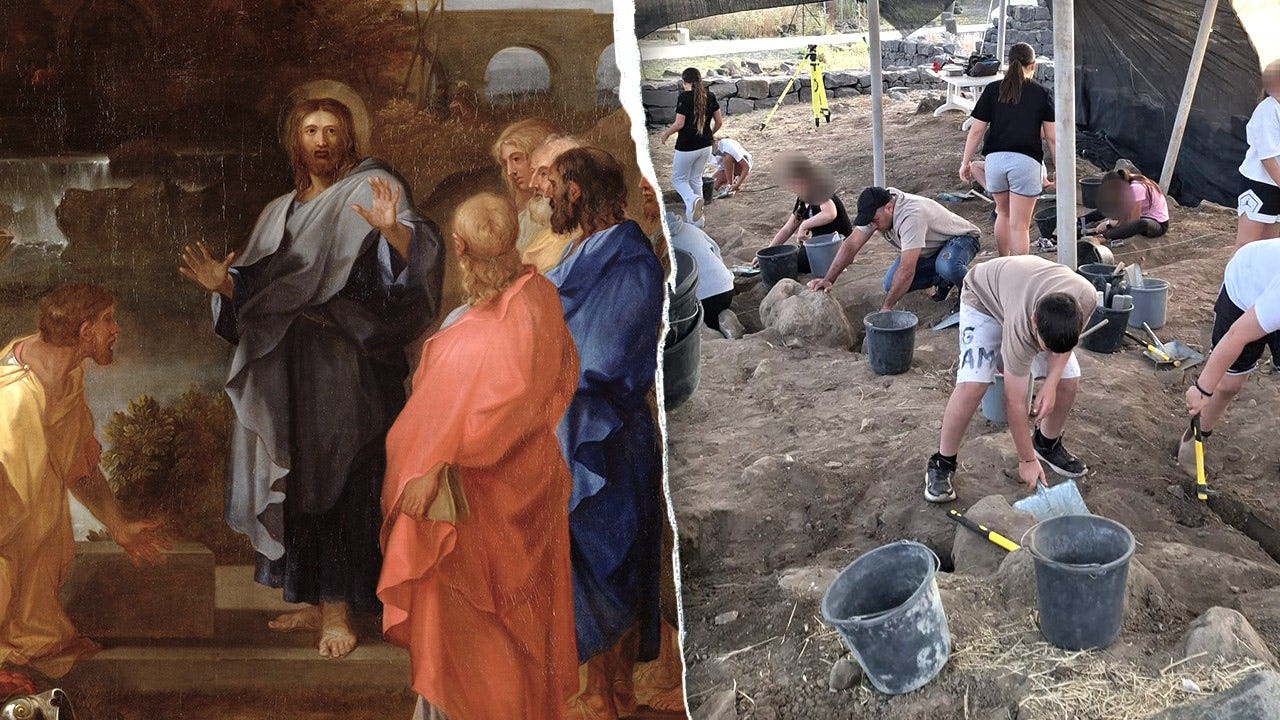
A 12-year-old student, Alon Horowitz, participating in a community excavation organized by the Israel Nature and Parks Authority in partnership with Ariel University, discovered a small pale-blue gemstone at Korazim National Park near the Sea of Galilee. Archaeologists date the stone to the sixth century A.D. and identified it as a Nicolo, a rare variety of agate used as a luxury item in the Roman and Byzantine eras. The gem was recovered from what excavation directors describe as a wealthy estate area of the site, suggesting the object belonged to an affluent household and likely arrived via long-distance trade rather than local sources. Korazim is commonly identified with the biblical village of Chorazin, mentioned in the New Testament in connection with Jesus' ministry. The announcement included statements from excavation director Achia Kohn-Tavor and photos of the find; organizers highlighted the educational value of community archaeology and noted similar child discoveries at other Israeli sites in recent years.
Biblical Reflection
This report sits at the intersection of faith and material history: it offers a concrete glimpse into daily life and social status in late antique Galilee and invites Christians to appreciate the cultural context of the biblical world. The article is primarily descriptive and fact-based, though it frames the site as "linked to Jesus' ministry," which is historically common but should be understood as identification by tradition and scholarship rather than an archaeological proof-text for theological claims. The piece shows healthy public engagement with heritage—young people learning by doing—and points to the global trade connections of the region. Pastors and Christians can celebrate curiosity, education, and careful stewardship of the past while resisting two temptations: treating archaeological finds as direct validation of doctrinal points or letting nationalistic or commercial narratives over-define sacred history. Truth-seeking requires both appreciation for what artifacts reveal and humility about the limits of what they can prove about faith.
Scripture in context
This outlook does not yet include contextual Scripture citations. Do not treat a general biblical theme as an exegetical conclusion.
Faithful Response
No prescribed response is offered. Consider the reflection prompts below in your own church context.
Reflection and Discussion
- 1Am I tempted to treat archaeological finds as proof for or against my theological convictions rather than as context that enriches faith?
- 2How does labeling a site as 'biblical' shape public perception—does it promote learning or encourage simplistic devotional claims?
- 3What responsibilities do believers have to protect, study, and share cultural heritage so it benefits neighbors and future generations?
Sources
Reporting links are evidence inputs; Sanctuary News' biblical reflection is commentary.
This outlook currently relies on fewer than two linked sources. Broaden verification before teaching from it.
- 1.Original reportprimary