News Summary
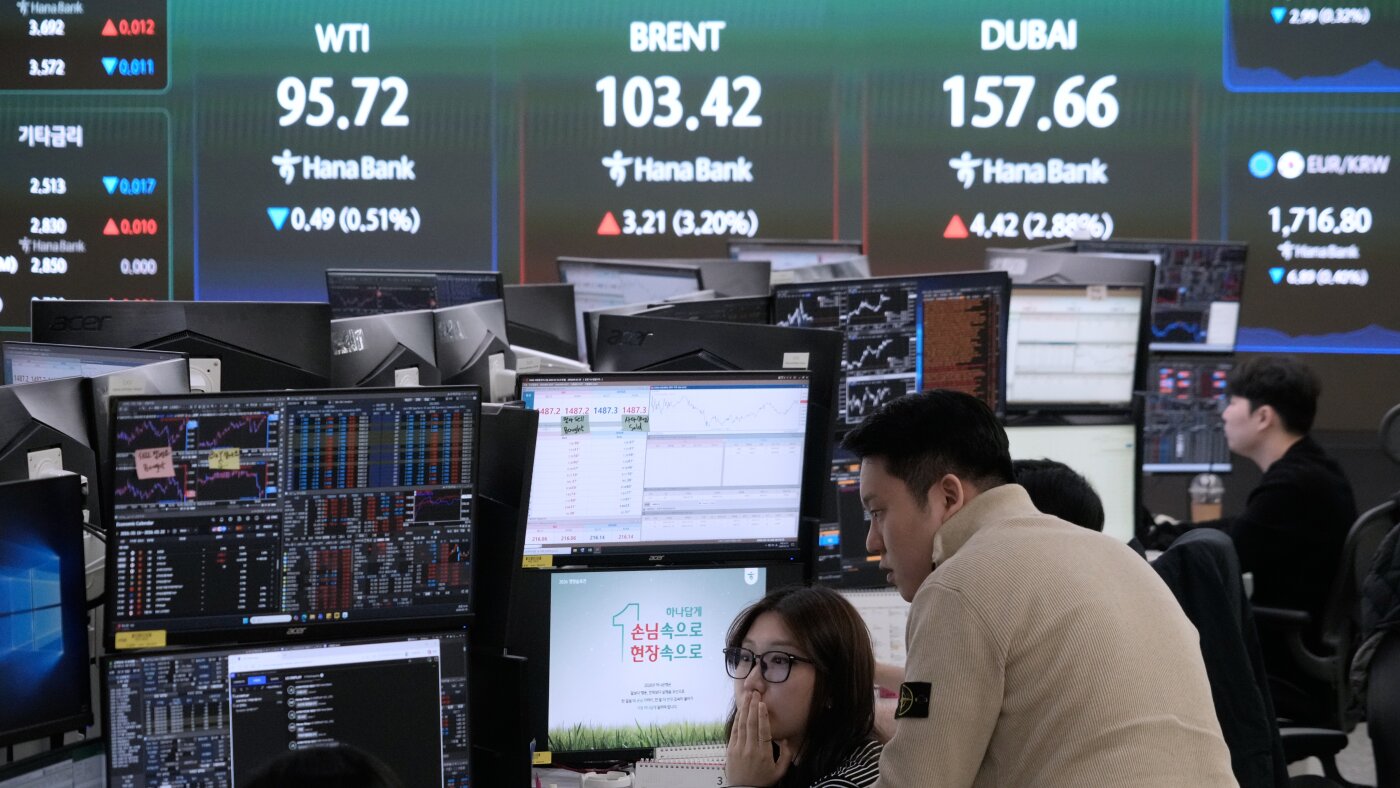
Global crude oil prices have been unusually volatile in recent weeks, swinging as much as $35 in a single day and trading near $110 per barrel. The volatility is linked to disruptions in the Strait of Hormuz, which has been largely blocked to tanker traffic, creating uncertainty about global supply. Analysts describe two opposing scenarios: a short disruption that global stockpiles and floating crude could absorb, keeping prices from staying elevated, or a prolonged closure that would cause a severe supply shock and much higher sustained prices. Market behavior reflects this uncertainty: commodity prices have moved sharply on signals that the conflict might be short (administration statements, reports of talks) and have risen when signs point to a longer disruption. Traders recall recent geopolitical events that were resolved quickly, which has encouraged some to bet on a short disruption. The article highlights a feedback loop in which U.S. political statements—particularly from President Trump—move markets, while market moves in turn influence policy considerations. Experts warn that if price increases are delayed or muted now, that could produce harsher adjustments later. The piece notes physical evidence of tighter regional fuel markets (spot prices and rationing in some countries) and estimates the current oil shortfall at roughly 10 million barrels per day. U.S. gasoline prices have risen by about $1 per gallon on average so far.
Biblical Reflection
From a Christian perspective, this article highlights how uncertainty and scarcity reveal human priorities and pressures. The reporting accurately emphasizes market psychology and the real-world link between geopolitics and people's livelihoods; it does not appear to make factual claims beyond the experts' assessments. Two underlying worldviews stand out: (1) a market-centric lens that treats price signals as the primary mechanism for balancing scarcity and demand, and (2) a geopolitical/leadership lens that treats political actors (notably the U.S. president) as central decision makers whose words shape outcomes. The article rightly warns about moral hazard — that muted markets can blunt political urgency — and it could have given more attention to the humanitarian consequences that follow fuel shortages (rationing, disrupted services, and harm to the poor). Scripture repeatedly calls believers to seek peace, pursue justice, and care for the vulnerable. Practically, Christians should read this story aware that economics and national security often interact in ways that can both mitigate and mask suffering. We should resist simplistic narratives that reward profit over people or that reduce complex human lives to market indicators. Instead, hold leaders accountable for pursuing peaceful resolutions, advocate for policies that protect the most vulnerable in times of crisis, and practice faithful stewardship (prudence in consumption, generosity toward those affected). Finally, be wary of emotional or partisan headlines that frame complex uncertainty as certainty; the call is to discernment, prayer, and concrete acts of mercy amid geopolitical and economic turbulence.
Scripture in context
This outlook does not yet include contextual Scripture citations. Do not treat a general biblical theme as an exegetical conclusion.
Faithful Response
No prescribed response is offered. Consider the reflection prompts below in your own church context.
Reflection and Discussion
- 1Whose perspectives are centered in this coverage (traders, governments, consumers) and whose experiences — especially the poorest and most directly affected — are missing or under-emphasized?
- 2How might market signals or their suppression create moral hazards that reduce pressure on leaders to pursue peace, and how should Christians weigh economic incentives against the imperative to seek justice and peace?
- 3Are we responding to uncertainty with fear and speculation, or with patient discernment, prayer, and practical care for those harmed by economic and military disruption?
Sources
Reporting links are evidence inputs; Sanctuary News' biblical reflection is commentary.
This outlook currently relies on fewer than two linked sources. Broaden verification before teaching from it.
- 1.Original reportprimary