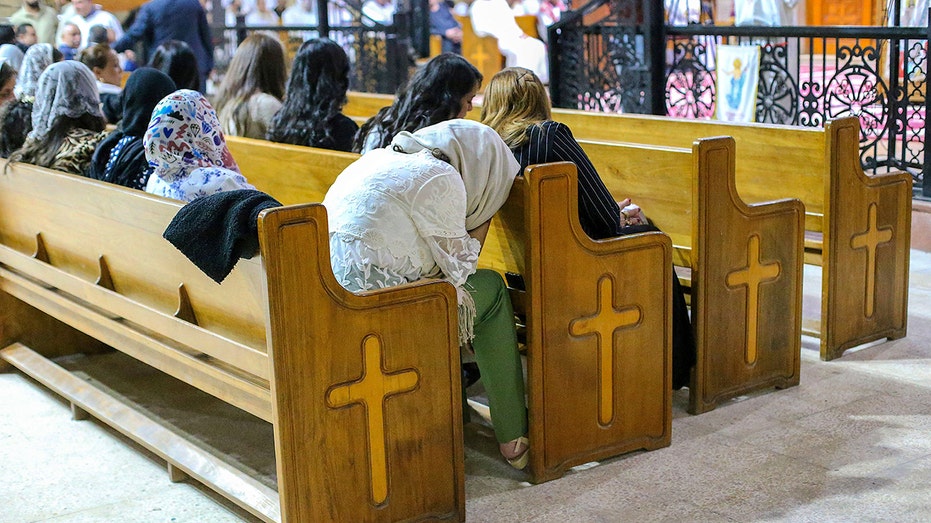
News Summary
Reported facts: The article states that Egypt’s roughly 20 million Coptic Christians face discrimination and occasional violence and that experts say the Egyptian state has not sufficiently addressed anti‑Christian fanaticism; it also reports that the U.S. State Department is pressing for religious freedom in Egypt. Attributed claims: The view that the state 'fails to address' the problem is presented as expert opinion. Uncertainty: The piece does not name the experts, give specific incidents, cite data, or include official Egyptian government responses in this brief summary.
Source and Framing Analysis
The story is a brief report from a single media outlet and attributes the central critique to unnamed "experts." That creates material uncertainty about scope, sources, and specific incidents. The framing focuses on victimization and state failure without offering detailed evidence, government statements, or corroborating sources; readers should seek named reports, incident data, and official responses to assess scale and patterns.
Biblical Reflection
This reporting highlights a persistent moral and practical concern: when a religious minority faces discrimination and violence, neighbors and governments have a duty to protect vulnerable people and uphold justice. The article presents the problem as both social (popular hostility, occasional violence) and institutional (state failure to address fanaticism). Christians should first seek the truth of the facts while responding in charity — offering solidarity, prayer, and support to those who suffer.
At the same time, remain cautious about drawing sweeping conclusions from a short report that attributes views to unnamed "experts." The biblical call to love neighbor and seek justice requires careful discernment: verify what is happening, advocate for protection and equal treatment, and avoid inflaming tensions with simplistic or partisan narratives. Where governments fail to protect minorities, international advocacy and nonviolent assistance may be necessary, but Christians must pursue such action with humility, mercy, and respect for complex local realities.
Scripture in context
- 1Matthew 5:10-12 — Part of the Sermon on the Mount where Jesus addresses the blessedness of those who are persecuted for righteousness' sake; originally spoken to a Jewish audience under Roman occupation and religious opposition. — These verses recognize that persecution may come to those who live by God's standards and offer comfort and hope rather than a political program; they call Christians to endure with integrity and to find joy in faithfulness when suffering is unjustly experienced.
- 2Romans 12:17-21 — Paul's instructions to the Roman church on how to live practically among outsiders and enemies—avoiding revenge, seeking peace, and overcoming evil with good in a Greco-Roman setting where Christians were vulnerable. — This passage guides a Christian response to persecution or injustice: do not repay evil with evil, pursue peace where possible, protect the vulnerable, and respond to hatred with restorative acts that seek the neighbor's good.
Faithful Response
Pray regularly and specifically for Coptic Christians and for Egyptian officials charged with public safety.
Seek reliable information: read named reports from multiple independent human-rights organizations and official statements before forming policy positions or public denunciations.
Support reputable humanitarian and religious-freedom organizations that provide legal aid, security assistance, and dialogue on the ground.
Speak up to elected representatives for consistent, principled foreign-policy concern for religious freedom while avoiding dehumanizing rhetoric toward any group.
Reflection and Discussion
- 1What additional, specific information would you need before drawing firm conclusions about state responsibility and the scale of violence reported?
- 2How does a commitment to both truth and mercy shape the way Christians advocate for persecuted minorities abroad?
- 3Are our responses informed by prayerful humility and solidarity, or by political assumptions and cultural distance?
Sources
Reporting links are evidence inputs; Sanctuary News' biblical reflection is commentary.
This outlook currently relies on fewer than two linked sources. Broaden verification before teaching from it.
- 1.Christian persecution concerns rise in Egypt as State Department presses religious freedomprimary_reporting