News Summary
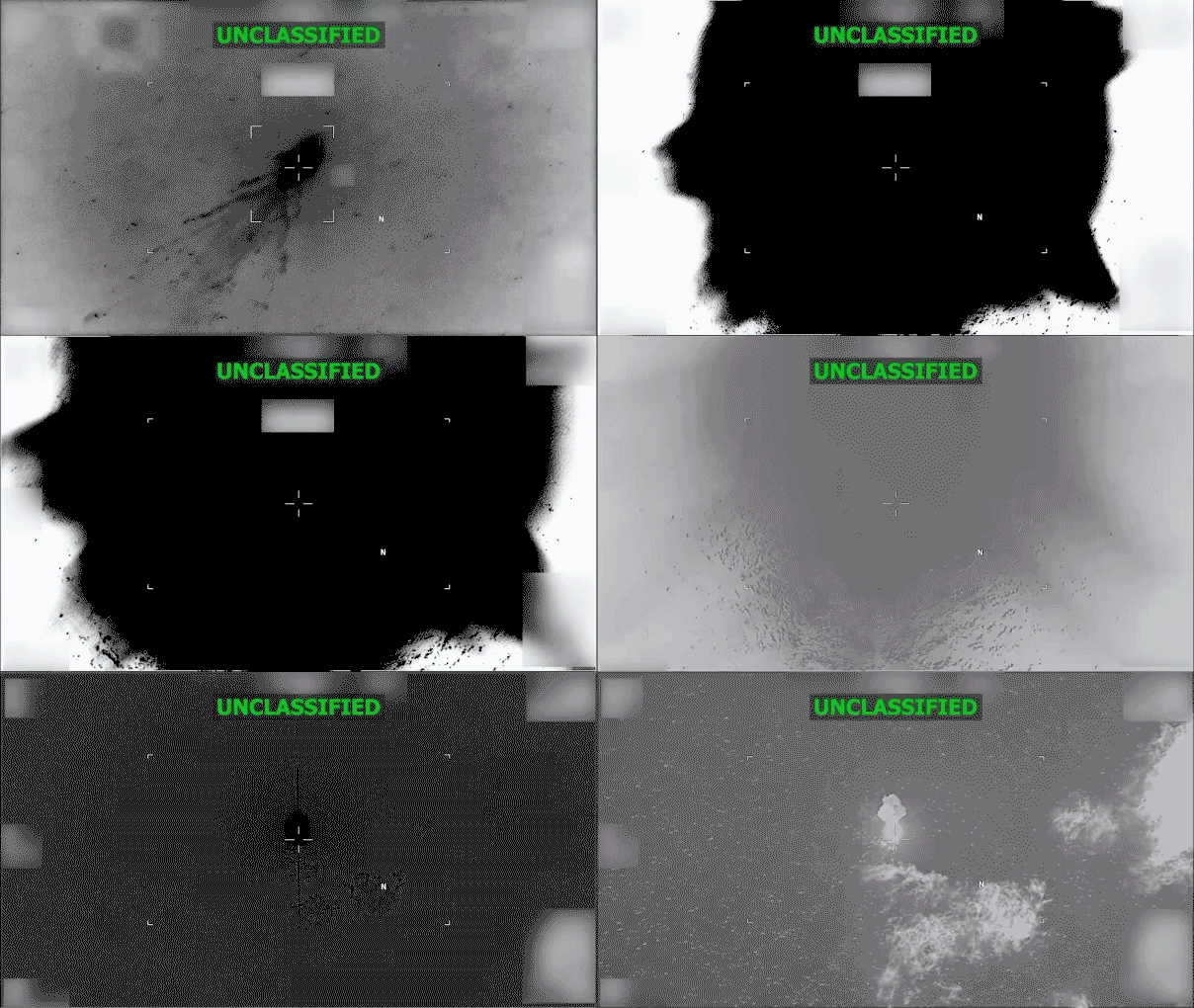
On May 8, at the direction of U.S. Southern Command (SOUTHCOM) commander Gen. Francis L. Donovan, Joint Task Force Southern Spear conducted a lethal strike on a vessel in the Eastern Pacific. SOUTHCOM stated the vessel was operated by groups it described as "Designated Terrorist Organizations" and was transiting known narcotics-trafficking routes. Two male individuals on board were reported killed; one survived and SOUTHCOM notified the U.S. Coast Guard to conduct search-and-rescue for the survivor. No U.S. personnel were reported wounded. SOUTHCOM did not release the names or further identifying details of those killed. The strike is part of a series of recent U.S. military operations targeting suspected cartel-linked smuggling vessels in the Eastern Pacific and Caribbean; earlier in the same week SOUTHCOM reported other lethal strikes that killed additional suspected traffickers.
Biblical Reflection
The article primarily relays an official military statement with minimal independent detail. As Christians seeking truth, note two realities: (1) the state bears responsibility to protect citizens and disrupt violent criminal networks that harm communities; (2) lethal force raises grave moral and evidentiary questions that require transparency and accountability. The military’s framing — using terms like "Designated Terrorist Organizations" and "narco-terrorists" — signals both legal/operational justification and a public-relations framing that simplifies complex local dynamics. Journalistic repetition of official language without independent corroboration can obscure uncertainty: who exactly was targeted, what intelligence supported the strike, and whether civilian harm was possible or assessed. From a biblical perspective, pursuit of justice and protection of the vulnerable is right (e.g., defending the oppressed), but Christians should also press for mercy, due process where possible, and humility about state power (recognizing human fallibility). Practically, this means valuing efforts to stop trafficking and violence while asking for transparent investigations, care for survivors and any innocent victims, and ongoing attention to the root causes of trafficking (demand, corruption, poverty) rather than only tactical strikes. Finally, beware of dehumanizing language; those involved in crime remain image-bearers of God and our response should be tempered with prayerful pursuit of justice, not vindictiveness.
Scripture in context
This outlook does not yet include contextual Scripture citations. Do not treat a general biblical theme as an exegetical conclusion.
Faithful Response
No prescribed response is offered. Consider the reflection prompts below in your own church context.
Reflection and Discussion
- 1What assumptions are embedded in the military's labels ("designated terrorist organizations" / "narco-terrorists"), and what additional evidence would you want before accepting them as settled facts?
- 2How does the article balance the state's duty to protect civilians with the moral need for transparency, restraint, and care for noncombatants?
- 3In addressing drug trafficking and cartel violence, are tactical strikes enough, or must Christians also call for long-term strategies that address root causes and rehabilitation?
Sources
Reporting links are evidence inputs; Sanctuary News' biblical reflection is commentary.
This outlook currently relies on fewer than two linked sources. Broaden verification before teaching from it.
- 1.Original reportprimary