News Summary
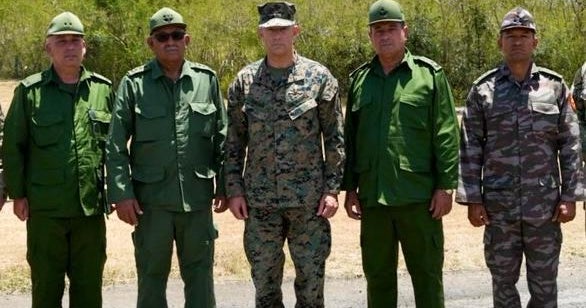
Gen. Francis L. Donovan, commander of U.S. Southern Command (SOUTHCOM), met on May 29, 2026 with Cuban Gen. Roberto Legrá Sotolongo and other senior Cuban military leaders at the perimeter of the U.S. naval base at Guantanamo Bay. The U.S. military described the meeting as a "brief exchange on operational security matters." Cuba's defense ministry characterized the meeting as "positive" and said both sides discussed topics of mutual interest. Such perimeter or "fence-line" contacts have occurred periodically, but meetings involving the SOUTHCOM commander and senior Cuban officials are uncommon. The meeting follows other recent high-level U.S. contacts with Cuba, including visits by CIA Director John Ratcliffe and State Department diplomats. The article places the meeting in the context of an intensified U.S. policy toward Cuba under President Trump that includes tighter sanctions, threats of tariffs on oil exports to Cuba, criminal charges against former Cuban leader Raúl Castro, and public comments by President Trump about possible military action. The report also notes U.S. intelligence attention to Cuba's military capabilities (including reported acquisition of attack drones) and concerns raised about possible Chinese and Russian intelligence facilities in Cuba. Cuban President Miguel Díaz-Canel denied that Havana poses a military threat and warned a U.S. assault would cause heavy loss of life. The article reports that during a recent visit to Havana, CIA Director Ratcliffe introduced a paramilitary figure involved in a prior operation in Venezuela to Cuban officials.
Biblical Reflection
This article reports a concrete interaction between military officials amid heightened diplomatic pressure and public threats. As Christians called to seek truth and pursue peace, we should read the piece with sober attention to both facts and framing. The factual meeting at Guantanamo Bay is plausible and appears aimed at operational risk-management, yet the surrounding coverage emphasizes escalation and threat—statements by political leaders and evocative anecdotes (e.g., the introduction of a paramilitary operator) heighten alarm. That framing can predispose readers toward fear and support for force before exhausting diplomatic channels. Scripture repeatedly calls believers to value peace, to weigh the cost of violence, and to speak truthfully about our neighbors. At the same time, legitimate security concerns and accountability for wrongdoing matter. Discernment requires separating verifiable facts (who met whom, where, and what was said officially) from politically charged rhetoric and implications about inevitable military action. We should also remember the human consequences: sanctions, threats, and military posturing most affect ordinary people—energy shortages and civilian suffering are moral facts that demand mercy. Christians are wise to pray for leaders’ humility and restraint, to advocate for transparency and diplomacy, and to refuse narratives that dehumanize the other side or celebrate dominance over neighborly reconciliation.
Scripture in context
This outlook does not yet include contextual Scripture citations. Do not treat a general biblical theme as an exegetical conclusion.
Faithful Response
No prescribed response is offered. Consider the reflection prompts below in your own church context.
Reflection and Discussion
- 1Does the article emphasize actions and rhetoric that make war more likely, and whose perspectives—especially ordinary civilians in Cuba—are missing from the coverage?
- 2Are we accepting claims about threats and capabilities at face value, or asking what independent verification exists and what nonmilitary options remain?
Sources
Reporting links are evidence inputs; Sanctuary News' biblical reflection is commentary.
This outlook currently relies on fewer than two linked sources. Broaden verification before teaching from it.
- 1.Original reportprimary