News Summary
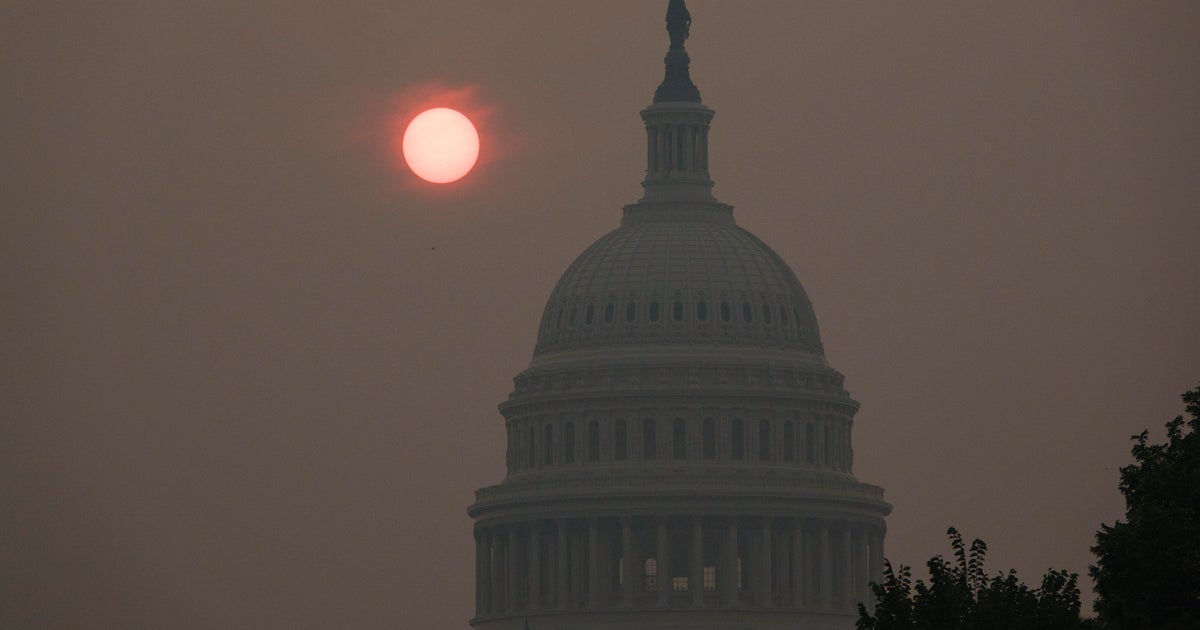
Reported facts: CBS News states more than 50 million people across the Ohio Valley, Mid-Atlantic and Northeast are at risk of severe weather including damaging winds, large hail, isolated tornadoes and flash flooding; the National Weather Service warned of scattered flash flooding from Washington, D.C., to Boston and a flood watch was in effect for New York City. The article reports that heavy smoke from wildfires in Canada and Minnesota has affected air quality across at least 19 states and that air quality is expected to improve as a cold front moves through. The story notes tens of thousands of fans heading to the World Cup final in New Jersey and quotes an MLS analyst about possible air-quality impacts on play. It reports that central Texas received around two feet of rain over several days, recovery is ongoing, some rivers remain high, roads are impassable, and the Texas National Guard is conducting rescues; a Texas resident is quoted describing damage to her workplace. Attributions and uncertainty: forecasts (storm severity, flash flooding, air-quality improvement) are predictive statements attributed to the National Weather Service and forecasters; smoke spread and the number of affected states are reported as observed impacts; specific future conditions (e.g., smoke improvement by game time) are contingent and uncertain.
Source and Framing Analysis
Source role: Single-source primary reporting by CBS News, which cites the National Weather Service and includes on-the-ground quotes and a sports analyst. Missing voices: direct statements from local emergency management, state public-health officials, air-quality indexes (AQI data), and wildfire incident commands are not included. Incentives and framing: the piece aims to inform a wide audience about immediate hazards and to connect these hazards to a high-profile event (World Cup final) and ongoing recovery in Texas, which may broaden appeal but can shift focus away from vulnerable populations. Disputed or predictive claims: forecasts (storm impacts, air-quality improvement) require follow-up with official NWS/AQI updates; casualty figures or long-term damage estimates in Texas are not detailed here and need independent verification. What to verify independently: NWS watches/warnings by locality, real-time AQI readings across affected cities, wildfire containment and acreage, and official casualty/rescue counts in Texas.
Biblical Reflection
This report is straightforward situational reporting intended to warn and inform. Its primary purposes are to communicate public-safety risk (severe storms, flash flooding) and public-health risk (reduced air quality from wildfire smoke). The underlying worldview is pragmatic and precautionary: authorities and reporters emphasize forecasted hazards, possible impacts on large populations, and ongoing recovery efforts. Missing from the piece are detailed voices from emergency management or public-health agencies with actionable guidance for vulnerable groups, and more granular data (AQI readings, NWS advisories by time/location). From a Christian pastoral perspective, the facts call us to truthfulness (accurately assess risks), mercy (care for neighbors who are vulnerable to floods and poor air), humility (recognize human limits in the face of weather), courage (mobilize help), and peace (offer calm, prayerful presence). Christians should neither spiritualize disasters as simple retribution nor minimize the concrete suffering they cause; instead, report and respond with compassion and practical help.
Scripture in context
- 1Matthew 8:23-27 — In this Gospel passage Jesus calms a violent storm while sleeping in the boat; the disciples fear for their lives and Jesus rebukes the wind and the waves, demonstrating authority over natural forces and prompting the disciples to reflect on his identity. — This story models two responses relevant to today’s storms: honest fear and urgent prayer, coupled with trust that God is present; it also invites believers to be present with those who are afraid and to bring the authority of compassionate action—practical rescue and relief—alongside spiritual comfort.
Faithful Response
Prepare practically: update emergency kits, review evacuation routes, and monitor official NWS and AQI updates for your area.
Check on vulnerable neighbors (elderly, medically fragile, those without air conditioning or safe shelter) and offer immediate assistance or transport to safer places when needed.
Support relief efforts: donate to local disaster-relief organizations or volunteer networks coordinating recovery and shelter.
Reflection and Discussion
- 1Which specific local data (NWS warnings, AQI readings) would change how you respond to this report, and where can you get that data reliably?
- 2How might focused human-interest details (e.g., a quoted homeowner) shape emotional response, and does that push urgent needs of less-visible groups out of view?
- 3Does the mixing of sports-event coverage with public-health warnings shift attention away from where relief resources are most needed?
Sources
Reporting links are evidence inputs; Sanctuary News' biblical reflection is commentary.
This outlook currently relies on fewer than two linked sources. Broaden verification before teaching from it.
- 1.Severe weather puts millions at risk in Northeast as wildfire smoke lingersprimary_reporting