News Summary
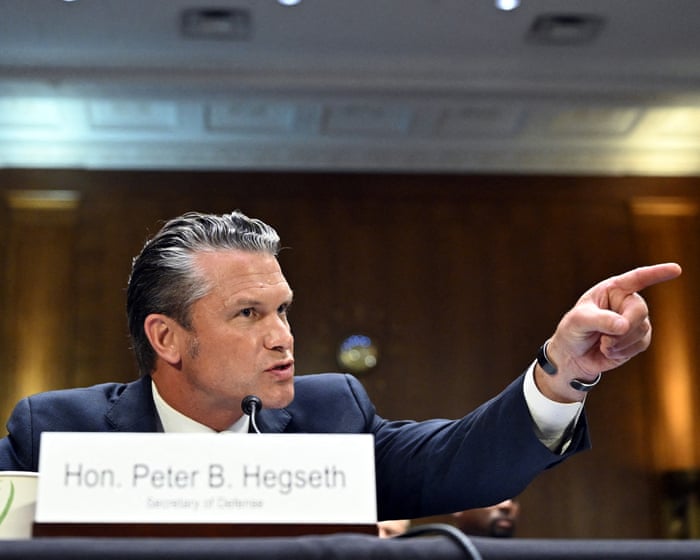
Reported facts: Pete Hegseth testified to the Senate that the US–Israel war on Iran has cost $37.5 billion so far and defended an ~$88 billion supplemental funding request; the article reports three U.S. service-member deaths and White House action on flights to Lebanon. Attributed claims: Iranian FM Abbas Araghchi said he was rescued from rubble after a US–Israeli strike that, he said, killed Ali Khamenei on day one; reporting from Iran describes airstrikes, repression, and water shortages. Uncertainty: extraordinary claims about the death of a foreign leader and battlefield details are reported as statements by officials and lack independent corroboration in this single article.
Source and Framing Analysis
The article compiles multiple items (Senate testimony, on-the-ground reporting, official statements) into a short briefing. Material uncertainty arises where the piece relays quoted or attributed claims of major events (for example, the alleged death of a national leader) without presenting independent corroboration. The framing emphasizes cost, political reaction, and human suffering; that selection highlights fiscal and humanitarian lenses but does not substitute for primary-source verification of battlefield claims.
Biblical Reflection
The article reports on large financial, human, and geopolitical costs tied to a widening conflict in the Middle East. As Christians called to love our neighbors and to seek peace, we should receive such reporting with sober concern for the lives affected and humility about what we do and do not know from a single news item. The financial numbers and casualty reports, if accurate, represent real suffering — both for service members and for civilians caught in the conflict — and they raise questions about stewardship of public resources and the human cost of military escalation.
At the same time, the piece includes highly consequential and extraordinary claims (for example, accounts attributed to Iranian officials about leadership deaths and battlefield events) that require independent verification before we accept them as settled fact. Christian discernment demands that we resist the rush to certainty, seek corroborating information, and center prayers and policy questions on protecting the vulnerable, preventing further bloodshed, and pursuing justice and reconciliation wherever possible.
Finally, the article surfaces broader moral issues: the temptation of long-running military commitments, the downstream risks of regional proliferation, and the burden placed on civilians. The Christian witness in such moments is neither partisan cheerleading for military might nor simple pacifist retreat; it is an insistence that even in questions of national security, we prefer truth, pursue peace, defend the defenseless, and hold leaders accountable for consequences of war.
Scripture in context
- 1Matthew 5:9 — Part of the Sermon on the Mount, where Jesus teaches about the character of the kingdom and instructs disciples on attitudes and behaviors that reflect God's rule; 'peacemakers' are presented as blessed and tied to righteousness. — In a time when war and its costs are prominent, this text invites Christians to prioritize peacemaking and to evaluate policies and rhetoric by whether they foster reconciliation and protection of the vulnerable.
- 2Romans 12:18 — Paul's practical exhortations for how Christians should live among outsiders: pursue peace where possible and respond with humility and love rather than vengeance. — The verse calls Christians to temper calls for escalation with efforts to avoid unnecessary harm, to seek peaceful solutions when feasible, and to care for those suffering as a result of conflict.
Faithful Response
Pray regularly for victims, service members, decision-makers, and civilians caught in the conflict, asking God for wisdom and mercy.
Seek reliable, corroborated reporting before sharing claims that could inflame or mislead; cultivate habits of source-checking and restraint in public speech.
Support humanitarian organizations aiding civilians and refugees from the conflict and encourage local churches to prioritize relief and pastoral care.
Engage elected representatives about policy priorities that protect civilians, require clear objectives for military spending, and include plans for aid, rebuilding, and diplomatic resolution.
Reflection and Discussion
- 1How does this report challenge or reinforce your assumptions about when military force is justified, and what biblical criteria should guide that judgment?
- 2Which statements in the article are direct government claims and which are independent reporting, and how does that distinction affect how you assess the story?
- 3How might Christian concern for the vulnerable (civilians, service members, refugees) change priorities in public conversation about funding and escalation?
Sources
Reporting links are evidence inputs; Sanctuary News' biblical reflection is commentary.
This outlook currently relies on fewer than two linked sources. Broaden verification before teaching from it.
- 1.$37.5bn cost of Iran war revealed as senator warns of ‘another forever war’ | First Thingprimary_reporting