News Summary
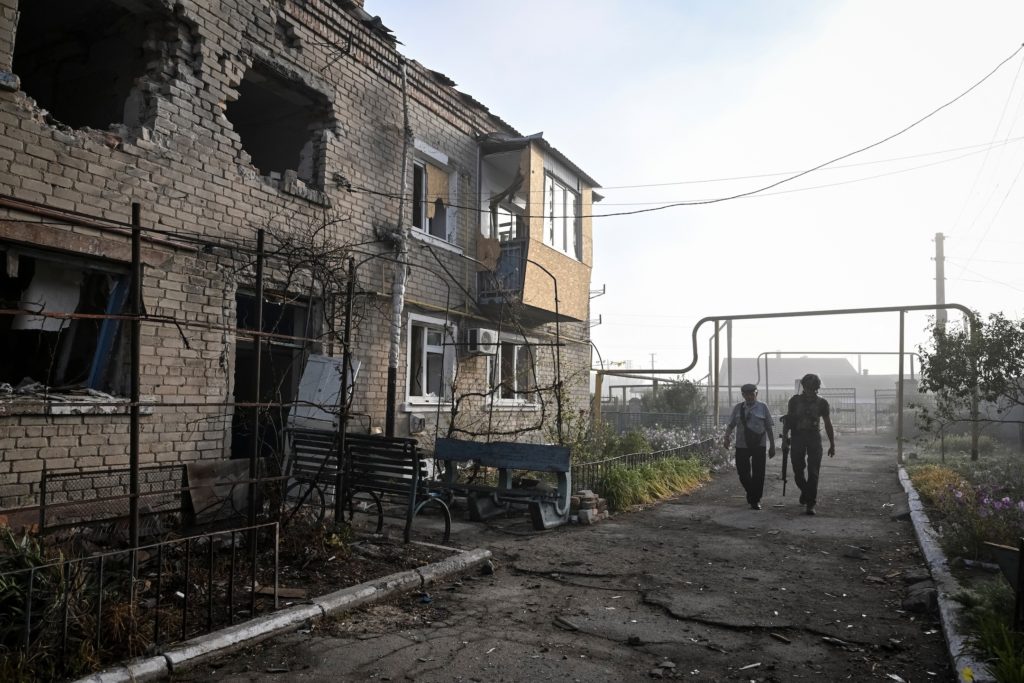
Ukrainian officials, as reported by PBS NewsHour, say Russia launched several missiles and an estimated 168 drones in a coordinated attack that killed at least 17 civilians and injured more than 40 people. President Volodymyr Zelenskyy reportedly urged allies to provide replacement Patriot interceptors. PBS interviewed retired U.S. Army Col. Robert Hamilton in Kyiv; Hamilton described war crimes as part of Russia's strategy. The numbers and the strategic characterization are presented in the piece as attributions or expert opinion rather than independently verified documentary proof.
Source and Framing Analysis
The primary source for this cluster is a single PBS NewsHour report that combines (a) incident reporting based on Ukrainian official statements—counts of missiles/drones and casualty totals—and (b) an expert interview offering a broader strategic and moral interpretation (Col. Robert Hamilton’s assertion that war crimes are part of Russia’s strategy). The report attributes weapon and casualty figures to Ukrainian authorities and uses qualifying language (e.g., 'estimated') for drone counts. The transition from attributed incident facts to an expert’s high-level judgment is clearly framed as analysis rather than as independently proven fact. Material uncertainties in the report include independent corroboration of the munition and casualty counts, precise locations and timing of strikes within Ukraine, and documentary evidence required to establish intentionality or the legal elements of war crimes. The piece is cautionary in attribution but does not supply the independent documentation that would convert strategic characterizations into established legal findings.
How sources covered this story
Sanctuary separately assesses reporting quality and alignment with Christian virtues. The virtues assessment considers truthfulness, dignity, compassion, justice, peacemaking, humility, and care for vulnerable people. It does not assess a publisher's faith or reward religious language.
Compare 1 reports
Rank 1
PBS NewsHour: War crimes are part of Russia's strategy in Ukraine, retired U.S. Army colonel saysReporting 72/100Virtues 75/100
- Distinctive contribution
- Provides an attributed tally of weapons used (missiles and ~168 drones) and casualty figures (17+ killed, 40+ injured) and flags that the account is presented as Ukraine's claim; indicates follow-up analysis will come from a retired U.S. Army colonel.
- Framing
- Presents the attack and casualty totals as an attributed claim ('Ukraine says'), uses an estimated figure for drone numbers, and prepares the reader for analysis by a retired military officer. Framing is attributive and cautious rather than definitive.
- Omissions or uncertainty
- No date, no locations of strikes, no independent verification or sourcing for the drone estimate, no detail on how casualties were counted, and the excerpt truncates the expert's identity and the substance of the analysis.
- Why these scores
- The excerpt responsibly attributes claims ('Ukraine says') and uses qualifying language ('estimated'), which is good practice. However, it is very brief and omits key verification details (dates, locations, sources for the estimate) and the expert's full comments, limiting its completeness as presented. The wording is measured and non-sensational, attributes claims rather than asserting unverified facts, and notes civilian harm, which reflects attention to human dignity. It does not dehumanize or exploit suffering. The excerpt lacks explicit expressions of compassion, context for victims, or calls for justice/peacemaking, preventing a higher score.
Biblical Reflection
The human facts reported—civilian deaths and injuries—call for immediate compassion, aid, and mourning. The expert claim that such violence is part of a deliberate strategy raises moral and legal concerns that merit serious investigation but should not be treated as settled without independent corroboration. Christians should respond first with lament and care for the vulnerable, press for truthful and transparent documentation, advocate for measures that protect civilians, and resist rhetoric that reduces complex realities to triumphalism or dehumanization. Pursuing justice must be paired with mercy and peacemaking; calling out wrongdoing should aim toward accountability and the protection and restoration of human dignity.
Scripture in context
- 1Romans 12:17–21 — Paul exhorts early Christian communities not to repay evil for evil, to live at peace with all if possible, and to overcome evil by doing good. — This counsel tempers calls for vengeance, urging Christians to seek justice without personal reprisal, to prioritize peace when feasible, and to respond to suffering with restorative care.
- 2Matthew 5:9 — Part of the Sermon on the Mount where Jesus describes the character of those belonging to God's kingdom as peacemakers. — This passage emphasizes the church’s role as agents of reconciliation and protection for the vulnerable, shaping responses that pursue both justice and peace.
Faithful Response
Pray with specificity: lament for the dead, intercede for the wounded and grieving families, and pray for clarity and protection for investigators and aid workers.
Support verified humanitarian channels (medical aid, shelter, refugee assistance) through established organizations operating in Ukraine; prioritize trauma-informed care and dignity for survivors.
Press for independent documentation and transparent investigation of alleged abuses: encourage governments and credible NGOs to compile evidence that could inform legal accountability while protecting witness safety.
Avoid amplifying unverified strategic claims as settled fact in personal or congregational communications; distinguish reported attributions from expert interpretation.
Provide pastoral care for members with personal ties to the affected communities, and offer congregational teaching that balances truth-telling with compassion and peacemaking commitments.
Reflection and Discussion
- 1How does our church balance the urgency of protecting civilians with the call to avoid dehumanizing people on the other side of a conflict?
- 2When an expert frames violence as a deliberate strategy, what steps should we take to evaluate that claim faithfully and responsibly?
- 3What concrete forms of aid, advocacy, and prayer can our congregation commit to that serve victims without fueling partisan or vengeful responses?
- 4How can we teach our community to hold sorrow and a pursuit of justice together with mercy and a desire for restoration?
Sources
Reporting links are evidence inputs; Sanctuary News' biblical reflection is commentary.
This outlook currently relies on fewer than two linked sources. Broaden verification before teaching from it.
- 1.War crimes are part of Russia's strategy in Ukraine, retired U.S. Army colonel saysprimary_reporting