News Summary
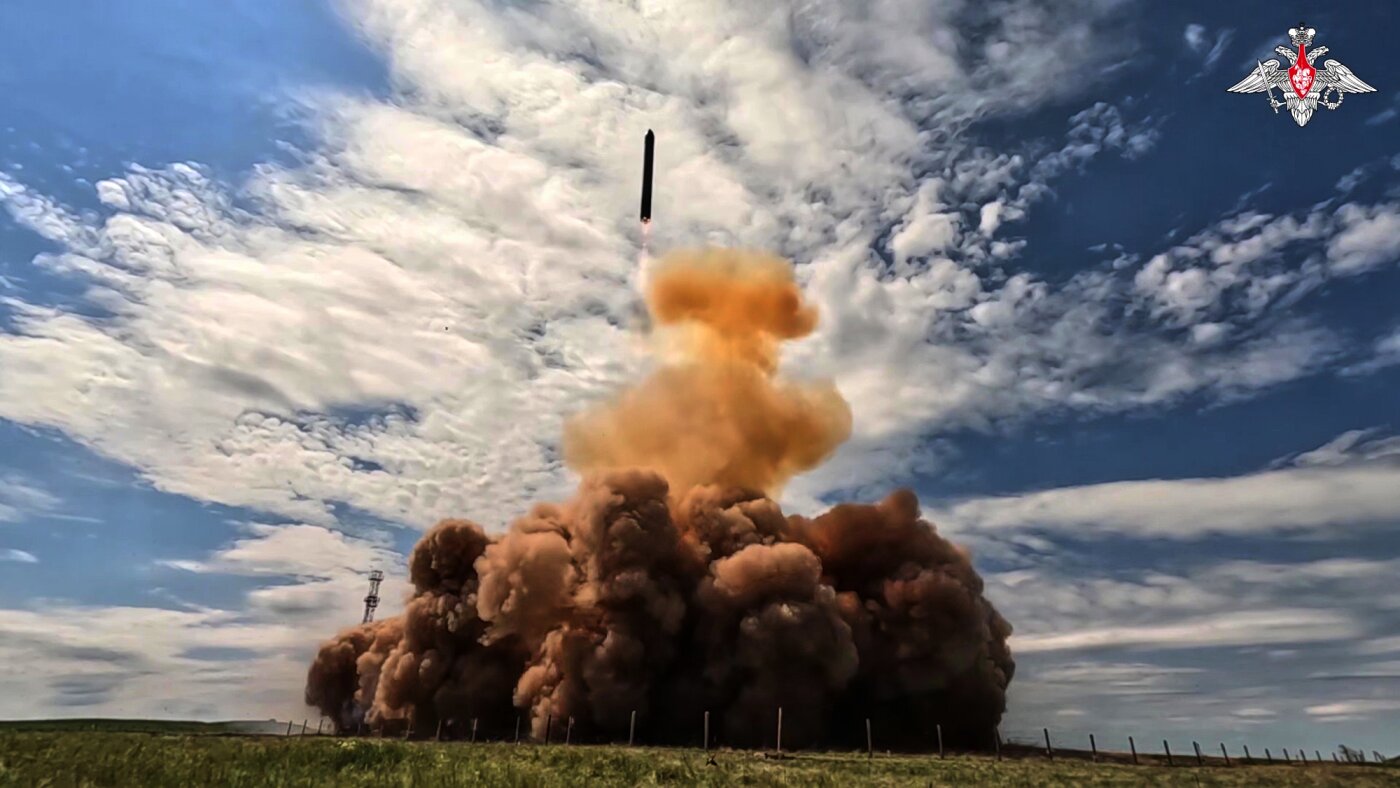
On May 12, 2026, Russian state media and officials reported a test launch of the RS-28 Sarmat intercontinental ballistic missile. President Vladimir Putin publicly hailed the test and said the Sarmat would enter combat service by the end of the year. Putin described the missile as the world’s most powerful and said its combined warhead yield exceeds that of Western counterparts; he also asserted improved precision and a range over 35,000 km enabled by suborbital flight. Russian officials say the Sarmat is intended to replace about 40 Soviet-era Voyevoda missiles. The missile’s development began in 2011; prior public reports note one earlier successful test and a reported abortive test in 2024 that involved a large explosion. The launch was presented as part of a broader Russian modernization of its nuclear triad, alongside other systems Russia has announced or deployed (Avangard hypersonic glide vehicle, Oreshnik intermediate-range missile, Poseidon underwater drone, Burevestnik nuclear-powered cruise missile). The article notes Russia’s modernization has spurred U.S. modernization of its own forces and that the last remaining U.S.-Russia nuclear arms pact expired in February 2021, leaving no formal caps on the two countries’ arsenals. Russian officials have framed these weapons developments as responses to perceived threats from U.S. missile defenses and as measures to maintain strategic parity. The article also references Russia’s military actions in Ukraine and mentions that Russia has used conventionally-armed versions of some missiles in that conflict.
Biblical Reflection
The article reports a state-led announcement celebrating a new strategic weapon and frames it within the logic of deterrence and great-power competition. From a Christian standpoint, a few truths and concerns are evident. Truths: nations pursue military strength out of concerns for survival and strategic advantage; leaders use displays of capability to reassure domestic audiences and deter rivals. Concerns: rhetoric that glorifies the most destructive weapons can normalize reliance on violence as the primary guarantor of security, and it risks fostering fear, escalation, and dehumanization of opponents. Media coverage that largely repeats leaders’ claims about a weapon’s power without independent verification can amplify prestige narratives and obscure moral and humanitarian implications. Scripture repeatedly calls God’s people away from trust in arms and toward justice, humility, and peacemaking (e.g., Micah’s vision of turning swords into plowshares and Jesus’ blessing on peacemakers). That does not mean being naive about evil or unwise about real threats; prudence and stewardship of citizens’ safety are necessary. But Christians are called to critique worldviews that prioritize domination and mutual annihilation, and to advocate for policies and religious witness that seek restraint, transparency, and avenues to reduce the risk of catastrophic violence. Finally, respond with sober prayerfulness rather than triumphalism or despair: hold leaders accountable, pray for wisdom for statesmen, and pursue practical measures that reduce risk and protect the vulnerable.
Scripture in context
This outlook does not yet include contextual Scripture citations. Do not treat a general biblical theme as an exegetical conclusion.
Faithful Response
No prescribed response is offered. Consider the reflection prompts below in your own church context.
Reflection and Discussion
- 1Whose voices are centered in this coverage (state leaders, military officials, independent experts), and how does that shape what we accept as verified fact versus political rhetoric?
- 2Does the framing of strategic parity and deterrence presuppose that security primarily comes from greater destructive power? How does that assumption compare with the biblical call to seek peace and justice?
- 3What practical steps (diplomacy, arms control, transparency) are missing from the narrative, and why might those not be emphasized by the actors or media involved?
Sources
Reporting links are evidence inputs; Sanctuary News' biblical reflection is commentary.
This outlook currently relies on fewer than two linked sources. Broaden verification before teaching from it.
- 1.Original reportprimary