News Summary
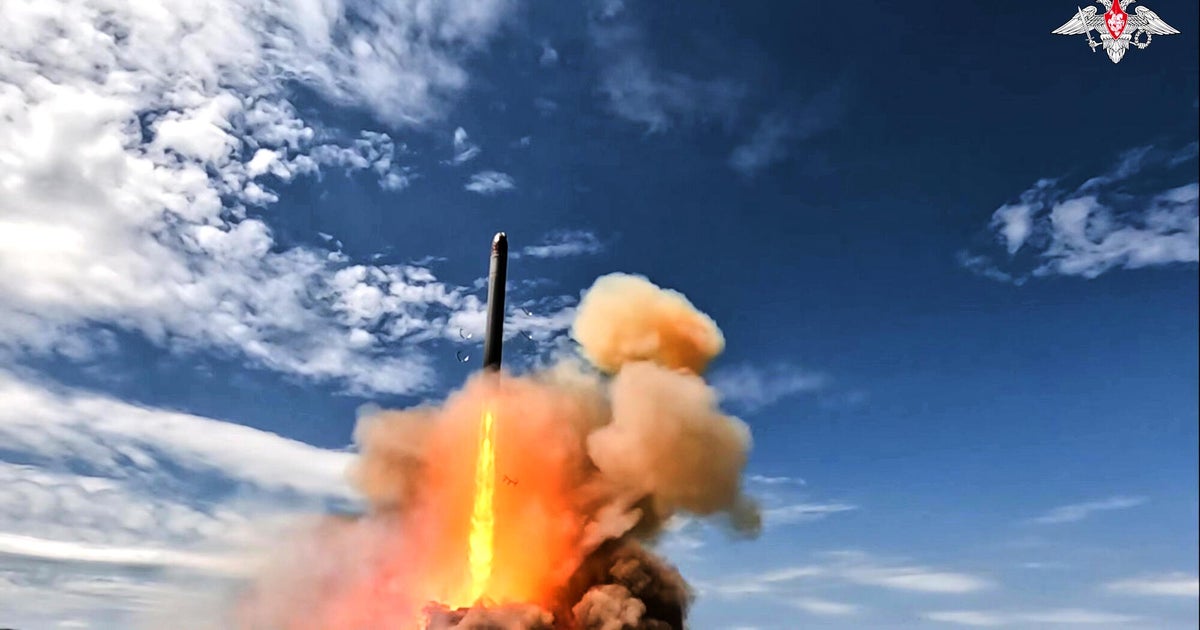
Russia test-fired its new Sarmat intercontinental ballistic missile, a heavy ICBM that Moscow says will replace Soviet-era Voyevoda missiles and enter combat service by the end of the year. President Vladimir Putin described the Sarmat as "the most powerful missile in the world," saying the combined yield of its individually targeted warheads exceeds that of Western counterparts — a claim reported as his assertion. The missile, nicknamed "Satan II" by NATO, has been in development since 2011; before this launch it had one known successful test and an earlier abortive test in 2024 that reportedly caused a large explosion at Plesetsk Cosmodrome. Independent technical details cited in the report include classification as a heavy ICBM, payload capacity up to about 10 tons (per CSIS), and claimed suborbital flight and long range. The report places the test in the context of a broader Russian nuclear modernization program (including Avangard, Oreshnik, Poseidon, and Burevestnik systems) and notes that the last remaining U.S.–Russia nuclear arms pact expired in February, leaving no bilateral limits on their arsenals. The article also cites estimated warhead inventories (roughly 4,300 U.S. and 3,700 Russian warheads per the Federation of American Scientists) and mentions diplomatic steps such as reestablished military communications and a draft U.S.–Ukraine drone defense memorandum.
Biblical Reflection
From a Christian perspective this report raises spiritual and moral concerns without denying geopolitical realities. Leaders often publicize weapons tests for deterrence, domestic legitimacy, and bargaining leverage; Putin's proclamation fits that pattern — strong rhetoric paired with selective technical claims and political timing. The article largely reports both the claim and contextual facts (development history, previous test failures, expert payload and range estimates, and the arms-control backdrop), but readers should note where assertions are presented as the leader's statement rather than independently verified fact. Biblically, the expansion and celebration of instruments built to destroy large populations confronts the biblical affirmations of the sanctity of human life and the call to pursue peace (Psalm 34:14; Matthew 5:9). Christians should be wary of narratives that normalize or glorify destructive power or that foster fear-based trust in human measures for security; at the same time, truthful assessment of threats and prudent advocacy for restraint, arms control, and protection of civilians are consistent with Christian care for neighbor. Pray and act for de-escalation, wise diplomacy, accountability for reckless programs, and policies that reduce rather than increase the risk of mass destruction. Finally, be discerning about media framing: note when language repeats leaders' claims uncritically, and prefer sources that distinguish verified technical assessment from political rhetoric.
Scripture in context
This outlook does not yet include contextual Scripture citations. Do not treat a general biblical theme as an exegetical conclusion.
Faithful Response
No prescribed response is offered. Consider the reflection prompts below in your own church context.
Reflection and Discussion
- 1What purposes — domestic, diplomatic, or deterrent — are served when a leader proclaims a weapons test as "the most powerful," and how should that shape our assessment of the claim?
- 2Where does the article clearly separate verified technical information from the leader's rhetoric, and what additional independent sources would you seek to confirm the missile's capabilities?
- 3How does the expiration of arms-control agreements change the moral responsibilities of states and of Christian citizens who pray for peace and advocate for policies that protect innocent life?
Sources
Reporting links are evidence inputs; Sanctuary News' biblical reflection is commentary.
This outlook currently relies on fewer than two linked sources. Broaden verification before teaching from it.
- 1.Original reportprimary