News Summary
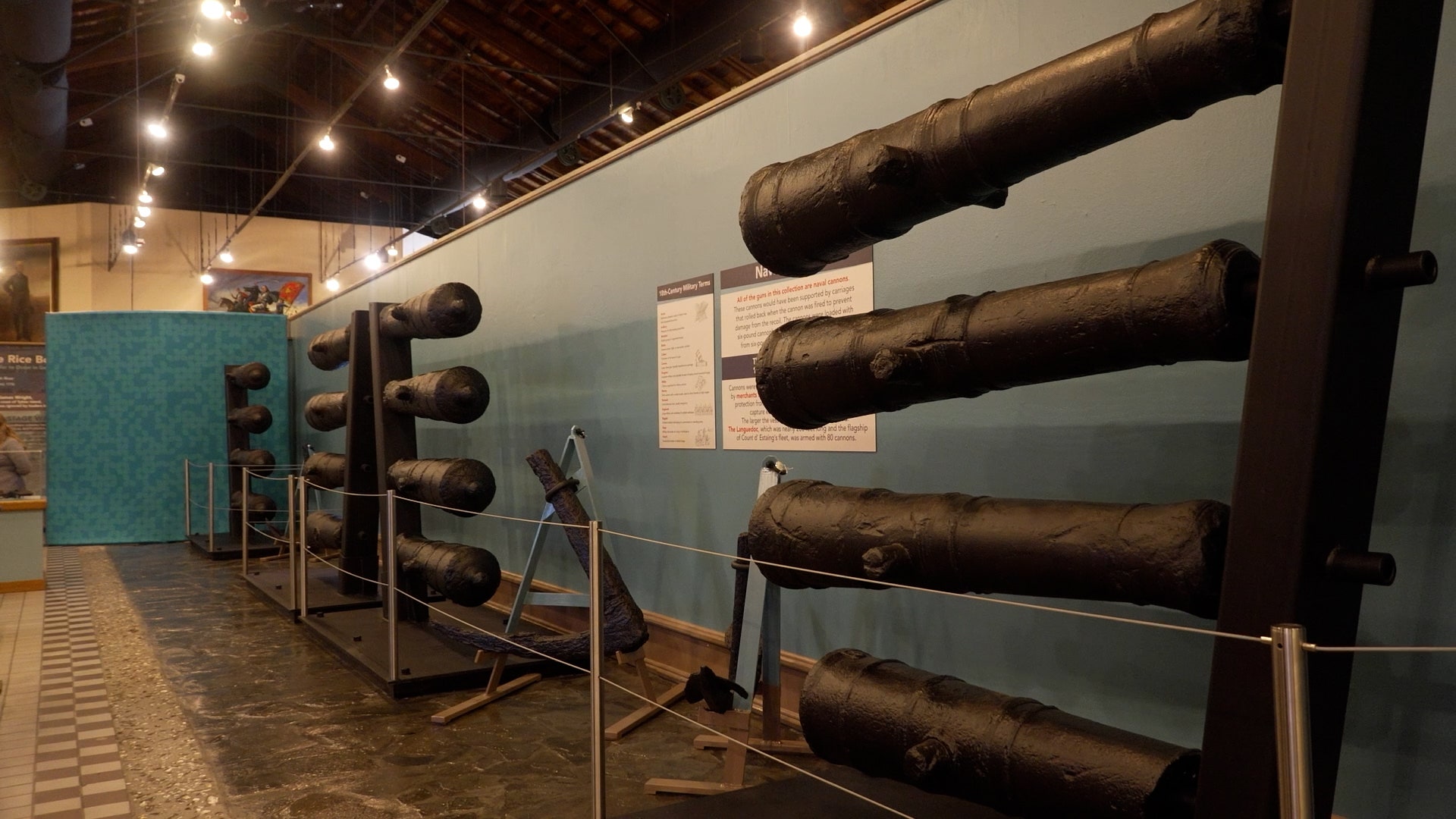
In 2021 a U.S. Army Corps of Engineers dredging crew recovered 19 cannons and about a dozen small artifacts from the Savannah River. Conservators determined the artillery dated to the 18th century and likely sank when British forces scuttled ships to block the French fleet shortly before the 1779 Siege of Savannah. Many of the cannons still contained cannonballs and powder charges. Seventeen of the cannons underwent conservation, including long-term electrochemical desalination and finishing treatments at a Texas A&M lab; two were left unrestored for comparison. All 19 are now on permanent display in a new exhibit, “Loyalists & Liberty: Savannah in the American Revolution,” at the Savannah History Museum timed for America’s 250th anniversary. The exhibit frames Savannah’s revolutionary history through five figures, including Indigenous people, free and enslaved people, women, and children. Nora Fleming Lee of the Coastal Heritage Society provided details about the find and conservation process; the article notes the nearby Battle of Savannah site and that the 1779 battle had large casualties.
Biblical Reflection
The discovery and conservation of these cannons are an exercise in stewardship: recovering, preserving, and interpreting material evidence of the past for public education. The article is primarily factual and local in focus, with an added celebratory tone tied to America’s 250th anniversary. It responsibly notes efforts to broaden the narrative by highlighting Indigenous, enslaved, and other less-heard perspectives, which aligns with a more truthful and just retelling of history. Christians should welcome sober, honest history-telling that honors facts and gives voice to the marginalized. At the same time, beware of turning artifacts into idols of national pride or using selective stories to sanitize difficult realities. Archaeological interpretation requires humility: objects point to events but do not by themselves settle complex moral and social questions. The preservation work models care for God’s creation of human memory, and thoughtful exhibits can invite repentance, gratitude, and reconciliation when they reckon plainly with injustice.
Scripture in context
This outlook does not yet include contextual Scripture citations. Do not treat a general biblical theme as an exegetical conclusion.
Faithful Response
No prescribed response is offered. Consider the reflection prompts below in your own church context.
Reflection and Discussion
- 1Whose voices are centered in this exhibit, and whose experiences might still be underrepresented or simplified?
- 2Are artifacts being used primarily for celebration or for honest education that confronts injustice and grief?
- 3How does the way we preserve and display the past shape civic identity and responsibility today?
Sources
Reporting links are evidence inputs; Sanctuary News' biblical reflection is commentary.
This outlook currently relies on fewer than two linked sources. Broaden verification before teaching from it.
- 1.Original reportprimary