News Summary
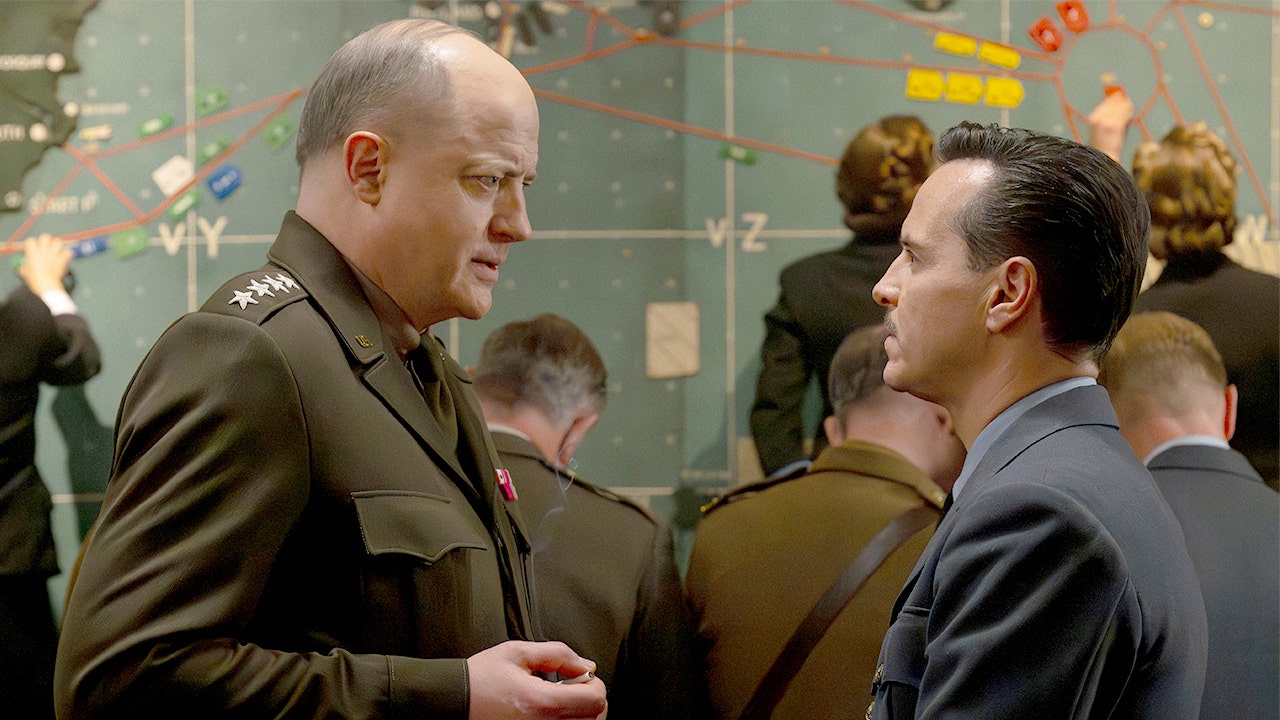
The Fox News Digital piece is a review of Pressure, a 2026 film directed by Anthony Maras and adapted from David Haig's 2014 play. The story centers on the wartime effort to forecast weather for the D-Day invasion of Normandy. British meteorologist Captain James Stagg (Andrew Scott) is recruited to advise General Dwight D. Eisenhower (Brendan Fraser) after Winston Churchill's endorsement. Stagg and the American meteorologist Irving Krick (Chris Messina) must reconcile divergent forecasts within 72 hours to advise Eisenhower whether to proceed or delay the invasion; Stagg predicts storms while Krick forecasts clear weather. Other credited cast members include Kerry Condon as Captain Kay Summersby and Damian Lewis as Bernard Montgomery. The review notes the film's focus on the weight of command given recent losses at the Exercise Tiger rehearsal, praises performances (particularly Scott and Fraser) and the screenplay, and describes the film as a gripping war thriller. Pressure is rated PG-13 for war violence, bloody images, some strong language and smoking, with a running time of 1 hour, 40 minutes. The review was written by Joseph A. Wulfsohn for Fox News Digital and the film was released by Focus Features around the 82nd anniversary of D-Day.
Biblical Reflection
This film highlights a moment when leadership, expertise, and life-or-death decisions intersect. The narrative spotlights themes Christians should notice: the moral burden of leadership, the need to seek and weigh expert counsel, and the humility required to act when certainty is impossible. As a review and as a piece of entertainment, the film necessarily dramatizes historical events; viewers should be aware that cinematic storytelling can compress complexity and elevate particular perspectives (military leaders, certain advisors) while downplaying others (non-military voices, wider Allied contributions). The review itself is promotional in tone—praising performances and screenplay—so approach it as an evaluation rather than definitive history. Spiritually, the story can remind believers of our responsibility to pursue truth (not comfort or convenience), to show mercy toward those under our care, and to pray for wisdom for those who lead. At the same time, be cautious of any nationalism or hero-worship that eclipses sober remembrance of human cost; honoring sacrifice includes honest reckoning, not mere dramatization.
Scripture in context
This outlook does not yet include contextual Scripture citations. Do not treat a general biblical theme as an exegetical conclusion.
Faithful Response
No prescribed response is offered. Consider the reflection prompts below in your own church context.
Reflection and Discussion
- 1When a story centers on a leader's decision, whose voices and data are left out—what perspectives should I look for outside the film to get a fuller historical picture?
- 2Does the film's dramatization encourage thoughtful remembrance of sacrifice, or does it risk turning real suffering into spectacle for entertainment?
- 3How can Christians hold leaders accountable for decisions that affect many, while also praying for and supporting them in the lonely burden of leadership?
Sources
Reporting links are evidence inputs; Sanctuary News' biblical reflection is commentary.
This outlook currently relies on fewer than two linked sources. Broaden verification before teaching from it.
- 1.Original reportprimary