News Summary
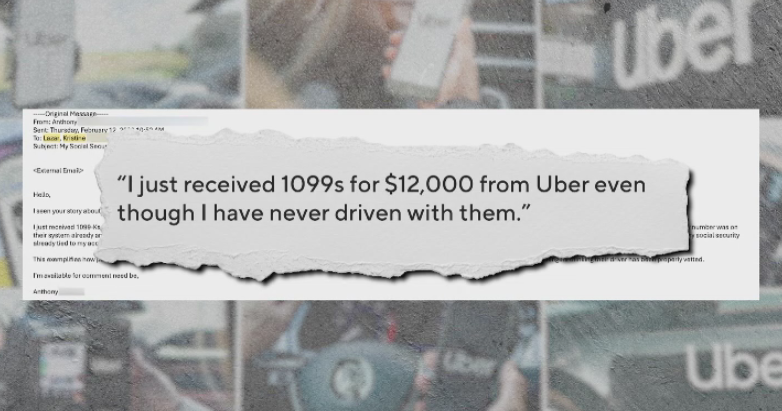
CBS News California Investigates reports that numerous people across the U.S. have received IRS Form 1099s showing income from Uber despite never having signed up to drive. Victims in multiple states say stolen identities — including names, driver's license numbers, and Social Security numbers — were apparently used to create fraudulent Uber driver accounts that passed the company's verification and led to alleged unauthorized driving activity. Many victims learned of the fraud only after receiving tax forms; others report difficulty getting meaningful responses from Uber when they tried to report fraud. Uber told CBS it is investigating reports, permanently banning accounts found to be fraudulent, and issuing corrected 1099s, and that the incidents align with broader identity-theft trends rather than an internal data breach. Consumer attorneys and advocates have said they are receiving hundreds of related complaints and have raised questions about whether passengers can reliably know who is picking them up, given apparent gaps in screening and company responsiveness.
Biblical Reflection
From a Christian perspective this story surfaces several moral and pastoral concerns. First, the deliberate theft of another’s identity is a form of deception and theft that violates the command to love our neighbor and to act honestly (see Ephesians 4:25). Victims suffer not only financial and legal headaches but also an erosion of trust in systems designed to protect public safety. Corporations that provide services touching people’s physical safety bear a moral responsibility to act with diligence, transparency, and compassion toward those harmed. Scripture calls leaders and those in positions of stewardship to seek justice for the vulnerable (Isaiah 1:17) and to be accountable for the safety of those under their charge (Luke 12:48 in principle: greater responsibility with greater knowledge/ability).
This story also calls Christians to a balanced response: denounce the wrongdoing of identity thieves without descending into paranoia about public spaces; advocate for structural reforms and better protections (stronger identity verification, clearer remediation processes, timely communication with victims); and care pastorally for those who are anxious or harmed by the breach of trust. Practically, believers can model neighborly protection — helping victims navigate reporting steps, offering counsel or advocacy, and urging companies and regulators to prioritize truth and safety. The biblical ethic of truth-telling, protection of the vulnerable, and pursuit of justice should inform how Christians respond to both victims and institutions in this case.
Scripture in context
This outlook does not yet include contextual Scripture citations. Do not treat a general biblical theme as an exegetical conclusion.
Faithful Response
No prescribed response is offered. Consider the reflection prompts below in your own church context.
Reflection and Discussion
- 1Who in my community feels exposed or vulnerable when systems meant to protect them fail, and how can I help?
- 2Am I trusting systems or providers without asking for reasonable safeguards, and how should I balance trust with prudence?
- 3How can I advocate—practically and prayerfully—for justice and better protection for victims of identity theft?
Sources
Reporting links are evidence inputs; Sanctuary News' biblical reflection is commentary.
This outlook currently relies on fewer than two linked sources. Broaden verification before teaching from it.
- 1.Original reportprimary