News Summary
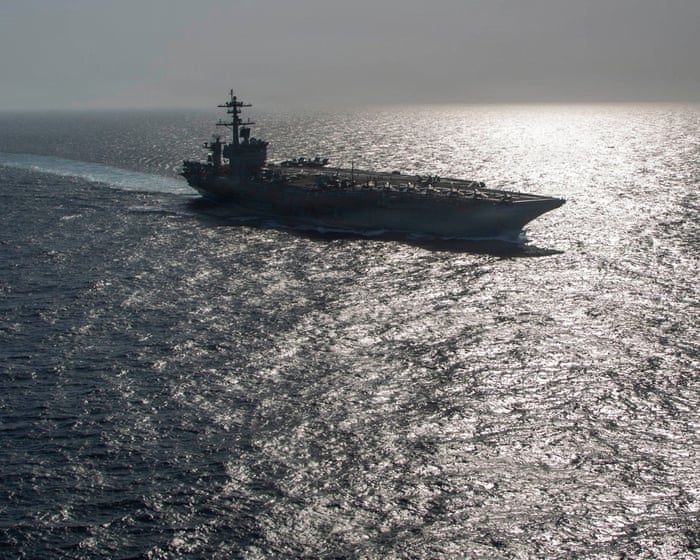
The Guardian reports, citing specialist military outlets Navy Times and Stars and Stripes, that multiple sailors aboard the aircraft carrier USS Abraham Lincoln have attempted to jump overboard during an extended deployment. The reporting describes the carrier as carrying roughly 5,000 sailors and marines and places the ship in its ninth month at sea—about 250 consecutive days without making land. Military families and some members of Congress are reported to be raising alarms about deteriorating living conditions and worsening mental‑health stress. The supplied reporting is attributional (Guardian → Navy Times & Stars and Stripes) and does not include Navy or Department of Defense confirmation, exact counts, dates, outcomes, or on‑the‑record testimony in the excerpt provided.
Source and Framing Analysis
The supplied material is primarily a Guardian article that attributes core claims to two specialist military publications (Navy Times and Stars and Stripes). That chain of attribution is appropriate for sector reporting, but the excerpt contains no direct Navy/DOD statements, no incident reports, and no on‑the‑record sailor testimony. The piece frames the situation as a mounting crisis (words such as 'record', 'breaking point', and 'intensifying mental health crisis' appear in the supplied text) and links the extended deployment to operations related to the war with Iran. Those contextual links may be plausible but are not proven by the excerpt. Important verification gaps remain: counts, dates, outcomes of alleged overboard attempts; primary documentation of the 250‑day figure and its historical comparison; and official Navy responses or corrective actions. Readers should treat the claims as serious and newsworthy but currently unverified by primary official sources in the supplied text.
How sources covered this story
Sanctuary separately assesses reporting quality and alignment with Christian virtues. The virtues assessment considers truthfulness, dignity, compassion, justice, peacemaking, humility, and care for vulnerable people. It does not assess a publisher's faith or reward religious language.
Compare 2 reports
Rank 1
The Guardian: USS Abraham Lincoln sailors tried to jump overboard amid extended deployment – reportsReporting 82/100Virtues 86/100
- Distinctive contribution
- Provides numeric and documentary detail: 5,000 personnel affected, a record 250 consecutive days without making land, and reporting that multiple sailors attempted to jump overboard; cites Navy Times and Stars and Stripes as sources and mentions families and Congress raising alarms.
- Framing
- Presents the situation as a mounting crisis — a record-breaking, prolonged deployment producing mental-health emergencies that have prompted concern from families, lawmakers, and military-focused media.
- Omissions or uncertainty
- The excerpt does not include direct confirmation from the Navy, exact dates/times or outcomes of the reported overboard attempts, nor detailed medical or incident data. It relies on secondary military publications (named) but the supplied text does not quote or link their original reports, which leaves verification of specifics incomplete in the excerpt.
- Why these scores
- The piece improves on specificity by citing other reporting outlets, giving concrete numbers for personnel and days at sea, and identifying actors raising alarms (families, Congress). However, the supplied excerpt still lacks first-hand quotes, official responses, and precise incident verification in the text provided, which modestly limits completeness. Reporting centers on the wellbeing of service members, elevates concerns from families and public servants, and seeks to document systemic strain — aligning well with compassion, care for vulnerable people, and justice (raising attention to potential neglect). The piece avoids sensational language in the excerpt; higher alignment would be supported by including resources, remedies, or direct testimony from affected sailors.
Reporting 78/100Virtues 84/100
- Distinctive contribution
- Reports specific onboard infrastructure problems (water shortages and plumbing issues) and explicitly links prolongation of deployment (nearly nine months) to deteriorating mental health; notes the president publicly downplayed sailors' concerns.
- Framing
- Frames the situation as an intensifying humanitarian and mental-health concern tied to an unusually long deployment, emphasizing strain on sailors and expert/veteran alarm while noting political minimization by a senior leader.
- Omissions or uncertainty
- Excerpt does not provide direct quotes from sailors or naval officials, lacks precise counts or dates for incidents (e.g., number/timing of jump attempts), and gives no operational explanation from the Navy for the extended deployment or reported infrastructure failures. The source of the water/plumbing reports and any verification is not shown in the excerpt.
- Why these scores
- The excerpt supplies concrete, newsworthy details (infrastructure failures, length of deployment) and situates them in context (mental-health concerns). It attributes concerns to veterans and experts but in the supplied text lacks direct sourcing from sailors or official Navy statements and does not quantify incidents; those gaps reduce precision but do not critically undermine the account. The reporting centers on human dignity and care for vulnerable people (sailors under strain), highlights expert concern, and avoids sensationalized or dehumanizing language. The excerpt could increase alignment by adding more voices from affected individuals and concrete steps toward remedy or assistance.
Biblical Reflection
A Christian response centers truth, mercy, justice, peacemaking, humility, dignity, and care for vulnerable neighbors. Truth demands careful discrimination between reported claims and verified facts: insist on official responses and corroborating detail before amplifying specifics. Mercy and justice call the church to immediate pastoral care for sailors and their families, to support chaplaincy and mental‑health resources, and to advocate for institutional accountability where preventable harm is possible. Peacemaking and humility require resisting partisan exploitation of suffering while still pressing responsibly for reforms that protect life and dignity. Practically: prioritize listening, practical assistance, prayerful solidarity, and advocacy for transparent, timely action to protect those aboard the ship.
Scripture in context
- 1Galatians 6:2 — Paul instructs the Christian community to 'bear one another’s burdens' within a community committed to mutual care rather than selfishness. — This call shapes pastoral and civic responses: churches and congregations are summoned to provide practical support, to press for humane institutional conditions, and to accompany suffering people in both prayer and service.
Faithful Response
Pray regularly and specifically for sailors aboard the USS Abraham Lincoln, their families, shipboard leaders, and chaplains.
Contact and coordinate with military chaplaincy programs and established military‑family ministries to identify concrete needs (meals, childcare, counseling referrals, visitation) and to offer non‑partisan support.
Encourage congregations to avoid sharing unverified details; when communicating publicly, attribute claims to the reporting outlets and clearly note what remains unconfirmed.
Respectfully urge elected representatives to request timely transparency from the Navy/DoD and to press for confirmed facts, adequate mental‑health resources, and protective action if necessary.
Provide pastoral care resources (listening teams, grief/trauma referrals, support groups) for military families in your congregation or community.
Reflection and Discussion
- 1How does Scripture’s call to bear one another’s burdens shape our expectations of institutions responsible for the safety and care of those they employ?
- 2In what ways might gratitude for military service obscure the need to insist on humane conditions and adequate mental‑health care?
- 3How can Christians be both supportive of those who serve and prophetic in calling for accountability when reports suggest preventable harm?
Sources
Reporting links are evidence inputs; Sanctuary News' biblical reflection is commentary.
This outlook currently relies on fewer than two linked sources. Broaden verification before teaching from it.
- 1.USS Abraham Lincoln sailors tried to jump overboard amid extended deployment – reportsprimary_reporting