News Summary
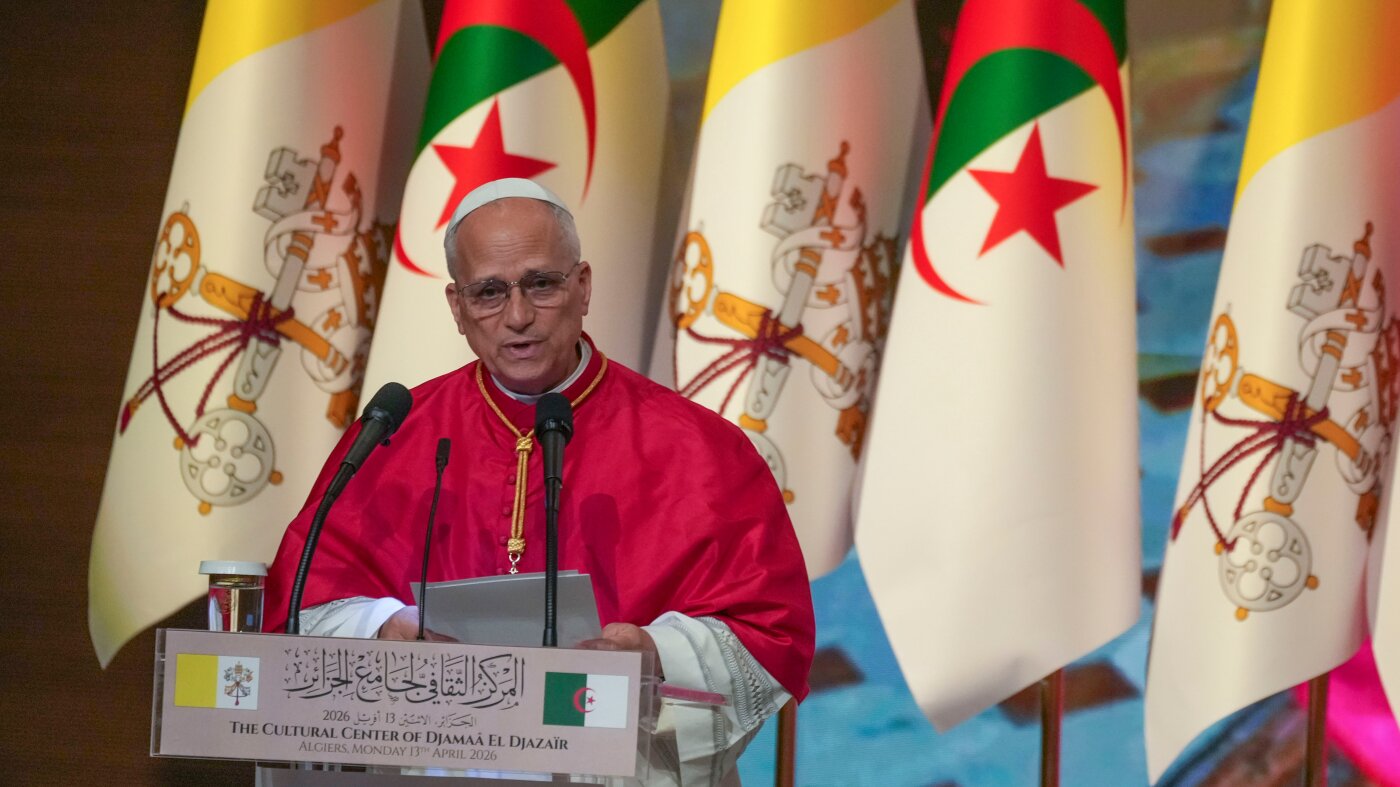
Pope Leo XIV, described in the article as the first American pope, began an 11-day tour of Africa with a stop in Algiers. He told reporters he will continue to speak out against war and to advocate for peace, dialogue and multilateral solutions to global conflicts. At a worldwide peace vigil at St. Peter's Basilica he warned against a “delusion of omnipotence” and urged diplomacy over military escalation. President Trump publicly criticized the pope on Truth Social, arguing the pope should focus on religious leadership and asserting he would not permit Iran to obtain a nuclear weapon; Trump also shared an AI-generated image of himself as Jesus Christ. A Vatican spokesman and Father Antonio Spadaro responded to Trump's posts, accusing political power of trying to delegitimize a moral voice. Separately, three U.S. cardinals told 60 Minutes that the Iran conflict does not meet Catholic just-war criteria. The pope’s visit includes engagements in Algeria, Angola, Equatorial Guinea and Cameroon and is framed in the article as occurring amid a growing rift between the Vatican and the U.S. administration over the Iran conflict.
Biblical Reflection
From a Christian perspective, the core issues here are moral witness, the protection of human life, and how the church and political leaders ought to weigh questions of war and peace. The pope’s public opposition to war and his call for diplomacy reflect central biblical themes—peacemaking, concern for the innocent, and the prophetic task of calling rulers to justice (e.g., Isaiah and the prophetic tradition). At the same time, governing authorities have a responsibility to protect citizens and pursue justice, a role Scripture acknowledges (Romans 13). The article highlights a tension that Christians should evaluate carefully: when the church issues moral critique of state policy, is it exercising faithful prophetic witness or stepping beyond its vocation into partisan politics? Both risks exist. The media framing in this piece emphasizes personalization and conflict (the public clash between a pope and a president), which can obscure the substantive moral questions (nuclear proliferation, civilian suffering, legal and prudential judgments about force). Christians should not reduce the debate to celebrity conflict or tribal loyalty. Instead, discernment requires: (1) attending to the concrete facts and humanitarian consequences of potential military action; (2) recognizing the legitimate role of moral leadership to call for peace and protection of the vulnerable; and (3) holding political leaders accountable while avoiding idolizing them. Practically, Scripture calls believers to be peacemakers who pray for rulers, seek justice, and pursue humility and wisdom in public conversation (James 3:17–18).
Scripture in context
This outlook does not yet include contextual Scripture citations. Do not treat a general biblical theme as an exegetical conclusion.
Faithful Response
No prescribed response is offered. Consider the reflection prompts below in your own church context.
Reflection and Discussion
- 1Is the public dispute being presented more as a personal clash or as a debate over concrete moral and security questions, and how does that framing affect my ability to think biblically about the issues?
- 2How do we balance the biblical call to be peacemakers with the scriptural teaching that governing authorities bear responsibility for public safety and justice (e.g., Romans 13)?
- 3Am I inclined to defend or denounce leaders from a partisan stance, or can I evaluate their words and actions according to consistent Christian principles (sanctity of life, truth, humility, and prudence)?
Sources
Reporting links are evidence inputs; Sanctuary News' biblical reflection is commentary.
This outlook currently relies on fewer than two linked sources. Broaden verification before teaching from it.
- 1.Original reportprimary