News Summary
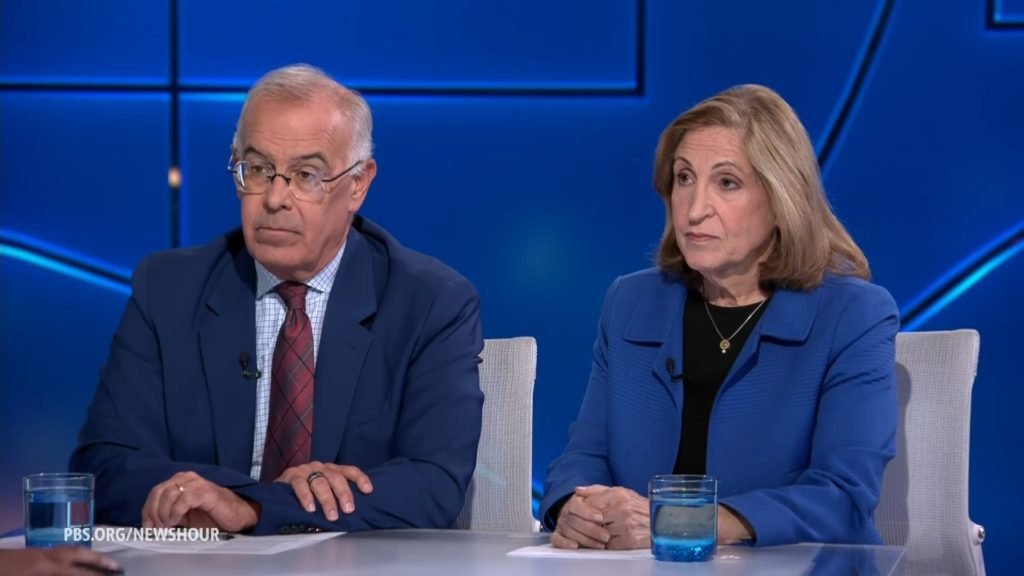
Reported facts: PBS NewsHour hosted a discussion in which David Brooks and Ruth Marcus spoke with Amna Nawaz about recent political developments. Attributed claims: the panelists commented on the economic and human toll of the Iran conflict, warned it could become a 'forever war', discussed a U.S.-Saudi nuclear energy deal, and noted Trump-allied election deniers winning GOP primaries. Uncertainty: the article summarizes commentary and provides no independent data, timelines, or details to substantiate the scale of human/economic costs, the terms of the U.S.-Saudi deal, or which primary contests are referenced.
Source and Framing Analysis
The piece is a short summary of a commentary segment, not investigative reporting. The phrase 'becoming a "forever war"' is a framing choice that signals a particular interpretation (long-term entanglement) rather than presenting empirical proof. Material uncertainty stems from the lack of supporting data in the piece—no casualty counts, economic figures, contract terms, or named primary races are provided—so the reader must treat analytic labels and warnings as opinion that require further sourcing.
Biblical Reflection
This news segment surfaces three concerns that Christians should weigh prayerfully: the human cost of prolonged conflict, the moral and strategic questions around nuclear and diplomatic deals, and the erosion of public trust when election denialism gains traction in party politics. The panelists are commentators offering analysis; their framing—especially the term 'forever war'—is an interpretive judgment that calls attention to long-term consequences but is not itself empirical proof.
From a Christian perspective, we should refuse to normalize lengthy armed conflict and its suffering. Scripture shapes a posture of lament for civilians harmed by war, insistence on justice and accountability for leaders, and active pursuit of peace. Likewise, when political movements traffic in mistrust of democratic processes, Christians are called to defend truth, protect institutions that safeguard neighbors' flourishing, and exercise humility about partisan certainties.
Practically, that means listening to careful reporting, pressing for transparent evidence about human and economic costs, advocating for humanitarian relief, and encouraging leaders toward de-escalation, diplomacy, and policies that protect the vulnerable. It also means resisting the comfort of partisan tribalism and instead seeking the common good—speaking truth in love, holding authorities accountable, and praying for wisdom for those who govern.
Scripture in context
- 1Matthew 5:9 — Part of the Sermon on the Mount, this verse praises 'peacemakers' within a broader teaching on life in God's kingdom that calls followers to righteousness, reconciliation, and a different ethic than worldly retaliation. — It calls Christians to seek and promote peace and reconciliation as a primary posture, advocating for diplomacy, protection of civilians, and policies that minimize suffering rather than celebrate military dominance.
Faithful Response
Pray regularly for civilians affected by the Iran conflict, for policymakers, and for wisdom for diplomats.
Seek reliable, corroborated information before repeating claims; support journalism and institutions that provide verified reporting.
Advocate to elected officials for humanitarian relief, careful oversight of military commitments, and transparent diplomatic agreements.
Support local congregational responses—care for refugees, partner with vetted relief organizations, and provide pastoral care to those affected by conflict or political division.
Reflection and Discussion
- 1How should the call to be peacemakers shape our response to news of prolonged conflict and diplomatic deals involving nuclear technology?
- 2In what ways are we tempted to prioritize partisan advantage over the welfare of civilians, and how can Scripture reorient us?
- 3What practices of discernment—prayer, study, civic engagement—should inform how we evaluate claims about threats to democracy and peace?
Sources
Reporting links are evidence inputs; Sanctuary News' biblical reflection is commentary.
This outlook currently relies on fewer than two linked sources. Broaden verification before teaching from it.
- 1.Brooks and Marcus on the Iran conflict becoming a 'forever war'primary_reporting