News Summary
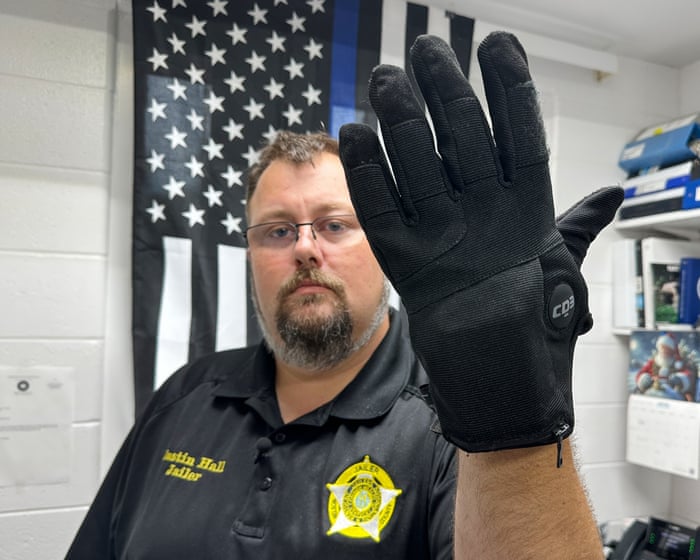
The Guardian reports that Omaha police agreed to stop carrying glove-style devices capable of delivering electric shocks in the halls of most Omaha Public Schools middle and high schools. The Guardian attributes the policy change to earlier Associated Press reporting that U.S. Immigration and Customs Enforcement (ICE) planned to give officers the devices (referred to in reporting as “Gloves” or “generated low output voltage emitters”). The supplied reporting also notes that similar devices have been used in some jails. The supplied excerpt does not include direct on-the-record statements from Omaha police, Omaha Public Schools officials, or ICE, nor does it specify whether the devices were ever used on students, when the policy change took effect, or whether the restriction is permanent or limited to hallways.
Source and Framing Analysis
Primary supplied source: The Guardian article (which itself attributes part of the chain of facts to Associated Press reporting). Framing: the Guardian frames the local policy action (Omaha police agreeing to stop carrying the devices in school halls) as a response to prior AP reporting about ICE’s plans, and highlights the ethical concerns raised by placing shock-capable devices in school settings. Strengths: clear, newsworthy claim about a policy change; attribution provided to AP for the earlier revelation. Limitations and uncertainties in the supplied reporting: no direct quoted statements or primary documents from Omaha Police Department, Omaha Public Schools, or ICE are included in the excerpt; timing, scope, and permanence of the policy change are unspecified; it is not established in the supplied text whether the devices were distributed, actively carried, or ever used on students. Implication for readers: the sequence reported (AP → media scrutiny → local policy change) is plausible and newsworthy, but further primary-source verification is needed. Recommended follow-ups: obtain statements or written policies from Omaha Police and Omaha Public Schools, review the original AP reporting referenced by the Guardian, and seek clarification from ICE about any distribution or plans.
How sources covered this story
Sanctuary separately assesses reporting quality and alignment with Christian virtues. The virtues assessment considers truthfulness, dignity, compassion, justice, peacemaking, humility, and care for vulnerable people. It does not assess a publisher's faith or reward religious language.
Compare 1 reports
Reporting 75/100Virtues 78/100
- Distinctive contribution
- Reports that Omaha police agreed to stop carrying electric shock gloves in the halls of the state's largest public school district; notes the decision followed AP reporting that ICE planned to give officers the devices (referred to as 'Gloves' or 'generated low output voltage emitters').
- Framing
- Straightforward news summary with attribution to the Associated Press; frames the change as a response to earlier AP reporting.
- Omissions or uncertainty
- Excerpt lacks direct quotes or on-the-record statements from Omaha police, the school district, or ICE; does not specify when the policy change took effect, whether gloves had been used on students previously, whether the prohibition is permanent or limited to halls, or whether ICE actually distributed devices versus having a plan. Technical details on how the devices work and legal/regulatory implications are absent.
- Why these scores
- Concise and responsibly attributed (names AP as the source prompting the decision) and conveys a clear, newsworthy fact (policy change). It falls short of higher scores because the excerpt provides limited detail, lacks direct sourcing from the named local actors, and offers little contextual or technical information about the devices or scope/timing of the policy. The report highlights a protective action affecting students (vulnerable people), which aligns with care and compassion. It is neutral in tone, avoids dehumanizing language, and attributes sourcing rather than making unsupported claims. Score not higher because the excerpt does not include explicit attention to dignity, restorative context, or statements showing concern for affected individuals.
Biblical Reflection
This report raises moral and pastoral concerns about the presence of devices designed to inflict pain in spaces meant for learning and the protection of children. Schools should be places of safety, formation, and protection for the vulnerable; introducing or normalizing devices that can shock students conflicts with the call to protect and tend the least powerful among us. The reported sequence—an external agency’s plan, media exposure, and a local policy change—also illustrates how public scrutiny and civic accountability can prevent potential harm. At the same time, avoid jumping to conclusions about intent: the supplied reporting focuses on a decision to stop carrying the devices in school halls rather than documenting widespread use against students. A faithful Christian posture holds compassion for those who fear for children’s safety while practicing discernment and seeking verified facts before assigning motives. Scripture calls for justice, mercy, humility, and care for the vulnerable; those commitments should guide advocacy for transparent policies, nonviolent alternatives, and protection of children.
Scripture in context
- 1Psalm 82 — Psalm 82 judges unjust leaders and calls for defending the weak and needy; it is a prophetic demand for justice from those in authority. — This passage challenges civil authorities and communities to protect vulnerable people—especially children—from abuse of power and to make decisions that uphold fairness and safety rather than domination.
- 2Matthew 25:31-46 — In this teaching, Jesus identifies himself with the hungry, the stranger, the imprisoned, and the vulnerable; the passage calls disciples to practical care as the measure of faithfulness. — Applied here, it presses Christians to evaluate policies by how they treat the least protected—students and minors—and to advocate for measures that demonstrate care rather than coercion.
Faithful Response
Pray for students, families, school staff, police officers, and community leaders affected by this issue and seek verified information before speaking publicly.
Request transparency: contact local school board members and elected officials to ask for written policies on the presence, storage, and permitted use (if any) of force-related devices on campuses, and seek opportunities for public forums where officials can answer questions.
Advocate for nonviolent de-escalation training for school resource officers and independent oversight or review mechanisms for school policing practices.
Provide pastoral care and practical support to families who express concern or anxiety—listen, offer counsel, and connect them with legal or advocacy resources if they suspect harm.
Encourage congregations to model and promote restorative, dignity-preserving approaches to student discipline and school safety that prioritize the well-being of vulnerable young people.
Reflection and Discussion
- 1How does the visible presence—or even the potential presence—of coercive tools in schools shape children’s sense of safety and trust in authority?
- 2In what ways should Christians balance concern for public safety with a priority on protecting vulnerable people from harm?
- 3What forms of community accountability, transparency, and pastoral presence are faithful responses when institutions hold power over children?
Sources
Reporting links are evidence inputs; Sanctuary News' biblical reflection is commentary.
This outlook currently relies on fewer than two linked sources. Broaden verification before teaching from it.
- 1.Nebraska school district asks police to stop using shock gloves on studentsprimary_reporting