News Summary
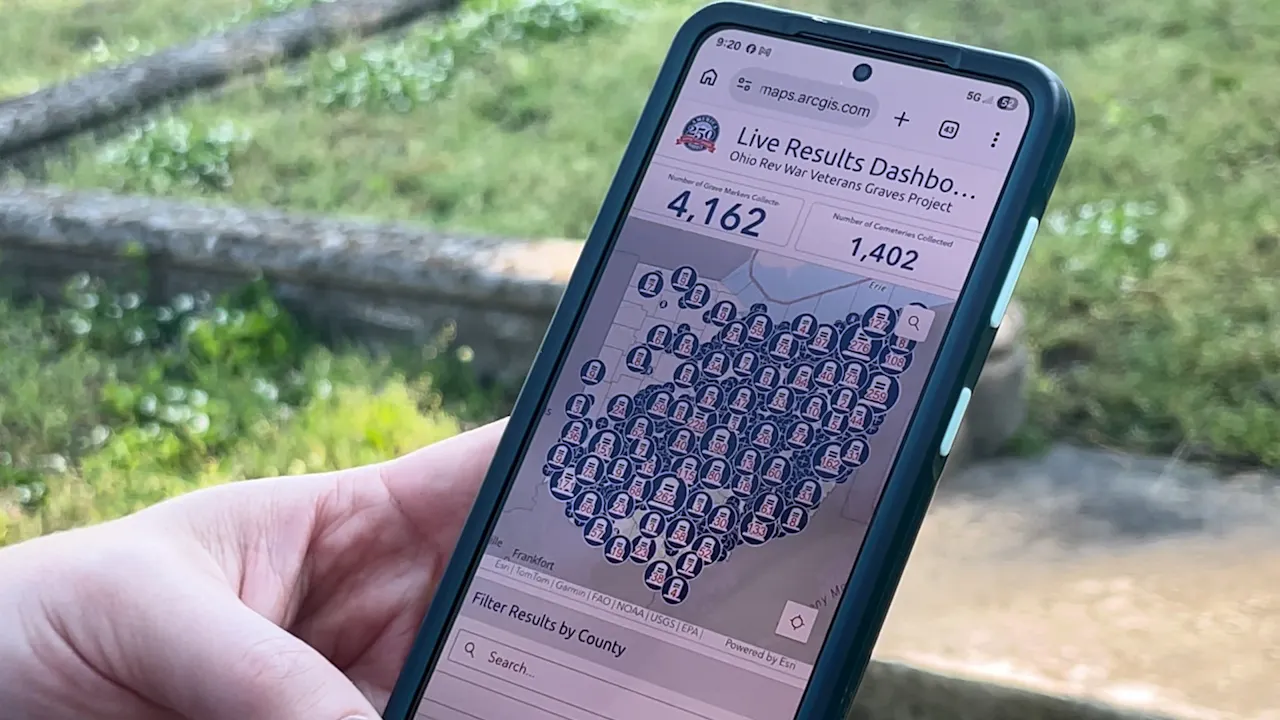
Ohio's State Historic Preservation Office, working with the Ohio History Connection and America250-Ohio, is running the Revolutionary War Veterans Graves Project to locate and document graves of Revolutionary War soldiers buried in Ohio. Historians estimate roughly 7,000 Revolutionary War veterans are buried in the state, many having received parcels of land in Ohio after the war. The public is being asked to use the Survey123 mobile app to search cemeteries and submit information (name, birth and death dates, photos, and other data) for undocumented graves. As of the article, more than 4,100 veterans' graves have been documented through the project; organizers say they may not reach the full 7,000 because some graves are missing or unlocatable. Local cemeteries such as Green Lawn Cemetery have contributed documented entries (nine listed in the app, thirteen identified internally). The project aims to compile a public list and encourage restoration or placement of historical markers or headstones for previously unmarked or forgotten veterans. The public submission deadline mentioned in the article is Memorial Day.
Biblical Reflection
This project models healthy civic memory: seeking the truth about the past, honoring those who served, and restoring dignity to forgotten graves. Scripture commends remembering the righteous and caring for the vulnerable; taking time to document and mark graves is an expression of stewardship and gratitude. At the same time, Christians should watch for two possible excesses. First, patriotic commemoration can slip into idolatry when national memory displaces ultimate hope in Christ; our gratitude for earthly sacrifice should point us toward God rather than uncritical nationalism. Second, the drive to meet numerical goals or promotional deadlines (e.g., a Memorial Day cutoff tied to America250) can risk rushing research and producing errors—something the project itself acknowledges with missing or moved markers. Practically, the project's reliance on crowdsourced reports requires careful verification and humility: honoring the dead rightly requires accuracy, transparency, and willingness to correct mistakes. Overall, the effort resonates with biblical virtues—remembrance, truthfulness, care for the marginalized (here, the forgotten dead)—and invites believers to praise sacrificial service while keeping ultimate trust in God alone.
Scripture in context
This outlook does not yet include contextual Scripture citations. Do not treat a general biblical theme as an exegetical conclusion.
Faithful Response
No prescribed response is offered. Consider the reflection prompts below in your own church context.
Reflection and Discussion
- 1Does the article present commemoration primarily as public celebration or as a sober duty to record truth, and how might that framing shape the way we remember the past?
- 2Where might healthy gratitude for civic sacrifice turn into unexamined nationalism, and how can Christians keep their remembrance oriented toward God?
- 3How should crowdsourced historical projects balance the urgency of deadlines and public engagement with the biblical call to honesty and careful stewardship of truth?
Sources
Reporting links are evidence inputs; Sanctuary News' biblical reflection is commentary.
This outlook currently relies on fewer than two linked sources. Broaden verification before teaching from it.
- 1.Original reportprimary