News Summary
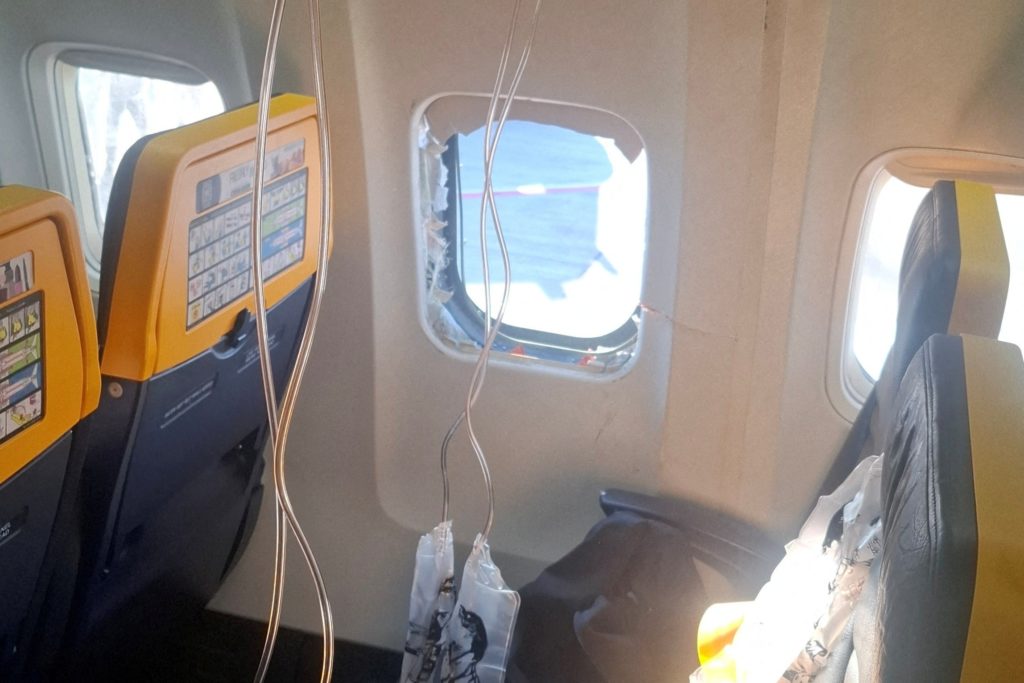
A PBS NewsHour story reports that, according to a preliminary National Transportation Safety Board (NTSB) finding, a fan blade in the right engine of a Boeing 737-800 broke loose and that fragments from the engine shattered a cabin window and damaged the fuselage in multiple places. The PBS headline also reports that "a man's head got sucked into" the broken window; that human-impact detail appears in the headline and is not corroborated by additional sourcing or a linked full NTSB report in the supplied article. The technical attribution (fan-blade failure → fragments breaching a window) is presented as an NTSB preliminary finding; the broader causes of the fan-blade break and details about injuries, flight identifiers, and airline statements remain unreported in the supplied piece.
Source and Framing Analysis
Source: PBS NewsHour. The article cites a preliminary NTSB finding for the mechanical sequence (right-engine fan blade fractured; fragments expelled outward; a cabin window was broken; fuselage sustained other damage). Strengths: the mechanical claim is attributed to an authoritative investigator (NTSB) and described in clear cause-and-effect terms. Limitations and framing issues: the piece is brief, relies on a preliminary report, and does not link the full NTSB report or include airline, operator, or medical updates. The headline contains a graphic human-impact claim (a man's head being sucked into a broken window) that is not clearly sourced in the body text; this creates a mismatch between headline emphasis and the supplied reporting detail. For a fuller, reliable account we need the full NTSB report, official airline statements, medical status of passengers, and corroboration from additional reporting. From a values perspective, the article's technical attribution aligns with careful sourcing, but the headline risks sensationalizing human suffering before full verification—contrary to a posture of compassion and restraint.
How sources covered this story
Sanctuary separately assesses reporting quality and alignment with Christian virtues. The virtues assessment considers truthfulness, dignity, compassion, justice, peacemaking, humility, and care for vulnerable people. It does not assess a publisher's faith or reward religious language.
Compare 1 reports
Reporting 75/100Virtues 75/100
- Distinctive contribution
- Specifies that a right-engine fan blade broke loose and that fragments from it shattered the window and damaged the fuselage, as reported by the NTSB preliminary report.
- Framing
- Presented as a factual finding and explicitly attributed to a preliminary National Transportation Safety Board report; language is technical and neutral, without emotive or speculative phrasing in the supplied excerpt.
- Omissions or uncertainty
- The excerpt is preliminary and does not state whether this is the final cause determination. It omits human impact details (injuries, number of people affected), incident timing/location/flight number, why the fan blade failed (fatigue, maintenance, manufacturing defect), degree of fuselage damage, or any airline/operator responses or corrective actions.
- Why these scores
- The sentence is specific and responsibly attributed to the NTSB, providing a clear mechanical explanation for the breach. As a brief excerpt it is appropriate and factual, but it is limited in scope (single-sentence, preliminary finding) and lacks broader context, quotes, or follow-up details that would raise the score further. The excerpt is factual, non-sensational, and attributes claims to an authoritative source, which aligns with truthfulness and humility. It neither dehumanizes nor exploits suffering. It does not, however, include explicit attention to victims, compassion, or justice-related context, which limits a higher score.
Biblical Reflection
This incident highlights human vulnerability and the public responsibility to steward safety. Christians should pursue the facts patiently (respecting formal investigative processes like the NTSB), act with mercy toward those harmed, and press for accountability that leads to systemic safety improvements. Avoid rushing to judgment or amplifying unverified graphic details. Pursue truth that protects future travelers, offer practical care and pastoral support to victims and those traumatized, and advocate for transparent, just responses from regulators and operators. Hold both the emotional needs of survivors and the technical work of investigators in tension: compassion for people, diligence for truth, and humility about what is not yet known.
Scripture in context
- 1Psalm 46:1–3 — A psalm historically used to address God's presence and help amid sudden danger and upheaval. — These verses remind Christians to seek refuge in God in times of sudden danger and to respond by helping those in distress rather than giving in to panic. The passage encourages offering calm, practical care while trusting God as people work for safety and repair.
Faithful Response
Pray for the injured, their families, crew, first responders, and investigators who seek the facts.
Avoid sharing or amplifying unverified graphic details; prioritize verified reports from investigators and official sources.
Provide tangible support to anyone in your community directly affected (meals, rides, counseling referrals) and compile local resources for trauma care.
Follow the NTSB investigation and airline communications patiently; when systemic failures are identified, advocate for regulatory or industry reforms that improve safety and protect future travelers.
Offer pastoral care and public teaching that acknowledges trauma and fear, brings people toward lament and hope, and models humility before incomplete information.
Reflection and Discussion
- 1How should our commitment to truth shape how we read and share early reports that mix technical findings with dramatic human-impact headlines?
- 2What concrete steps can our congregation take to support neighbors affected by aviation trauma or anxiety?
- 3When investigations reveal preventable causes, how can we hold institutions accountable in ways that pursue both justice and restoration?
- 4How do we care pastorally for people who are tempted to dwell on sensational details rather than the longer work of healing and safety reform?
Sources
Reporting links are evidence inputs; Sanctuary News' biblical reflection is commentary.
This outlook currently relies on fewer than two linked sources. Broaden verification before teaching from it.
- 1.NTSB says broken engine parts shattered Ryanair plane window that a man's head got sucked intoprimary_reporting