News Summary
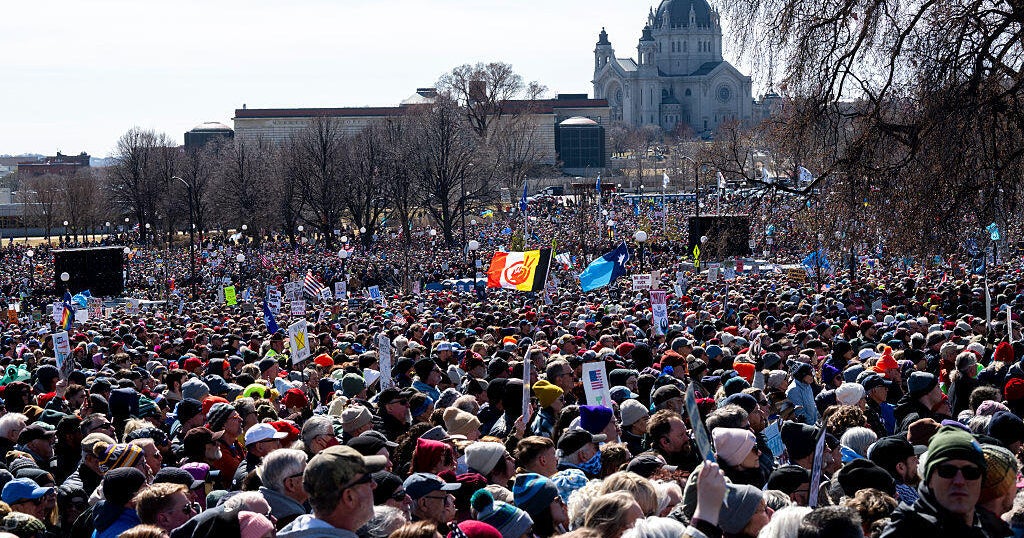
Thousands of people participated Saturday in “No Kings” rallies held across the United States and in multiple countries. Organizers registered more than 3,100 U.S. events and said they expected up to 9 million participants for the day (they cited prior turnout estimates of about 5 million in June and 7 million in October). The Minnesota rally at the St. Paul Capitol was designated the national flagship event; organizers estimated more than 200,000 people attended there. Performers and speakers at St. Paul included Bruce Springsteen (who performed “Streets of Minneapolis”), Joan Baez, Jane Fonda and Sen. Bernie Sanders. Springsteen and others referenced the fatal shootings of Renee Good and Alex Pretti by federal agents in Minnesota and criticized the Trump administration’s immigration enforcement. Protesters in other U.S. locations included New York City, Philadelphia, Chicago, San Diego (police estimated about 40,000), Washington, and rural towns such as Driggs, Idaho. Demonstrations also took place in cities abroad (Rome, London, Paris and others), with participants addressing issues including the war in Iran, U.S. and Israeli attacks on Iran, perceived threats to judicial independence in Italy, the rollback of transgender rights, and opposition to what organizers call authoritarian policies. Organizers such as Indivisible publicized the events; co-executive director Ezra Levin was quoted on international turnout. The White House dismissed the nationwide protests as driven by “leftist funding networks,” and a White House spokesperson criticized media coverage of the events. Rallies included a mix of chants, symbolic acts (for example, upside-down U.S. flags), mockery of authorities, bells and drums, and road closures in several cities.
Biblical Reflection
Christians should approach this story recognising multiple legitimate elements at once: citizens exercising public assembly and protest, political organizers advancing particular agendas, media and officials framing events to serve partisan arguments, and passionate rhetoric that can both clarify grievances and inflame division. Scripture affirms concern for justice and care for the vulnerable (for example, migrants and those harmed by state power), which means Christians can sympathize with peaceful protest as a form of witness. At the same time, the language of totalizing labels (“No Kings,” “regime change at home,” mocking imagery) and mutual demonization on all sides risk replacing measured truth-telling with spectacle and tribal identity. Claims about turnout and motives are political and often contested; organizers’ estimates and officials’ dismissals both aim to shape perception. A Christian reading calls for discernment: affirm the pursuit of justice and peace, resist dehumanizing rhetoric or reveling in mockery, and be wary of accepting single-source claims about scale or motive. Pray for truthful reporting, restraint from violence, and policies formed by wisdom and compassion rather than fear or dominance. Finally, remember that ultimate loyalty belongs to Christ, not any political leader or movement, and that the gospel summons followers to speak truth and love their neighbors even amid civic conflict.
Scripture in context
This outlook does not yet include contextual Scripture citations. Do not treat a general biblical theme as an exegetical conclusion.
Faithful Response
No prescribed response is offered. Consider the reflection prompts below in your own church context.
Reflection and Discussion
- 1Which claims in the article (attendance figures, motives, responsibility) are asserted by organizers or officials and would benefit from independent verification?
- 2How does the rhetoric used by protesters, organizers, and government spokespeople shape public perception more than the underlying policy issues themselves?
- 3In what ways does my first emotional reaction to this story reflect tribal loyalty rather than careful assessment of justice, mercy, and truth?
Sources
Reporting links are evidence inputs; Sanctuary News' biblical reflection is commentary.
This outlook currently relies on fewer than two linked sources. Broaden verification before teaching from it.
- 1.Original reportprimary