News Summary
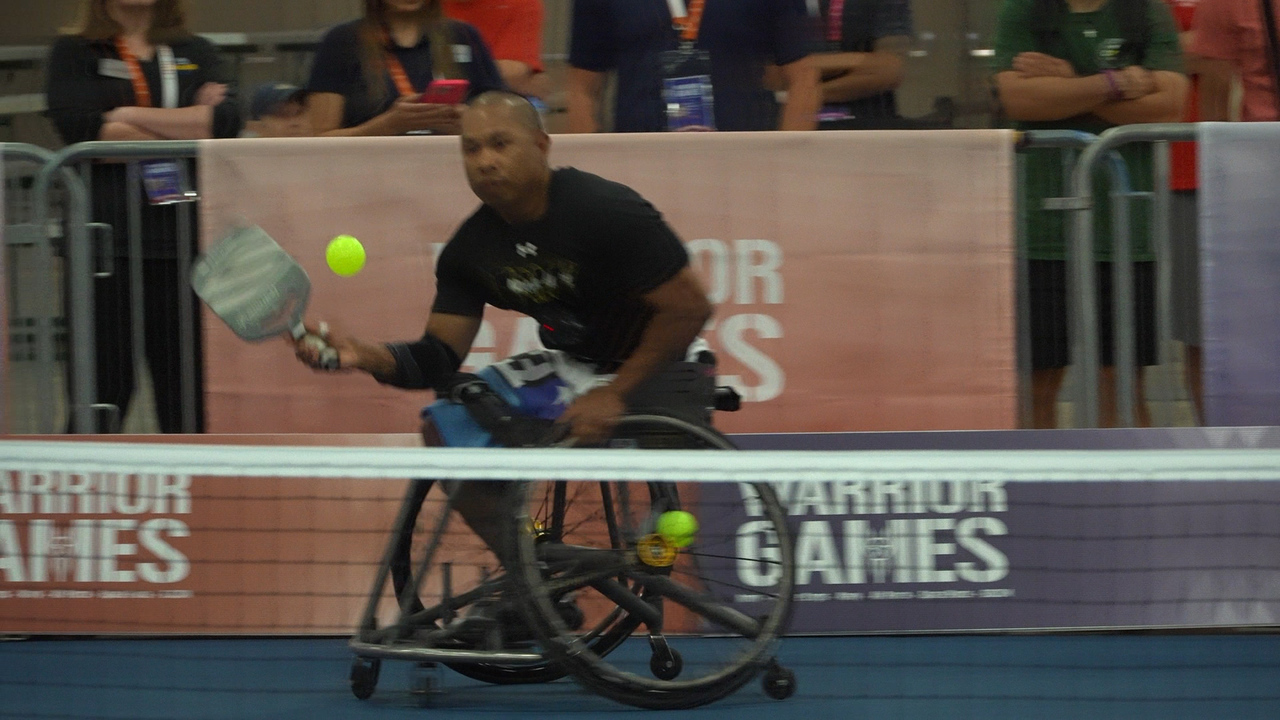
The 2026 Warrior Games, held in San Antonio, Texas, featured nearly 200 service members competing across 12 adaptive sports; all athletes had service-related conditions such as physical injuries, traumatic brain injuries, visual impairments, or PTSD. Army Maj. Jonathan Turnbull—who was seriously wounded in a 2019 ISIS suicide bombing in Manbij, Syria, lost his right eye and suffered severe damage to his left eye, underwent numerous surgeries, was initially given 12 hours to live, and later ran the Army 10-miler nine months after his injury—competed at the Games as a fully blind athlete for U.S. Special Operations Command (SOCOM) and participated in multiple events including archery, cycling, rowing, powerlifting, swimming, and track. The Warrior Games run eight days and include teams from the Army, Marine Corps, Navy/Coast Guard, Air Force/Space Force, and SOCOM; pickleball was added as a new sport in 2026. Director David Paschal characterized the Games as a springboard for participants’ next steps, including potential returns to duty; he also said the Games help show wounded service members what they remain capable of and thereby save lives. Prince Harry visited athletes at the event and organizers plan to send athletes to the Invictus Games in Birmingham next year. The article cites a 2024 VA statistic that about 17 veterans die by suicide each day and frames the Games as part of recovery and community support for injured service members.
Biblical Reflection
This article highlights courageous recovery and community for wounded service members—truthful human-interest reporting that honors sacrifice and resilience. Its intent is largely inspirational: to celebrate adaptive athletics and the personal victories of competitors like Maj. Turnbull and to show rehabilitation pathways. That positive framing is valuable, fostering hope and public appreciation, but it can also understate broader systemic responsibilities: the high veteran suicide rate and the long-term medical, mental health, and social support needs that extend beyond a competition. From a Christian pastoral perspective, the story affirms virtues we should cherish—courage, perseverance, sacrificial service, and compassionate community—but it should also prompt sober attention to justice and neighbor-love: ensuring sustained care, resources, and advocacy for veterans, not only praise for their individual grit. Be mindful of any celebrity or event-focused coverage that risks turning genuine needs into brief feel-good moments without sustained follow-through. Christians are called both to celebrate restored dignity and to press for institutional care that protects the vulnerable who bore the cost of service.
Scripture in context
This outlook does not yet include contextual Scripture citations. Do not treat a general biblical theme as an exegetical conclusion.
Faithful Response
No prescribed response is offered. Consider the reflection prompts below in your own church context.
Reflection and Discussion
- 1Does the article’s inspirational focus obscure the larger, systemic needs—medical, mental-health, and social—that veterans face after injury?
- 2Are we as a society responding with sustained support for veterans, or are we limited to moments of public praise and short-term programs?
- 3How can Christian communities translate admiration for these athletes into practical, ongoing care and advocacy for wounded and struggling veterans?
Sources
Reporting links are evidence inputs; Sanctuary News' biblical reflection is commentary.
This outlook currently relies on fewer than two linked sources. Broaden verification before teaching from it.
- 1.Original reportprimary