News Summary
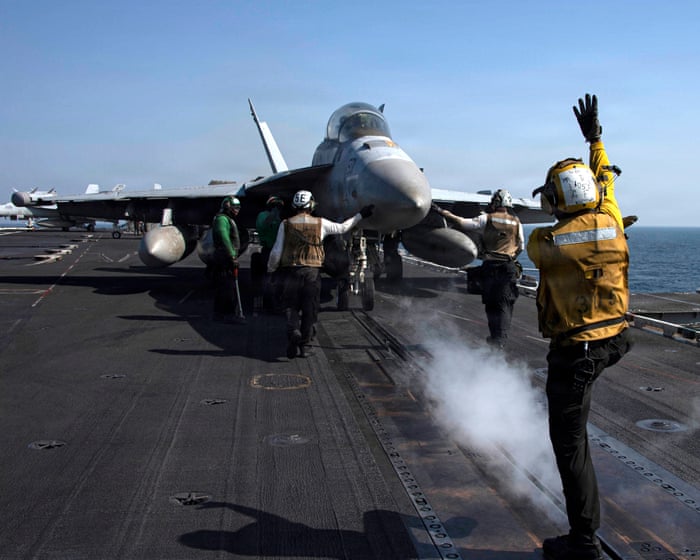
The Guardian reports that it interviewed three anonymous families of sailors serving aboard the USS Abraham Lincoln and the USS Tripoli. Those families say their relatives have been deployed for months amid fighting with Iran and are enduring severe physical and mental stress and poor living conditions. The families told The Guardian they fear retaliation against active-duty sailors if identified, and they criticized former President Donald Trump and Defense Secretary Pete Hegseth for publicly dismissing or downplaying their concerns and for implying those raising the issues were lying. The article does not include on-the-record responses from the Navy or documented corroboration of the conditions described.
Source and Framing Analysis
Source: The Guardian — single reporting package built around three anonymous family interviews. Strengths: gives voice to affected relatives, includes at least one direct quoted question from a sailor’s mother, and explains why anonymity was used (fear of retaliation). Limitations and framing effects: anonymity protects sources but reduces independent verifiability; the piece foregrounds political actors (Donald Trump and Pete Hegseth) and frames their remarks as dismissive according to family accounts, which gives the story a political dimension alongside human-impact reporting. Missing from the article are on-the-record replies from the Navy or from the named officials, medical or personnel records, inspector-general or ombudsman findings, and wider data about how widespread the reported conditions are. Readers should treat the families’ testimony as important firsthand accounts while pressing for documentary or institutional corroboration.
How sources covered this story
Sanctuary separately assesses reporting quality and alignment with Christian virtues. The virtues assessment considers truthfulness, dignity, compassion, justice, peacemaking, humility, and care for vulnerable people. It does not assess a publisher's faith or reward religious language.
Compare 1 reports
Reporting 78/100Virtues 82/100
- Distinctive contribution
- Provides victims' family perspectives and emotional response — including the quoted question from a sailor’s mother — and states families are alarmed about physical and mental stresses on sailors deployed for months on US warships amid the Iran war. It also attributes the families’ fury directly to perceived dismissals by Trump and Hegseth.
- Framing
- Frames the story around families' outrage and the human costs endured by deployed sailors, portraying officials’ comments (Trump and Hegseth) as dismissive of those experiences and prompting accusations of calling families/sailors liars. The lede centers emotional testimony and accountability.
- Omissions or uncertainty
- The excerpt does not identify the families or sailors by name, give specific examples or evidence of the alleged 'extreme pressures and dire conditions,' quote or summarize the exact remarks by Trump or Hegseth being criticized, provide responses from the named officials or the Navy, quantify how widespread the conditions are, or give dates/times for the deployments referenced.
- Why these scores
- The excerpt is concise, uses direct attribution ('The Guardian has talked to three naval families') and an on-the-record quotation, which supports credibility. It responsibly centers first-person accounts. It loses some points because, in the supplied text, it offers few concrete specifics or corroborating detail about the conditions or official statements; however, for a brief news lede the sourcing and attribution shown are solid. The piece gives voice to vulnerable family members and highlights questions of care, dignity, and justice for servicemembers, demonstrating compassion and concern for the vulnerable. It does not dehumanize any party and attributes criticism to families rather than asserting it as uncontested fact. The score reflects constructive emphasis on human dignity while noting the excerpt lacks broader contextual balancing information (official responses, factual detail).
Biblical Reflection
Christian concern centers first on attending to human suffering with both mercy and a demand for truth. The reported distress of sailors and anxiety of their families calls the church to compassionate listening, practical care, and protection for vulnerable members of the military community. At the same time, faithful discipleship requires seeking facts responsibly so advocacy leads to real remedies rather than unverified accusations. Christians should pray for those who serve, support nonpartisan investigations into welfare and retaliation claims, defend the dignity of all parties, and resist using grief as a partisan cudgel. Scriptural wisdom about serving 'the least of these' and modeling humility and servant leadership (e.g., the call to care for the vulnerable and to incarnate Christlike humility) applies: love compels both tender care and courageous pursuit of accountability.
Scripture in context
- 1Matthew 25 (sheep and goats) — contextual reference only — A New Testament teaching pairs care for the vulnerable with the claim that how a community treats its weakest members matters morally and spiritually. — Applied here: communal and institutional care for servicemembers—especially when they are exhausted, injured, or anxious—is morally significant; Christians should advocate for concrete care and listen closely to those who report suffering.
- 2Philippians 2 (Christ’s humility) — contextual reference only — An apostolic exhortation calls believers to humility and to consider others' needs above their own, modeling servant-hearted leadership. — Applied here: leaders and citizens should respond to allegations of hardship with humility, respectful listening, and a willingness to address failures rather than dismiss those who suffer.
Faithful Response
Practical Christian responses include: (1) Attend and listen: create confidential, non-partisan spaces for military families to share concerns without fear of political reprisal. (2) Care concretely: mobilize practical support (meals, childcare, referrals to vetted military family services, counseling resources and chaplain contact). (3) Advocate responsibly: contact congressional representatives, military ombuds, or inspector-general offices requesting welfare checks and transparent reviews focused on servicemembers’ wellbeing; prioritize facts and nonpartisan remedies. (4) Protect the vulnerable: press for safeguards against retaliation and for anonymous reporting channels. (5) Pray without politicizing: pray for sailors, families, investigators, and leaders to have justice, mercy, and wisdom. These steps hold together mercy and truth—serving the suffering while seeking reliable information to secure lasting solutions.
Reflection and Discussion
- 1How can my congregation or small group be a safe place for military families to disclose stress or harm without fear of political judgment?
- 2What steps should we ask of our elected officials or the military chain of command to ensure allegations about conditions and retaliation are investigated transparently and promptly?
- 3Where might partisan loyalties tempt me to dismiss or amplify a claim, and how can I choose to hold both compassion and careful verification in tension?
Sources
Reporting links are evidence inputs; Sanctuary News' biblical reflection is commentary.
This outlook currently relies on fewer than two linked sources. Broaden verification before teaching from it.
- 1.Families of US sailors denounce Trump and Hegseth for ‘dismissing their experiences and calling them liars’primary_reporting