News Summary
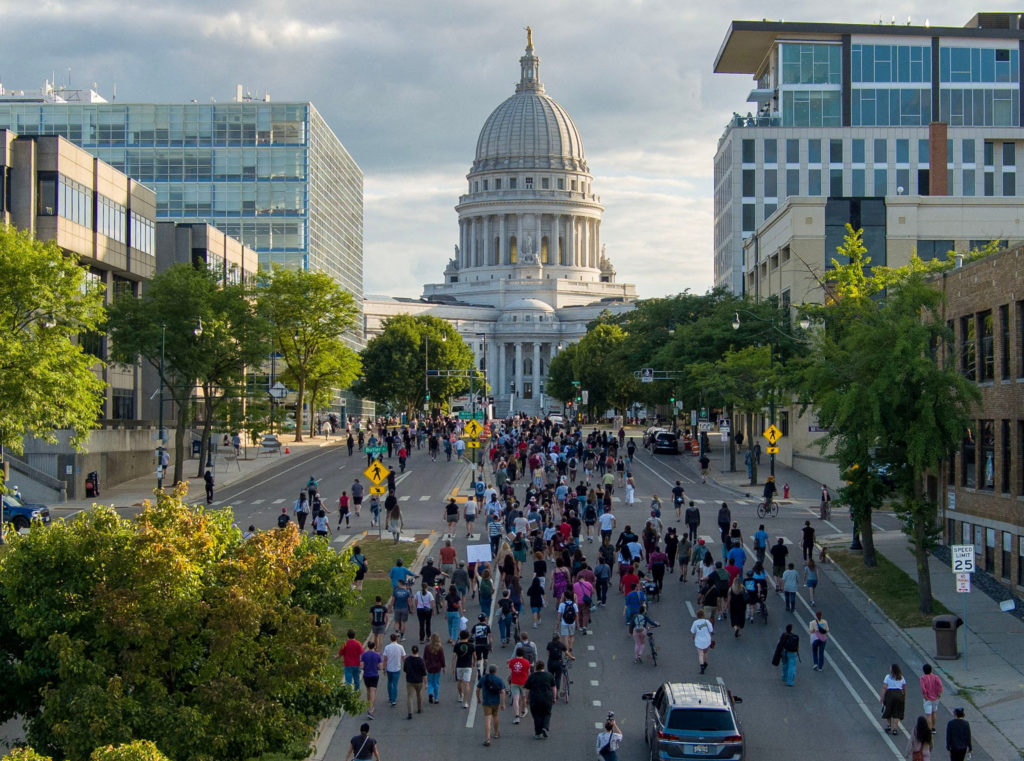
Reported facts: A Madison police officer fatally shot a homeless man who reportedly had a knife. At a subsequent news conference, protesters interrupted, took the police chief's microphone, and argued with attendees seeking investigation details. Attributed claims: Protesters said they wanted more transparency and information about the investigation. Uncertainties: The article does not provide the police account of the encounter, whether body or dash camera footage exists, precise circumstances of the shooting (e.g., distance, warnings, number of shots), the victim's identity or medical/autopsy findings, or any charges or disciplinary steps.
Source and Framing Analysis
The single supplied report is brief and focuses on public reaction rather than investigative detail. Language such as "roils Madison" conveys community unrest but does not supply evidence about the proportionality of force or investigatory facts. The material uncertainty — absence of official account, forensic details, or corroborating sources — limits readers' ability to assess whether the shooting was justified, negligent, or criminal. Because only one source is provided, confirmation and additional context are needed to resolve key factual questions.
Biblical Reflection
Christians should respond to this report with a dual commitment to truth and compassion. The facts reported are limited, so it is prudent to avoid hasty judgments about culpability or justification; at the same time, the death of a vulnerable person — described as homeless — calls for compassion, grief, and insistence on a transparent, impartial investigation. The disruption of a press conference expresses deep public mistrust; believers should acknowledge the pain and anger that drive such protests while also urging that protest remain peaceful and that civic processes be respected so truth can emerge.
The article’s framing emphasizes public unrest but leaves key facts unspecified. Christians can press for accountability without demonizing individuals or groups, holding both law enforcement and civic leaders to standards of justice and mercy. Defending the marginalized, seeking a full accounting of what happened, and praying for healing for the victim’s family, officers involved, and the wider community are appropriate responses grounded in Christlike care.
Finally, the church has a role in tending to the concrete needs made visible by this incident — homelessness, mental-health supports, and community-police relations — even as it advocates for lawful, transparent review of use-of-force incidents. Pursuing both justice and reconciliation reflects biblical balance: love of neighbor requires both seeking truth and offering compassion.
Scripture in context
- 1Isaiah 1:17 — In its immediate literary context Isaiah 1 rebukes social injustice in Judah and urges concrete action: seek justice, rescue the oppressed, and care for those harmed by society’s failures. — This incident calls Christians to insist on fair investigation and protection for the vulnerable while also addressing systemic needs — such as care for homeless neighbors — that too often contribute to cycles of harm.
- 2Romans 12:17-18 — Paul advises early Christian communities on interpersonal ethics: do not repay evil for evil, pursue peace with others when it is possible, and respond to wrongs in ways that reflect Christlike character. — The lines between righteous protest and destructive disruption can be blurred; believers are called to pursue justice but also to seek peace and avoid escalating harm when possible.
Faithful Response
Pray specifically for the victim, his family, the officers involved, investigators, and community leaders.
Advocate for and support transparent, impartial investigations (e.g., request release of body‑cam footage when appropriate) while avoiding spreading unverified accusations.
Engage or volunteer with local ministries that serve homeless people and those struggling with addiction or mental illness to address root causes.
Model and encourage peaceful public witness that insists on accountability without dehumanizing people on either side.
Reflection and Discussion
- 1In what ways does the church's care for the marginalized need to change after incidents that highlight their vulnerability?
- 2How do we balance the demand for immediate answers with the biblical call to be patient and just in our judgments?
- 3When is public protest a faithful witness, and when does it risk undermining the pursuit of truth and reconciliation?
Sources
Reporting links are evidence inputs; Sanctuary News' biblical reflection is commentary.
This outlook currently relies on fewer than two linked sources. Broaden verification before teaching from it.
- 1.Police officer's fatal shooting of man with knife roils Madison, Wisconsinprimary_reporting