News Summary
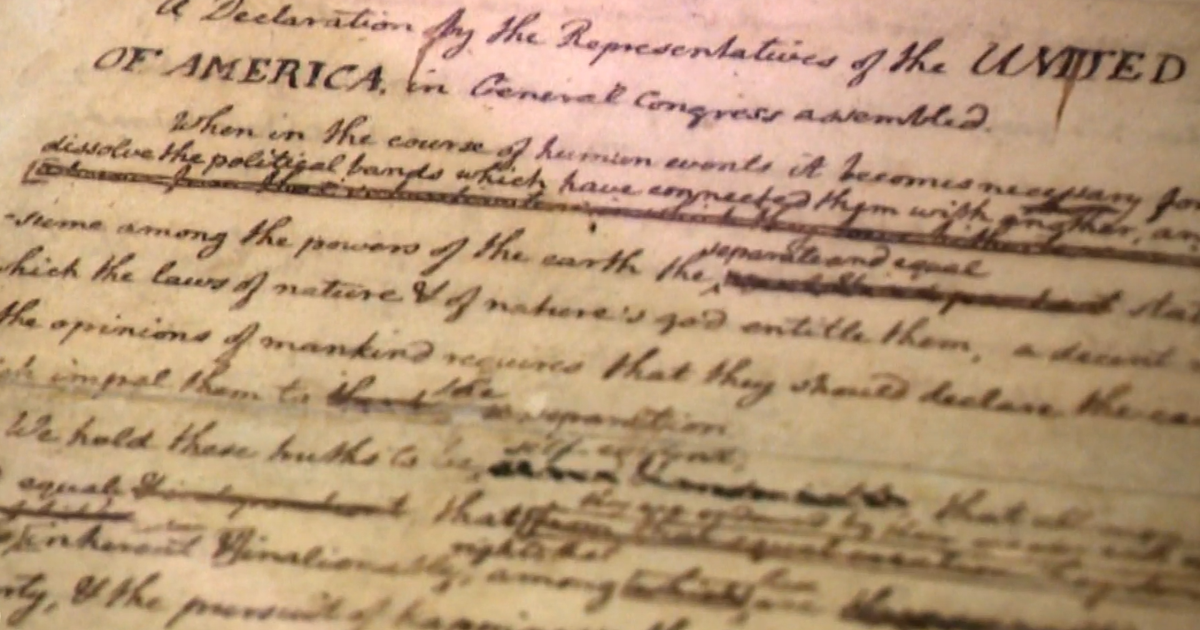
The Library of Congress opened an exhibit titled "The Declaration's Promise" for America's semiquincentennial, running from July 2026 through July 2027. The exhibit includes a rare, fully realized draft of the Declaration of Independence written by Thomas Jefferson that contains edits from Benjamin Franklin and John Adams; curators note changes in wording such as the preference for "self-evident" over "sacred and undeniable" and the substitution of "citizens" for "subjects." Curators and historians acknowledge that phrases like "all men are created equal" originally applied largely to White men and excluded women, enslaved people, Native Americans, and others, but argue the Declaration's language later enabled movements to expand the definition of equality. The exhibit also displays related historical items, including Abraham Lincoln's draft of the Gettysburg Address, a Declaration of Rights read by Susan B. Anthony, and speeches by Dr. Martin Luther King Jr. and John Lewis, framing these artifacts as markers of the nation's evolution on questions of equality and rights. Quotes in the article come from Ryan Reft, lead curator, and Kevin Butterfield, acting chief of the Manuscript Division at the Library of Congress. The report is from CBS News and runs with archival and curator commentary about the documents' textual changes and historical significance.
Biblical Reflection
The article reports a factual cultural event that invites reflection on how words shape communal life. From a Christian perspective, the Declaration’s ideals—life, liberty, pursuit of happiness, consent of the governed—resonate with biblical concerns for human dignity and justice. The reporting fairly notes both the originality and the limits of the Founders’ language: it acknowledges historic exclusions while showing how those words later became tools for justice movements. Christians should welcome the recognition that national documents can point toward truth while remaining incomplete, and resist both idolizing founding texts and dismissing their positive influence. The exhibit’s framing leans toward a progressive narrative of moral development; viewers should be aware this perspective highlights reform and continuity but may understate enduring structural harms or the complex motives of historical actors. Pastoral discernment calls us to hold truth and humility together—honor the good that language can do, confess past wrongs, and courageously pursue neighbor-love and justice in the present.
Scripture in context
This outlook does not yet include contextual Scripture citations. Do not treat a general biblical theme as an exegetical conclusion.
Faithful Response
No prescribed response is offered. Consider the reflection prompts below in your own church context.
Reflection and Discussion
- 1How does the power of foundational language invite both reverence and prophetic correction?
- 2In what ways should Christians balance honoring national goods with confessing historical injustices?
- 3Do we treat civic texts as final authorities or as instruments that point us toward greater fidelity to truth and neighbor-love?
Sources
Reporting links are evidence inputs; Sanctuary News' biblical reflection is commentary.
This outlook currently relies on fewer than two linked sources. Broaden verification before teaching from it.
- 1.Original reportprimary