News Summary
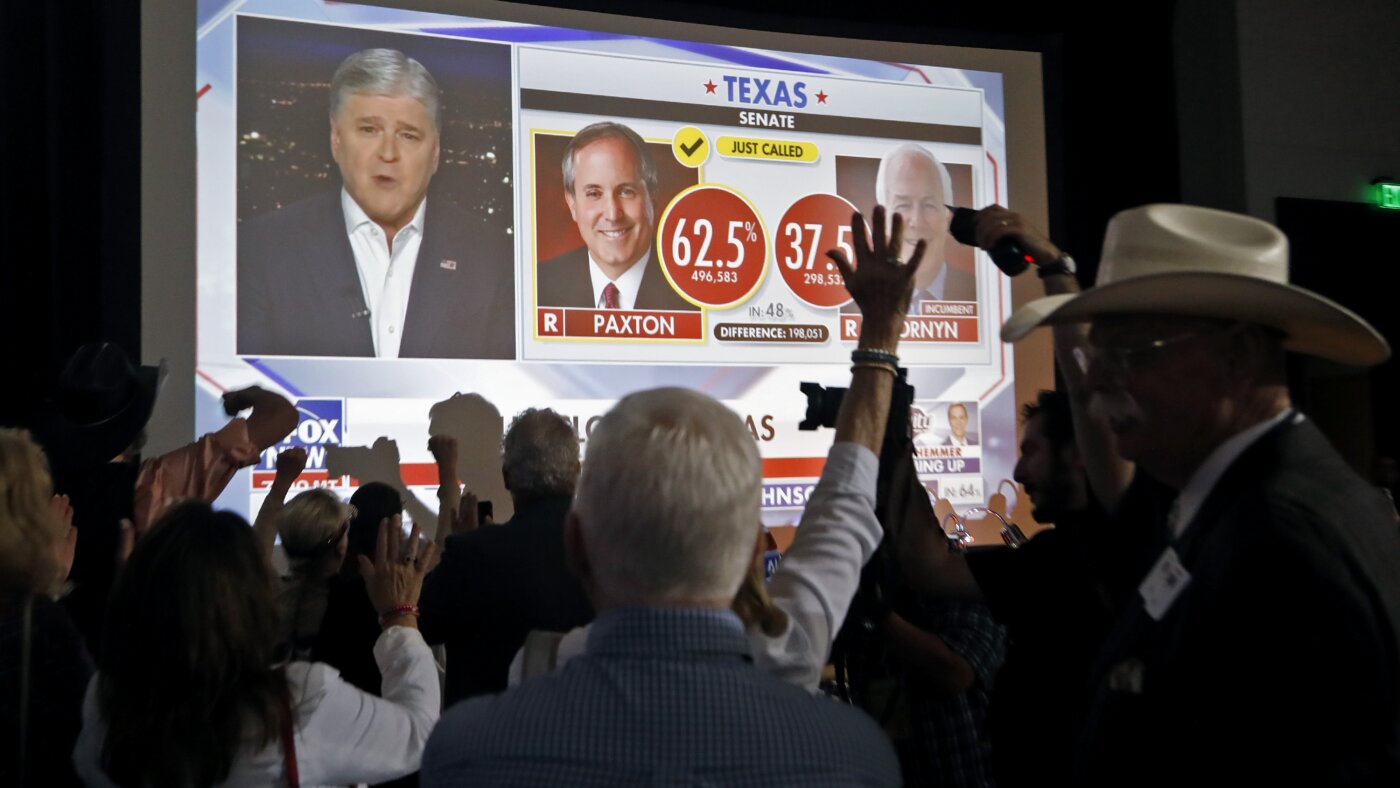
Key developments reported: 1) In the Texas Republican Senate runoff, Attorney General Ken Paxton defeated four-term incumbent Senator John Cornyn by nearly two to one to become the GOP nominee for U.S. Senate; both had advanced to a runoff after failing to secure a majority in the March primary. The Texas primary season was heavily funded, with roughly $100 million spent. 2) The Justice Department under the Trump administration removed or mass-deleted public-facing news releases and information related to Jan. 6 prosecutions from government websites; an NPR review found deletions included materials describing guilty pleas, jury verdicts, prison sentences, and some cases involving assaults on law enforcement. 3) South Carolina lawmakers blocked a proposed redistricting map that would have made all seven congressional districts lean Republican. 4) The Department of Homeland Security awarded a roughly $25 million no-bid contract to BI2 Technologies for iris scanners as DHS expands biometric capabilities amid large-scale immigration enforcement; privacy experts have raised concerns. 5) NPR is launching a series examining the increasing intertwining of religion and government rhetoric and imagery in the current administration, citing examples such as a DHS video quoting gospel language during immigration enforcement. 6) Separately, preparations began for a UFC event on the White House South Lawn scheduled for June 14 as part of national anniversary celebrations. The article reports these developments and cites reviews and commentary from NPR and other sources.
Biblical Reflection
From a Christian perspective, this collection of developments raises questions about truthfulness, transparency, authority, and the proper place of religious language. The removal of public DOJ materials undermines institutional transparency and makes accountability harder; Christians who value honesty and justice should be concerned when records that document legal outcomes are made less accessible. The use of scriptural language by political leaders or agencies to frame policy—for example, invoking gospel phrases alongside enforcement actions—calls for careful discernment: Scripture can be rightly used to comfort and call to repentance, but it can also be appropriated to legitimize force or partisan agendas. Christians should test such uses against the broader moral teaching of Jesus, especially care for the vulnerable and the call to love neighbors. On elections and political contests, the large sums spent and the partisan dynamics shown in Texas and South Carolina remind us that civic processes deeply affect neighbor-love and public life; Christians should advocate for stewardship, truth in campaigning, and systems that protect fair representation. Regarding biometric collection and no-bid contracts, concerns about privacy, consent, and the dignity of persons are rightly raised; Christians should press for policies that respect human dignity and the common good. Overall, the article's framing leans critical of the administration's actions on transparency and the mixing of religion and state; readers should note that these critiques are sourced through specific outlets (e.g., NPR) and evaluate claims against primary documents where possible. Our response as people of faith is to seek truth, defend justice, protect the vulnerable, and resist politicized uses of sacred texts.
Scripture in context
This outlook does not yet include contextual Scripture citations. Do not treat a general biblical theme as an exegetical conclusion.
Faithful Response
No prescribed response is offered. Consider the reflection prompts below in your own church context.
Reflection and Discussion
- 1When religious language is used by political leaders or agencies, who benefits from that framing and what ethical commitments might be obscured?
- 2How does the removal of public legal records affect our ability to seek justice and maintain trust in institutions, and what should Christians expect from systems of accountability?
- 3In debates over security, immigration, and technology, how do we weigh public safety against privacy and the dignity of persons in ways that reflect neighbor-love?
Sources
Reporting links are evidence inputs; Sanctuary News' biblical reflection is commentary.
This outlook currently relies on fewer than two linked sources. Broaden verification before teaching from it.
- 1.Original reportprimary