A little more detail
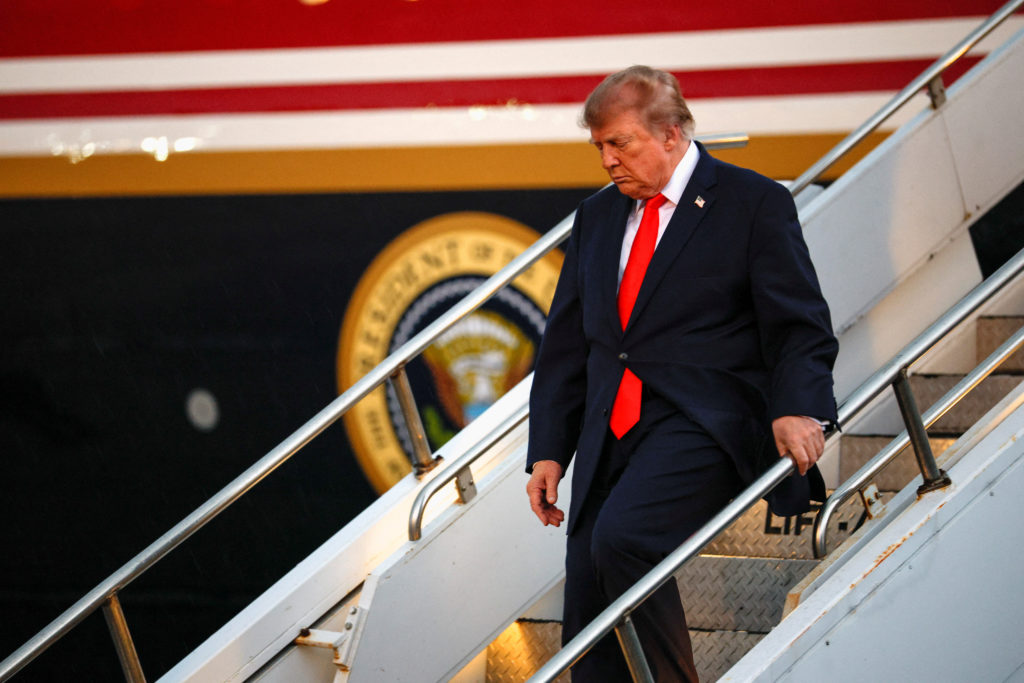
A federal judge ordered the U.S. government to remove three taxpayer-funded Trump administration advertisements from television and social media, concluding the ads appear to have been produced for political or propaganda purposes. One of the ads repeats President Trump’s claim that every American will receive $5,000 if Republicans retain control of Congress. The ruling was reported to have been issued on Friday.
Source and Framing Analysis
Primary reporting for this cluster comes from PBS NewsHour. The piece attributes a specific judicial order to a federal judge and highlights both the number of ads (three) and a concrete claim contained in one ad (the $5,000 promise). The report uses cautious language—saying the ads 'appear to have been made for political or propaganda purposes'—and focuses on accountability for taxpayer-funded messaging. Missing or underreported in that account are key legal and contextual details: the judge’s name and court, the procedural posture of the ruling (temporary injunction vs. final order), the legal statute or standard relied upon, who brought the case, any response or intended appeal from the administration, the exact text and timing/platforms of the ads, and independent fact-checking of the $5,000 claim. Those omissions shape the story’s frame: it emphasizes a court action and misuse of public resources while leaving the legal and evidentiary basis partially opaque.
How sources covered this story
Sanctuary separately assesses reporting quality and alignment with Christian virtues. The virtues assessment considers truthfulness, dignity, compassion, justice, peacemaking, humility, and care for vulnerable people. It does not assess a publisher's faith or reward religious language.
Compare 1 reports
Reporting 78/100Virtues 80/100
- Distinctive contribution
- Specifies that three taxpayer-funded ads were ordered pulled and highlights one ad's specific claim ($5,000 to every American if Republicans keep control of Congress), plus the determination that the ads 'appear to have been made for political or propaganda purposes.'
- Framing
- Presents the story as a court-enforced restriction on allegedly political taxpayer-funded advertising, emphasizing misuse of public funds and singling out a specific, politically charged claim in one ad. Language is cautious ('appear to have been made') and attributes the action to a judge's ruling.
- Omissions or uncertainty
- Does not identify the judge, court, plaintiffs, legal standard or statute relied upon, the exact nature of the order (temporary injunction, permanent removal, scope, or duration), whether the ads were actually false or misleading beyond the quoted claim, whether the administration responded or will appeal, or the dates/platforms where ads ran. 'Appear to have been made' leaves uncertainty about the evidentiary basis for that characterization.
- Why these scores
- Concise, clearly attributed to a judicial ruling and cautious in wording, which is appropriate for a legal-news lede. However, it omits key legal and contextual details (judge/court, legal basis, procedural posture, responses) that would be needed for fuller understanding. The tone avoids sensationalism. The excerpt promotes accountability for use of public resources and truthfulness by reporting a court action; it uses restrained language and avoids dehumanizing or sensational phrasing. It does not explicitly invoke compassion or broader social context, but it does not violate principles of dignity or justice and shows humility by qualifying the ads as appearing political.
Biblical Reflection
Christians should receive this report through the twin commitments to truth and the common good. Stewardship requires careful use of public resources and truthful public speech; courts and other institutions exist to test whether government messaging crosses the line into partisan advocacy financed by taxpayers. At the same time, Christians must practice humility about political conclusions, resist turning legal findings into partisan triumphalism, and protect the dignity of all participants. Responding well means seeking accurate information, advocating for transparent governance, and showing compassion for those affected by political conflict—especially vulnerable neighbors who rely on honest civic institutions.
Scripture in context
- 1 — In the Johannine narrative Jesus speaks about truth's power to free and the spiritual bondage of falsehood. — Christians are called to prize truth that liberates and to resist speech that misleads. Public claims—especially by those using public resources—should be subject to testing, correction, and accountability in service of the common good.
- 2 — The prophet calls the community to act justly, love mercy, and walk humbly with God. — When engaging political speech and institutional oversight, Christians should aim for justice (holding institutions accountable), mercy (caring for those harmed by deception or political strife), and humility (avoiding partisan triumphalism).
Faithful Response
Verify before sharing: check primary sources, court documents, and multiple reputable reports rather than amplifying a single headline.
Pray for wisdom for judges, public officials, journalists, and citizens; ask for courage to act truthfully and for humility in public discourse.
Educate congregations about media literacy and stewardship of public resources—offer nonpartisan resources on evaluating government-funded messaging.
Model charity in civic disagreements: hold leaders accountable without dehumanizing opponents, and prioritize the welfare of vulnerable neighbors affected by political decisions.
Support institutions that enable transparent review of government communications and insist on procedural fairness in carrying out remedies.
Reflection and Discussion
- 1How does the possibility that taxpayer-funded messaging was used for partisan aims affect your trust in government communications?
- 2What practical steps can your congregation take to improve media literacy and civic discernment among members?
- 3How can Christians hold public officials accountable while avoiding partisan maxims that damage neighborly trust?
- 4In what ways should stewardship of public resources shape expectations for government advertising during election seasons?
Sources
Reporting links are evidence inputs; Sanctuary News' biblical reflection is commentary.
This is a developing, single-source report. Details may change as more reporting becomes available.
- 1.Judge orders 3 taxpayer-funded Trump administration ads to be pulled from TV, social mediaprimary_reporting