News Summary
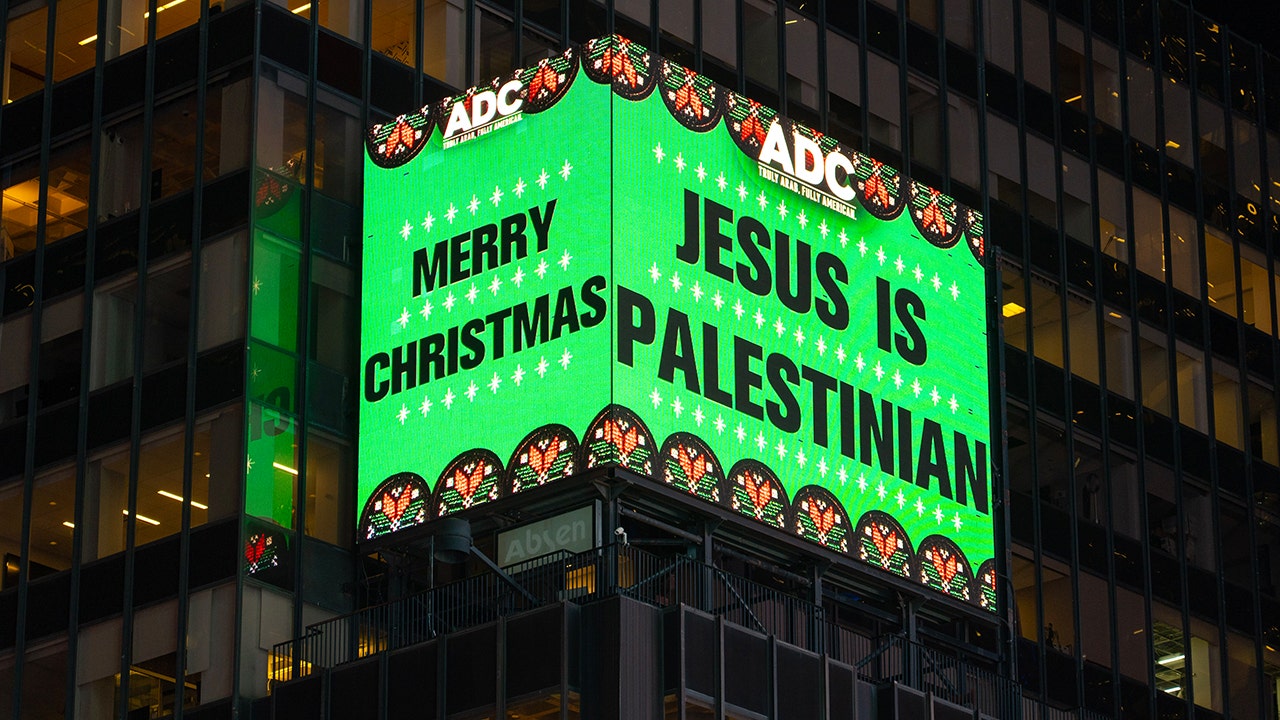
A billboard in New York City's Times Square, sponsored by the American-Arab Discrimination Committee, proclaims, 'Jesus is Palestinian. Merry Christmas,' and cites a verse from the Quran about Jesus. The campaign aims to bring attention to the ongoing conflict between Gaza and Israel and to highlight the plight of Palestinians and Christians in the Holy Land. The group asserts that the birthplace of Jesus is under siege and occupation, and accuses Israel of persecuting Christians in Bethlehem. The modern city of Bethlehem, now in the West Bank, has seen its Christian population decline over decades. The billboard campaign is described as an act of cultural resilience and a means to counter what organizers see as the erasure of Palestinian identity and the suffering of people in the region. The article notes that the State of Palestine was established in 1988, long after Jesus' time, when Bethlehem was part of Judea. The billboard has generated debate, and Israeli officials reportedly placed counter ads nearby.
Biblical Reflection
This news story reflects the complexity and pain found at the intersection of faith, history, culture, and modern geopolitics. Biblically, Jesus was born in Bethlehem of Judea, a Jewish man within a first-century Jewish context (Matthew 2:1, Luke 2:4). The attempt to label Jesus as 'Palestinian' is a modern political statement rather than a historical or scriptural one. While Christians are called to care deeply about justice, peace, and the suffering of all people—including Palestinians and Israelis—it is essential to represent biblical truth accurately. Using Jesus' identity for political messaging risks conflating earthly conflicts with the message of the Gospel, which transcends national and ethnic divides (Galatians 3:28). At the same time, the call to center 'unity and heritage' amid suffering highlights the biblical mandate to seek peace and pursue justice (Micah 6:8, Matthew 5:9). Christians should be wary of narratives that exploit Jesus' identity for political ends but also attentive to the real suffering in the Holy Land, remembering Christ's call to love our neighbors and pray for peace.
Scripture in context
This outlook does not yet include contextual Scripture citations. Do not treat a general biblical theme as an exegetical conclusion.
Faithful Response
No prescribed response is offered. Consider the reflection prompts below in your own church context.
Reflection and Discussion
- 1How can we pursue both truth and compassion when responding to political and religious messaging?
- 2In what ways do our cultural or political biases shape our understanding of Jesus and his message?
- 3How can we actively pray and advocate for peace and justice in places of conflict without distorting the Gospel?
Sources
Reporting links are evidence inputs; Sanctuary News' biblical reflection is commentary.
This outlook currently relies on fewer than two linked sources. Broaden verification before teaching from it.
- 1.Original reportprimary