News Summary
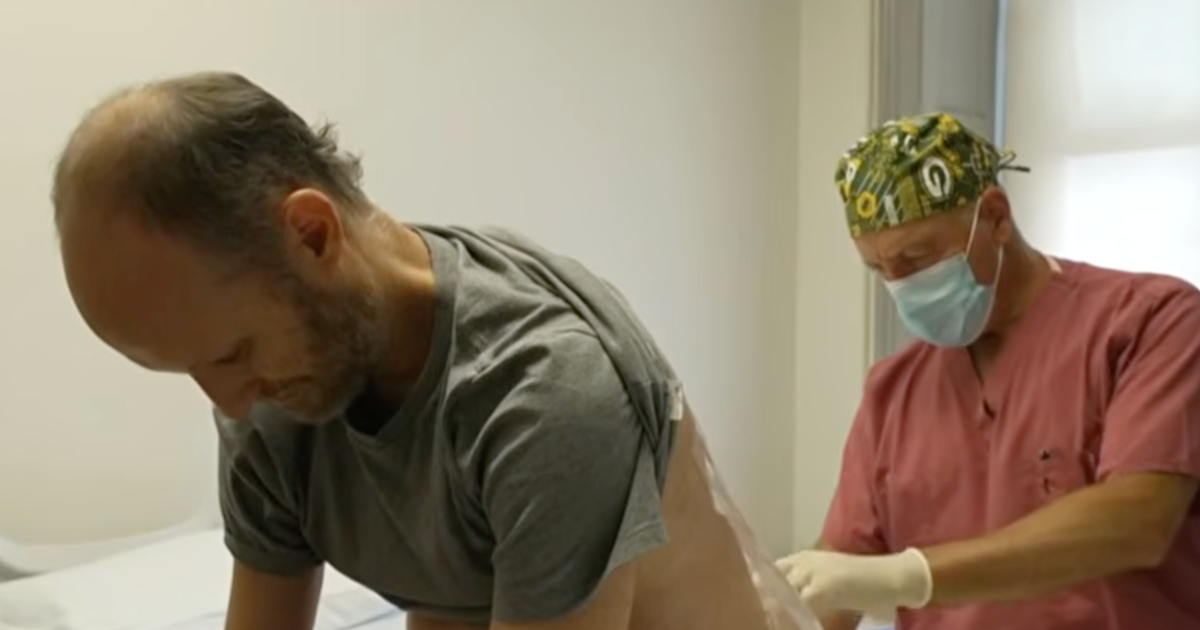
Jeff Vierstra, 41, carries a rare inherited mutation in the FUS gene that has caused ALS deaths in his mother and two sisters. Columbia University neurologist Dr. Neil Shneider offered Vierstra participation in an experimental trial in which he has received spinal (intrathecal) infusions every few months for about three years intended to target and disable the mutated gene. After one year, mild EMG abnormalities previously seen in Vierstra normalized; he has not developed clinical ALS and continues to work and travel. Both of his sisters participated in the Columbia trial but later developed ALS and died; Vierstra said the treatment extended their lives. Dr. Shneider and the Eleanor and Lou Gehrig ALS Center describe the research as promising and are seeking to expand individualized gene-based therapies (initiative contact: silenceals@cumc.columbia.edu). The article notes that 10–15% of ALS cases are genetic, about two-thirds of those are familial, and roughly 35,000 people in the U.S. live with ALS. The trial aims to make certain hereditary forms of ALS manageable and may inform treatments for non-familial cases, but no cure has been established.
Biblical Reflection
This story highlights both Christian hope and careful realism. It presents a faithful account of scientific efforts to prevent a devastating hereditary disease and celebrates the use of human ingenuity — a gift from God — to relieve suffering. The article's tone is cautiously optimistic without making definitive efficacy claims; it acknowledges that Vierstra's sisters died despite treatment and that no cure currently exists. Christians should welcome and pray for medical breakthroughs while keeping expectations measured: single-patient or small-trial outcomes can suggest promise but do not prove general success (watch for survivorship bias and early-report optimism). Ethically, gene-targeting interventions raise important questions about risk, informed consent, accessibility, and stewardship of resources; Christians should advocate compassion for afflicted families and equitable access to successful therapies. Spiritually, the account invites believers to hold both gratitude for scientific advances and dependence on God amid uncertainty, ministering to those who suffer and supporting research that alleviates human pain in ways that honor human dignity.
Scripture in context
This outlook does not yet include contextual Scripture citations. Do not treat a general biblical theme as an exegetical conclusion.
Faithful Response
No prescribed response is offered. Consider the reflection prompts below in your own church context.
Reflection and Discussion
- 1Does the article present the experimental treatment with appropriately measured language, or does it lean toward portraying technological intervention as definitive salvation from suffering?
- 2Are there signs of survivorship or selection bias in the narrative (one patient's positive outcome amid family losses), and how should that shape our evaluation of the therapy's promise?
- 3How should Christian ethics guide our response to gene-based interventions—balancing hope for life-saving science with concerns about risk, equity, and the dignity of those who suffer?
Sources
Reporting links are evidence inputs; Sanctuary News' biblical reflection is commentary.
This outlook currently relies on fewer than two linked sources. Broaden verification before teaching from it.
- 1.Original reportprimary