News Summary
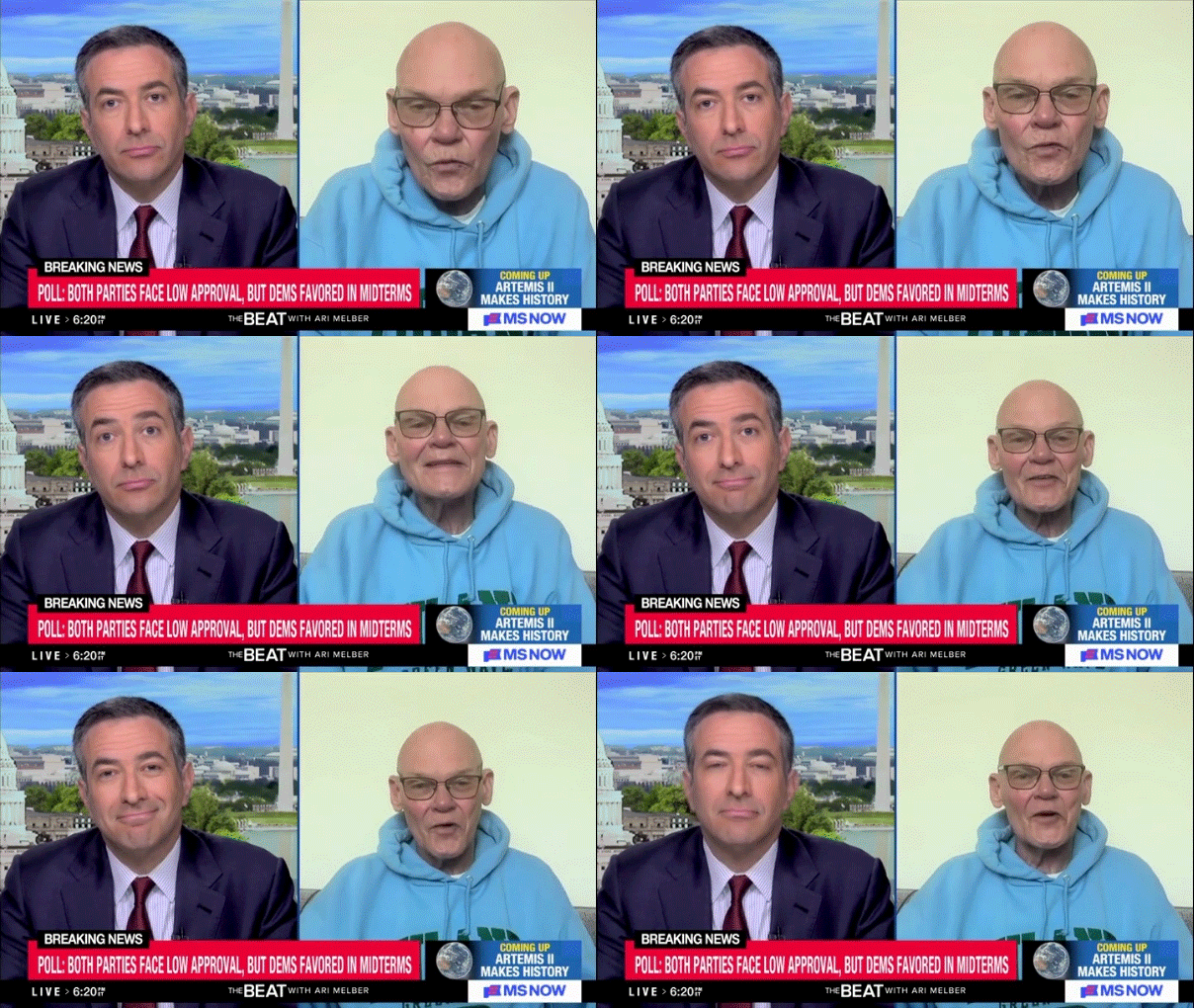
Democratic strategist James Carville told MSNBC host Ari Melber that the primary reason the Democratic Party remains unpopular is that it lost the last presidential election. He argued on-air that party favorability rises when a party wins elections and that the practical remedy for low poll numbers is electoral victory, not policy papers. The Fox News article cites a recent CNN/SSRS poll reporting 28% favorable views of the Democratic Party versus 32% for the Republican Party, and also notes the same poll showed 48% of respondents would support Democrats in the midterms versus 42% for Republicans. The article records Carville saying voters are justified in being harsh after a loss and predicting favorability will recover if Democrats win future races. It also mentions that Democrats won several recent gubernatorial contests and includes Carville’s earlier, profane criticisms of President Donald Trump.
Biblical Reflection
From a Christian perspective, Carville’s core point — that public favorability is strongly shaped by electoral success — is a realistic observation about political dynamics rather than a moral prescription. His emphasis on winning reflects a pragmatic, results-oriented worldview common in partisan politics: success measured by influence and power. Christians should note two complementary concerns. First, watching parties treat winning as the primary goal risks turning political victory into an idol; Scripture repeatedly warns against letting power or success become our ultimate aim (Proverbs and New Testament warnings about pride and ambition). Second, candid political realism can be valuable: acknowledging loss and its consequences can prompt repentance, humility, and better stewardship of civic influence. Media framing matters here. The Fox News piece highlights blunt quotes and profanity, which can amplify polarization and emotion rather than foster substantive debate about policy, character, and the common good. Evaluate such coverage for selective emphasis (choosing provocative lines over context) and seek multiple sources. Ultimately, Christians called to public engagement should balance prudent political strategy with faithfulness to truth, justice, and neighbor-love, resisting the temptation to equate God’s purposes with partisan success.
Scripture in context
This outlook does not yet include contextual Scripture citations. Do not treat a general biblical theme as an exegetical conclusion.
Faithful Response
No prescribed response is offered. Consider the reflection prompts below in your own church context.
Reflection and Discussion
- 1Does the article prioritize pragmatic political success over moral and spiritual accountability, and how should Christians weigh winning versus righteousness in public life?
- 2What elements of the media’s framing (choice of quotes, emphasis on profanity, selection of poll data) might shape readers’ emotions more than their understanding, and how can I check broader context?
- 3How can believers engage in political conversations that seek both effective stewardship and faithful witness, without making victory the highest good?
Sources
Reporting links are evidence inputs; Sanctuary News' biblical reflection is commentary.
This outlook currently relies on fewer than two linked sources. Broaden verification before teaching from it.
- 1.Original reportprimary