News Summary
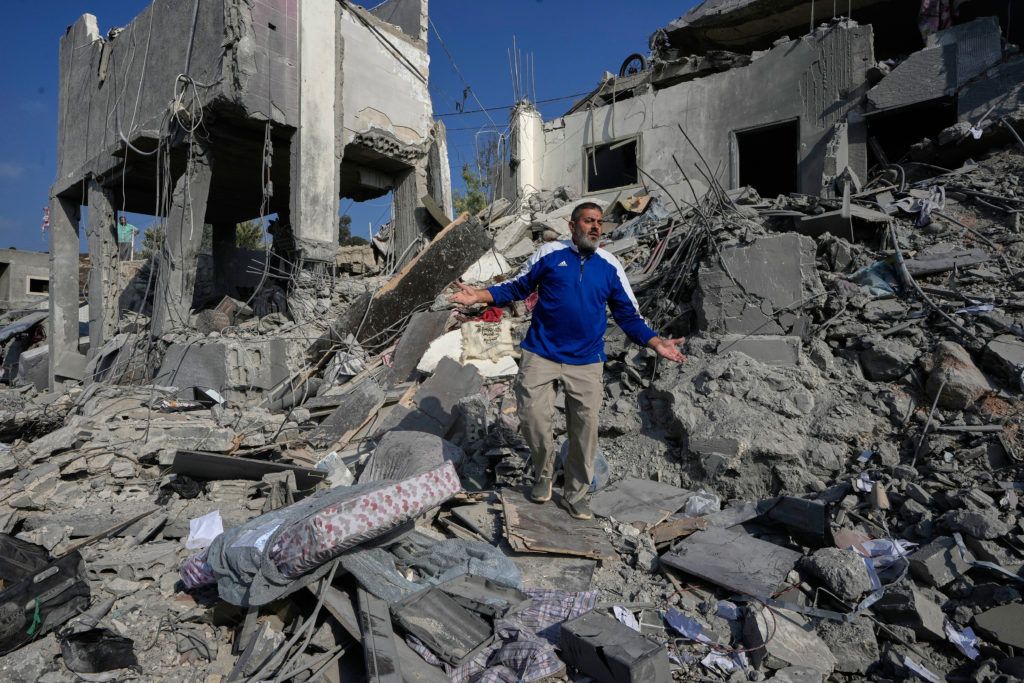
PBS NewsHour reports that Israeli airstrikes in southern Lebanon killed 11 people, attributing the casualty count to the Lebanese Health Ministry. The same piece notes that Israel and the Lebanese government announced a "framework agreement" on June 26 that purportedly links an Israeli withdrawal from southern Lebanon to the disarmament of Hezbollah, described in the report as Iran-backed. The supplied text does not provide independent on-the-ground corroboration of the casualty figures, names or ages of victims, precise timing or locations of the strikes, or details about who announced or will implement the framework agreement.
Source and Framing Analysis
The supplied reporting is single-source in the package provided: PBS NewsHour relays a casualty figure attributed to the Lebanese Health Ministry and introduces a diplomatic element — a cited June 26 "framework agreement" between Israel and Lebanon. Framing is neutral and declarative, but the package compresses two distinct claims (recent deadly airstrikes and a diplomatic framework) without operational detail linking them. Key omissions that affect interpretation include: which officials announced the framework agreement or its text; independent confirmation of the 11 fatalities; the precise timing, targets, and geographic coordinates of the airstrikes; any response from Israeli authorities or Hezbollah; and humanitarian or medical response details. Because the casualty count is attributed rather than independently verified in the supplied text, confidence in the raw report is contingent on the Lebanese Health Ministry source and would be strengthened by matching reporting from other independent outlets or on-the-ground verification.
How sources covered this story
Sanctuary separately assesses reporting quality and alignment with Christian virtues. The virtues assessment considers truthfulness, dignity, compassion, justice, peacemaking, humility, and care for vulnerable people. It does not assess a publisher's faith or reward religious language.
Compare 1 reports
Reporting 72/100Virtues 70/100
- Distinctive contribution
- Specifies a dated (June 26) "framework agreement" between Israel and Lebanon that links an Israeli withdrawal from southern Lebanon to the disarmament of the Iran-backed Hezbollah movement.
- Framing
- Presents the matter as an announced bilateral agreement, using the quoted term "framework agreement" and identifying Hezbollah as an "Iran-backed" militant group; neutral, declarative wording without elaboration or explicit value judgments.
- Omissions or uncertainty
- No attribution to which officials or documents announced the agreement, no text or terms of the agreement, no information on verification, implementation timeline, enforcement mechanisms, Hezbollah's response, or international involvement; context about preceding events or consequences is missing.
- Why these scores
- The excerpt is concise and clear about the core claim and uses a quoted phrase to avoid overstating certainty. However, it lacks specific attribution (who announced it), documentary evidence or sourcing, and contextual details that would improve verifiability and usefulness. Neutral, non-inflammatory language that avoids dehumanization and reports on a potential peacemaking step (withdrawal in exchange for disarmament), which aligns with peacemaking and truthfulness. The excerpt lacks explicit attention to humanitarian impacts, vulnerable people, or restorative-justice context, so it earns a moderate score rather than a higher one.
Biblical Reflection
Reports of civilian deaths in wartime demand both clear-eyed truth-telling and compassionate response. Christians are called to mourn with those who mourn, to pursue justice for the vulnerable, and to press for the protection of noncombatants. The combination of reports about deadly strikes and a diplomatic "framework agreement" underscores that military actions and political processes are interlinked; faithful concern requires advocating for measures that center civilian safety and restoration rather than only strategic advantage. Discernment is needed because brief news items can compress events and attribution; Christians should avoid quick partisan triumphalism, seek verification, extend mercy to those harmed, and support diplomatic and humanitarian efforts that reduce suffering. Scripture-informed peacemaking emphasizes humility, justice, and care for neighbors in the midst of conflict.
Scripture in context
- 1Matthew 5:9 — Jesus pronounces blessings on those who embody kingdom peace-making in the Beatitudes. — This calls Christians to active peacemaking — working for reconciliation and protection of the vulnerable amid cycles of violence rather than celebrating military success without regard for civilian harm.
- 2Romans 12:15 — An exhortation to empathize with others, sharing in both suffering and rejoicing. — We are called to mourn with victims and to resist dehumanizing rhetoric; compassionate response includes prayer, care, and material aid where possible.
- 3Micah 6:8 — A prophetic summons to act justly, love mercy, and walk humbly with God. — In responding to reports of civilian casualties and diplomatic arrangements, Christians should press for justice and mercy in policies and practice, while maintaining humility about partial information and complex causes.
Faithful Response
Pray specifically for the victims, their families, medical and rescue workers, and for negotiators and humanitarian responders seeking de-escalation and access.
Encourage congregations and individuals to give to reputable humanitarian organizations providing medical care, shelter, and emergency assistance to civilians in southern Lebanon; prioritize verified partners on the ground.
Seek verified information before forming or amplifying public judgments; share updates that clearly distinguish reported claims from independently corroborated facts.
Advocate with elected officials and civic institutions for policies that prioritize civilian protection, safe humanitarian corridors, and diplomatic solutions that reduce harm.
Provide pastoral care and safe spaces for members grieving or personally connected to the region; resist rhetoric that dehumanizes any group and emphasize the dignity of all civilians harmed by conflict.
Reflection and Discussion
- 1Which details in the report are directly sourced (e.g., to the Lebanese Health Ministry) and which are presented without clear attribution? How does that affect our confidence in the claims?
- 2How might our own political sympathies shape our immediate reaction to casualty reports, and what practices can help us respond with humility and compassion instead?
- 3What would we want to know next to assess responsibility, scale, and humanitarian needs (timing, locations, victim identities, independent verification, and medical response)?
- 4What concrete steps can our congregation take this week to pray, give, or advocate in ways that protect civilians and promote de-escalation?
Sources
Reporting links are evidence inputs; Sanctuary News' biblical reflection is commentary.
This outlook currently relies on fewer than two linked sources. Broaden verification before teaching from it.
- 1.Israeli airstrikes on southern Lebanon kill 11 people, Health Ministry saysprimary_reporting