News Summary
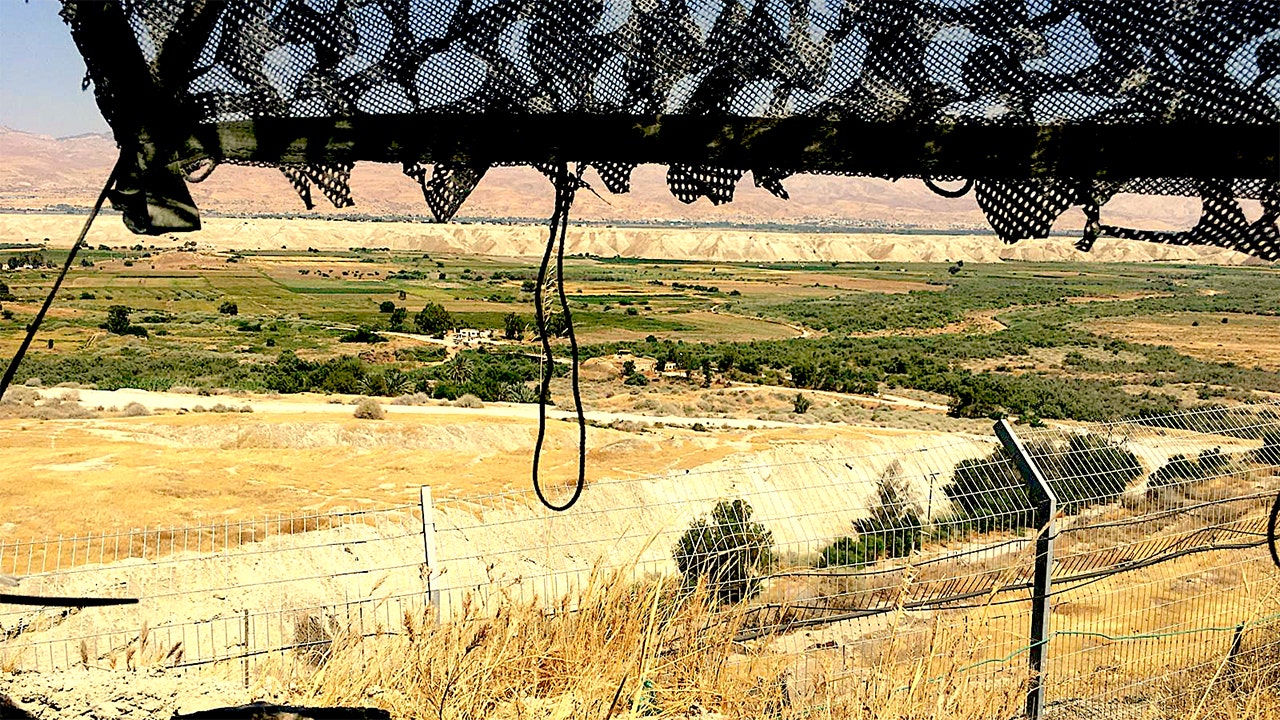
The Israel Defense Forces (IDF) created Division 96 just over a year ago and reactivated 45 previously dormant military bases in the Jordan Valley after the Oct. 7, 2023 Hamas attack. Fox News Digital was given access to several frontline bases. The IDF says Division 96 has thwarted more than 20 smuggling attempts this year involving weapons and narcotics and seized firearms and ammunition. Israel has implemented a three-layer border system in the Jordan Valley consisting of forward outposts, a rebuilt wall, and the Division 96 bases; the area covered is described by the IDF as roughly 250 air miles and about 242.3 miles of territory. The bases inspected are in Area C of the West Bank. Israeli officials characterize the Jordanian border as a “peace border” but say Iran and its allies have sought to destabilize Jordan and create a new front against Israel; the article notes protests in Jordan supportive of Hamas in 2024 and cites past missile strikes fired into the Jordan Valley by forces aligned with Iran. Israeli leaders, including Prime Minister Benjamin Netanyahu, are quoted warning that a diplomatic stalemate leaves the region under a fragile ceasefire and said Iran should not be allowed space to advance its ambitions. The IDF also reports increasing reserve mobilization and the construction of bunkers and other defensive measures to protect civilians and deter illegal crossings and smuggling.
Biblical Reflection
This report emphasizes legitimate security measures taken by a state facing real threats. The desire to protect citizens from terrorism, smuggling, and cross-border attack is consistent with the biblical duty to protect the vulnerable and pursue peace (shalom). At the same time, the article’s framing leans heavily toward military perspectives and threats attributed to external actors, with religious and historical language that can deepen emotional identification with one side. Missing are perspectives from Jordanian officials, Palestinian civilians in the Jordan Valley and Area C, and independent verification of some security claims. Christians should weigh the article’s accounts of danger and the moral imperative to defend innocents against the call to seek justice, mercy, and the dignity of all persons. Security policies are not morally neutral—measures that reduce immediate risk may also impose costs on civilians (restricted movement, economic hardship, displacement). Healthy Christian discernment affirms the need for protection while asking whether responses minimize harm, preserve human dignity, pursue truthful reporting, and keep open paths to diplomacy and reconciliation.
Scripture in context
This outlook does not yet include contextual Scripture citations. Do not treat a general biblical theme as an exegetical conclusion.
Faithful Response
No prescribed response is offered. Consider the reflection prompts below in your own church context.
Reflection and Discussion
- 1Whose voices are missing in this account, and how would including Jordanian and Palestinian civilian perspectives change the picture?
- 2How does the article’s use of biblical and historical imagery shape readers’ emotional alignment, and does that strengthen or weaken careful judgment?
- 3Are the defensive measures described proportionate to the documented threats, and what oversight or humanitarian safeguards are in place to protect noncombatants?
Sources
Reporting links are evidence inputs; Sanctuary News' biblical reflection is commentary.
This outlook currently relies on fewer than two linked sources. Broaden verification before teaching from it.
- 1.Original reportprimary