News Summary
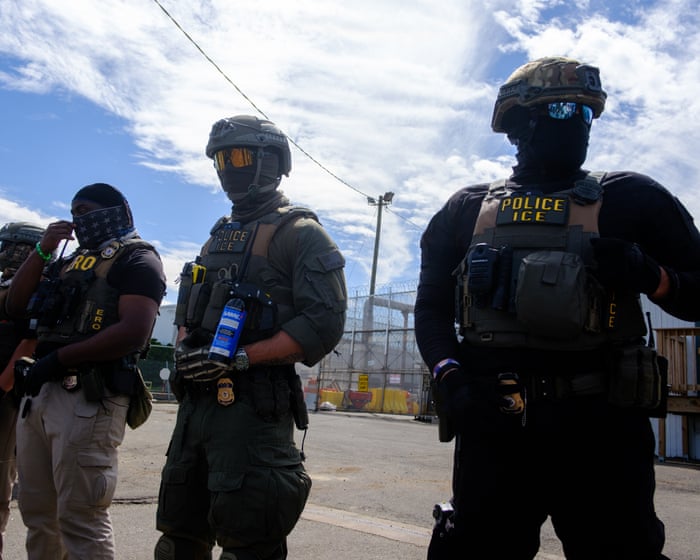
The Guardian reports a proposed $20 million plan to supply U.S. Immigration and Customs Enforcement (ICE) officers with glove-like devices capable of delivering electric shocks. The article foregrounds alarm from civil‑liberties groups and experts and cites litigation and high‑profile local incidents tied to similar devices — including a Kentucky case in which a 43‑year‑old man’s death is alleged in a wrongful‑death suit to have followed repeated shocks. The report does not provide ICE procurement documents, manufacturer or technical specifications, ICE operational policies, or independent medical/investigatory findings confirming causation.
Source and Framing Analysis
The primary source for this cluster is a single Guardian report that frames the story through civil‑liberties concerns and lawsuits. That framing is supported by concrete examples the article cites, but the piece omits several documentary and official details that would materially affect interpretation: procurement status and contract terms, the manufacturer and technical specs of the gloves, ICE statements or rules of engagement, training plans, and independent medical or investigatory confirmation regarding the Kentucky death. The supplied excerpt also contains an internal inconsistency about how many times the Kentucky man was allegedly shocked (27 versus 40 in different clauses), which reduces precision. Readers should treat the Guardian reporting as credible on what it reports about the proposal and the objections it documents, while recognizing key factual gaps and relying on further documentation or official responses before drawing final conclusions.
How sources covered this story
Sanctuary separately assesses reporting quality and alignment with Christian virtues. The virtues assessment considers truthfulness, dignity, compassion, justice, peacemaking, humility, and care for vulnerable people. It does not assess a publisher's faith or reward religious language.
Compare 1 reports
Reporting 60/100Virtues 75/100
- Distinctive contribution
- States a $20m plan to supply ICE with gloves that can deliver electric shocks; records civil-liberties groups' alarm; links the gloves to a Kentucky jail death (a 43-year-old man allegedly shocked dozens of times) and mentions the man's widow suing authorities.
- Framing
- Critical/concerned — the headline ('Alarm over...') and language ('decry', 'alarmed experts', 'drawn scrutiny') emphasize risks and controversy around the plan and foreground civil‑liberties objections.
- Omissions or uncertainty
- The excerpt contains an internal inconsistency (mentions the man allegedly being shocked '27 times' in one clause and '40 times' in another) and does not include attribution for the $20m figure, technical details about the gloves, ICE's response or justification, legal/regulatory context, manufacturer information, dates, or direct sourcing for the cited incidents or lawsuits.
- Why these scores
- The piece is topical and highlights important concerns and a specific case, which is useful. However, the supplied excerpt shows an internal numerical inconsistency about how many times the man was allegedly shocked, lacks clear attributions for key figures (the $20m amount, the incident details), and omits perspectives from ICE or manufacturers. Those problems weaken precision and balance in this excerpt. The excerpt prioritizes attention to potential harm and victims (highlighting a death and a widow's lawsuit) and raises concerns about civil-liberties implications, which aligns with compassion, care for the vulnerable, and truth-telling. The lack of visible effort to present the other party's perspective (ICE/manufacturer) and the internal inconsistency modestly reduce the score.
Biblical Reflection
Christians should weigh legitimate concerns for officer safety against the biblical call to protect human dignity, especially for people with little public voice. Procuring devices linked to severe injury and at least one contested death raises moral questions about means and ends. Our faith insists we not dehumanize neighbors for perceived security. Prudence, humility, and care demand transparent review, strict safeguards, independent oversight, and genuine investment in nonviolent alternatives. Advocate for truth, accountability, and policies that protect both staff and detained people, guided by mercy and justice rather than fear or control.
Scripture in context
- 1Matthew 25:31-46 (Parable of the Sheep and the Goats) — In its literary and historical setting this passage contrasts actions of care and neglect toward vulnerable people—feeding the hungry, visiting the imprisoned—with the final judgment scene; it addresses community duty toward those in need and marginal places in society. — This passage calls Christians to evaluate policies and practices by how they treat the least vulnerable. It pushes readers to ask whether a security measure protects or further marginalizes people who cannot easily speak for themselves.
Faithful Response
Pray for clarity, protection, and justice for both detainees and officers while seeking verified information about the procurement and its oversight.
Request and review public procurement documents, agency policies, and training materials where available; press elected officials and agency leaders for transparency.
Advocate for independent oversight, medical review, and clear, enforceable rules of engagement before any deployment of devices that can inflict pain or injury.
Support or refer people to reputable civil‑rights and legal‑aid organizations that provide assistance to detained people and families pursuing accountability.
Encourage congregations to host informed community forums that include legal aid, civil‑liberties advocates, and law‑enforcement representatives to foster constructive dialogue.
Provide pastoral care to families affected by detention incidents and resist both vilification of officers and normalization of practices that risk cruelty.
Reflection and Discussion
- 1Does the use of force technologies reflect a posture of protection or of control, and how should that distinction shape our judgment?
- 2What evidence and independent safeguards would be sufficient for us to trust that a security tool is being used consistently with mercy and justice?
- 3How should our churches and communities respond when enforcement tools are tied to patterns of harm against people with limited power?
- 4What nonviolent investments (training, de‑escalation, staffing, alternatives to detention) should be prioritized instead of or alongside force technologies?
Sources
Reporting links are evidence inputs; Sanctuary News' biblical reflection is commentary.
This outlook currently relies on fewer than two linked sources. Broaden verification before teaching from it.
- 1.Alarm over $20m plan to supply ICE officers with electric-shock glovesprimary_reporting