News Summary
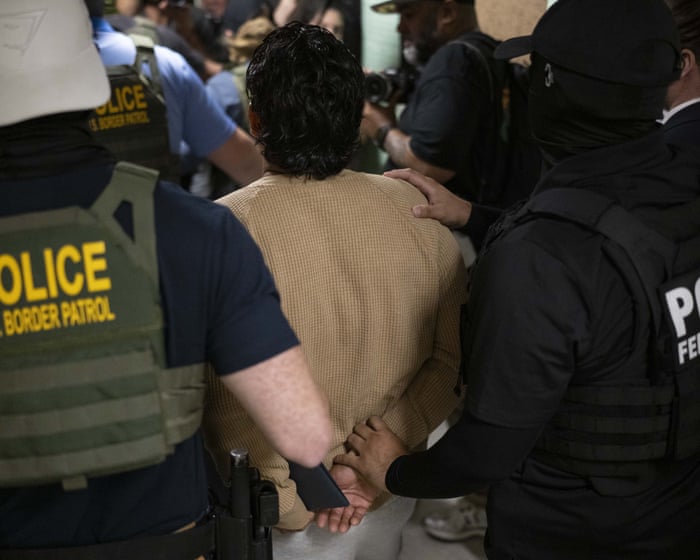
Reported facts: The Guardian reports ICE data showing 43,138 arrests in June 2026 and states this is the highest monthly number since Donald Trump assumed the presidency in January 2017. Attributed claims: The Guardian interprets the number as indicating a quiet, steady ramp-up of enforcement across the country and connects it to administration deportation priorities. Uncertainty: The article does not publish the underlying ICE dataset in full within the story, nor supply a geographic or case-type breakdown that would clarify whether arrests increased uniformly nationwide or in particular programs.
Source and Framing Analysis
The story is based on a single Guardian analysis of ICE-published data; the core numeric claim (43,138 arrests) is presented as derived from government data, but the article's broader interpretation — that enforcement is 'quietly but steadily ramping up across the country' — depends on trend-reading and would be strengthened by additional public breakdowns (geography, arrest categories, program names). The framing emphasizes scale and national spread; readers should note the difference between a clear numeric report and the interpretive claim about how operations are being carried out and where.
Biblical Reflection
This report points to real human consequences behind a statistic: tens of thousands of arrests in a single month means disrupted families, legal cases, and communities. Christians should listen first for the human need — the vulnerable neighbor, children separated from caregivers, workers removed from workplaces — and also for the question of justice before God. Scripture repeatedly calls God's people to care for the foreigner and to hold authorities accountable to just rule. At the same time, Christians also recognize the biblical role of governing authorities to maintain order; our calling is to insist that order be pursued with mercy, due process, and respect for human dignity.
The article's framing — “quietly but steadily ramping up” — is an interpretive lens built on the reported data; it rightly raises alarms about scale, but the lack of public granular data limits our ability to evaluate policy details. Christians should therefore resist quick partisan answers and instead press for transparency and concrete safeguards that protect due process, family integrity, and the most vulnerable. Practically, that means advocating for policies and practices that balance lawful governance with compassion for migrants and attention to the costly effects enforcement decisions have on neighbors and local communities.
Finally, Christian response should combine prophetic concern and neighborly care: call for truthful public accounting, comfort and practical help for those affected, and prayer for repentance where policy or practice causes harm. Our hope is not merely to critique, but to embody a justice that is merciful and a mercy that is just.
Scripture in context
- 1Leviticus 19:33-34 — In the legal and ethical instructions given to Israel, these verses command fair treatment of resident foreigners and neighbors, recalling Israel’s own experience as strangers in Egypt. — This passage calls Christian readers to evaluate immigration enforcement through the lens of hospitality and fair treatment: policies should protect human dignity and not treat strangers as objects to be expelled without regard for justice.
- 2Matthew 25:31-46 — Jesus’ teaching about the final judgment emphasizes care for 'the least of these'—feeding, sheltering, visiting—linking mercy to eternal accountability. — Believers are reminded that how a society treats the hungry, the stranger, and the imprisoned reflects moral priorities; Christians concerned about enforcement should couple calls for lawful order with active care for those harmed by policy.
Faithful Response
Pray for those detained, their families, and for wisdom for leaders and administrators.
Seek verified information: request public datasets or FOIA disclosures that clarify who is being arrested (criminal convictions vs. civil removals), and where.
Support or volunteer with local legal-aid organizations and church-based groups that help immigrants navigate the legal system and provide pastoral care.
Engage elected officials constructively: ask for humane safeguards (family protections, access to counsel, transparent reporting) rather than only partisan slogans.
Reflection and Discussion
- 1How does a rise in enforcement numbers change the way you think about the human costs of immigration policy?
- 2What kinds of public information do Christians need to evaluate whether enforcement is being carried out justly and with due process?
- 3Where should our community press for accountability when state power affects families and vulnerable people?
Sources
Reporting links are evidence inputs; Sanctuary News' biblical reflection is commentary.
This outlook currently relies on fewer than two linked sources. Broaden verification before teaching from it.
- 1.US immigration agents arrested a record number of people in June, data showsprimary_reporting