News Summary
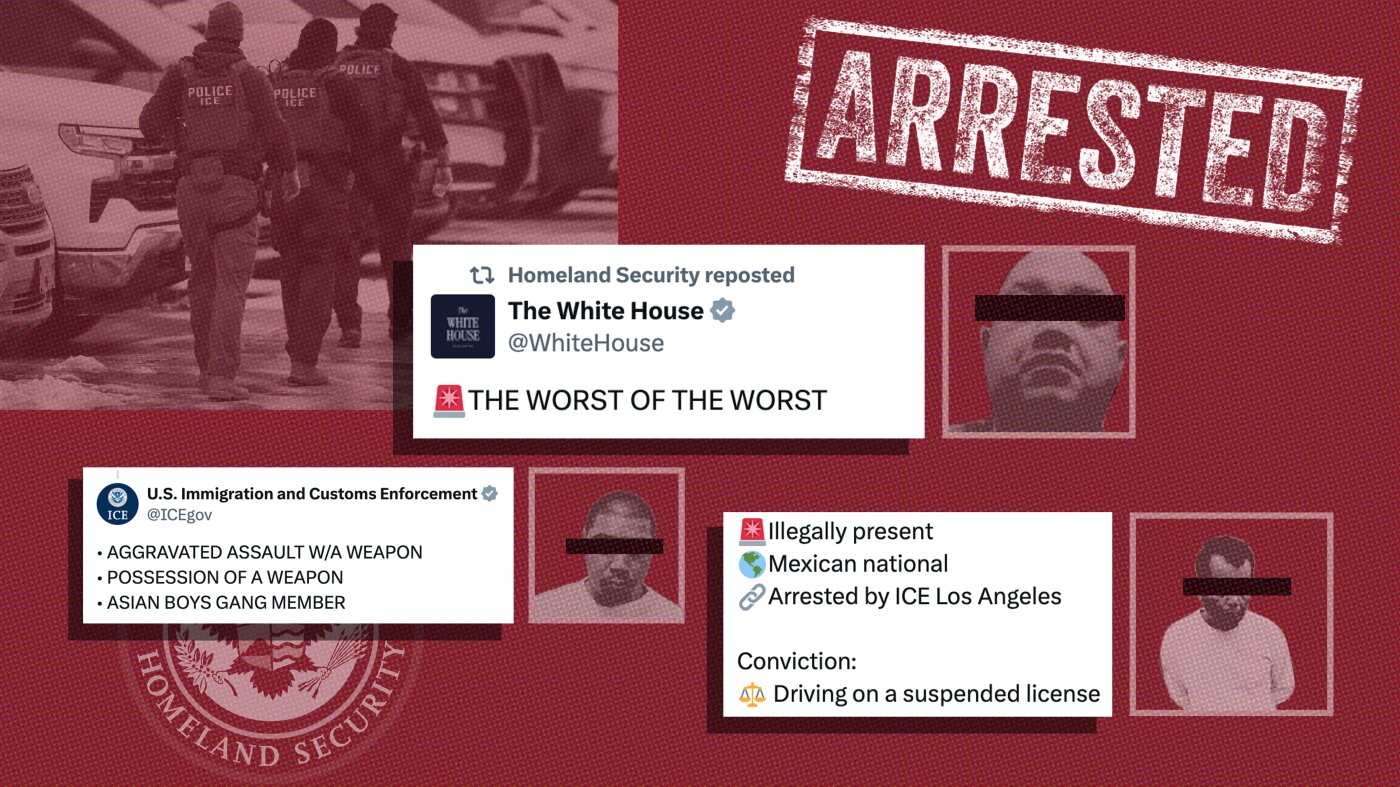
The article investigates how federal government agencies, including the White House, Department of Homeland Security (DHS), and Immigration and Customs Enforcement (ICE), have used social media to publicly portray immigrants as dangerous criminals. The article centers on the case of At 'Ricky' Chandee, a Laotian refugee with a single decades-old conviction, whose image and history were misrepresented by government social media posts. Analysis reveals that many social media posts exaggerate, distort, or misrepresent immigrants' criminal records, often using emotionally charged language and images, predominantly of nonwhite individuals. Data shows that a significant percentage of those highlighted have minor or old convictions, or none at all, and some posts publicize even those merely arrested or charged, not convicted. The media campaign is described by experts as unprecedented, with parallels drawn to past political scapegoating. State and local authorities, as well as families and legal advocates, have pushed back against the government's claims, pointing to inaccuracies and the harmful effect of equating immigrants with criminality.
Biblical Reflection
From a scriptural perspective, this article raises serious concerns about truthfulness, justice, and the dignity of all people. The use of misleading or inflammatory rhetoric to paint entire groups as inherently criminal stands in stark contradiction to biblical teachings. Scripture commands honesty and warns against bearing false witness (Exodus 20:16). The Bible also reminds us of the equal value of every person, regardless of origin or past mistakes: 'There is neither Jew nor Greek, slave nor free... for you are all one in Christ Jesus' (Galatians 3:28). Jesus consistently showed compassion to the marginalized, including foreigners and those with a troubled past. The rush to judgment, misrepresentation, and public shaming of immigrants—many of whom have turned their lives around or face old, minor offenses—ignores the possibility of redemption and the call to treat others as we wish to be treated (Luke 6:31). The campaign described in the article distorts reality and fosters division and fear, rather than healing and justice. Christians are called to seek the truth, advocate for the oppressed, and remember that all are made in God's image. Any policy or rhetoric that relies on deception and scapegoating is fundamentally at odds with biblical virtues of truth, mercy, and neighborly love.
Scripture in context
This outlook does not yet include contextual Scripture citations. Do not treat a general biblical theme as an exegetical conclusion.
Faithful Response
No prescribed response is offered. Consider the reflection prompts below in your own church context.
Reflection and Discussion
- 1How might I be tempted to accept or spread narratives about others without seeking the truth?
- 2In what ways can I stand up for truth and justice, especially for those who are marginalized or misrepresented?
- 3How do my attitudes toward immigrants and strangers reflect Christ’s call to love my neighbor as myself?
Sources
Reporting links are evidence inputs; Sanctuary News' biblical reflection is commentary.
This outlook currently relies on fewer than two linked sources. Broaden verification before teaching from it.
- 1.Original reportprimary