News Summary
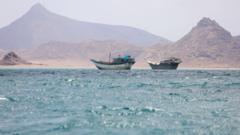
Reported facts: BBC reports that Houthi forces claim they attacked oil tankers in the Red Sea and that the US has launched additional strikes on Iran. Attributed claims: the Houthi claim of attacking tankers and the BBC's description that these would be the first Red Sea attacks since a Houthi 'maritime embargo' on Saudi Arabia. Uncertainty: the supplied article does not provide independent confirmation, specific details about the attacks, damage, casualties, or official statements from the US, Iran, Saudi Arabia, shipping companies, or maritime authorities.
Source and Framing Analysis
The supplied BBC item is brief and relies on claims attributed to the Houthis and reporting about US strikes; it does not include corroborating detail, eyewitness accounts, or official statements within the supplied text. That limited detail shapes the story: readers are left with a high-level, potentially escalatory frame but without the evidence needed to assess scale, timing, responsibility, or consequences. The linkage between Houthi actions, the announced maritime embargo, and US strikes is reported but not documented in depth here, creating material uncertainty about causation and scope.
Biblical Reflection
This report describes a pattern of tit-for-tat military claims and actions that raise the risk of further escalation in an already volatile region. Christians should approach such reports first by seeking truth: distinguish claims made by parties to a conflict from independently verified facts, and recognize how limited details can leave large gaps in understanding. The article, as supplied, mainly records claims and a broad situational link (a maritime embargo and activity in the Red Sea) rather than documenting independently verified attacks, casualties, or legal justification for strikes.
From a pastoral perspective, the core Christian responses are formed by mercy, justice, and peacemaking. Mercy calls us to remember and pray for civilians, mariners, and families who suffer when trade routes are threatened and when states use force. Justice and truth require careful attention to evidence and to the rights and protections owed to noncombatants. Peacemaking challenges believers to resist narratives that dehumanize opponents and to insist that governments and communities exhaust diplomatic and lawful avenues before escalating violence.
Practically, that means staying informed from multiple reliable sources, supporting humanitarian relief for affected civilians, and advocating peacefully for policies that protect innocent life and shipping safety. It also means refusing the easy comforts of tribalism: seeking instead to hold leaders accountable while praying and working for reconciliation and stability in the region.
Scripture in context
- 1Matthew 5:9 — Part of the Sermon on the Mount, where Jesus teaches about the character of citizens of God's kingdom—blessings for attitudes and practices that reflect God's rule. The verse honors those who actively pursue peace and reconciliation amid conflict. — This passage calls Christians to prioritize peacemaking and reconciliation even when nations and groups resort to force; it shapes a response that values protection for innocents and persistent effort toward nonviolent solutions.
Faithful Response
1) Pray specifically for civilians, sailors, and relief workers affected by maritime attacks and for restraining wisdom among political and military leaders. 2) Seek accurate information from multiple reputable sources before sharing claims. 3) Support humanitarian organizations assisting displaced or harmed people in the region. 4) Advocate peacefully through civic channels for policies that protect noncombatants and keep sea lanes open for commerce and aid.
Reflection and Discussion
- 1Where in the reporting do we find confirmed facts versus claims, and how does that difference change our judgment about what is happening?
- 2How should a Christian perspective shape our response to government use of force that risks civilian harm and wider escalation?
- 3What concrete steps can the church take to comfort and assist those directly harmed by regional conflicts without taking partisan stances?
Sources
Reporting links are evidence inputs; Sanctuary News' biblical reflection is commentary.
This outlook currently relies on fewer than two linked sources. Broaden verification before teaching from it.
- 1.Houthis claim attack on oil tankers as US launches more strikes on Iranprimary_reporting