News Summary
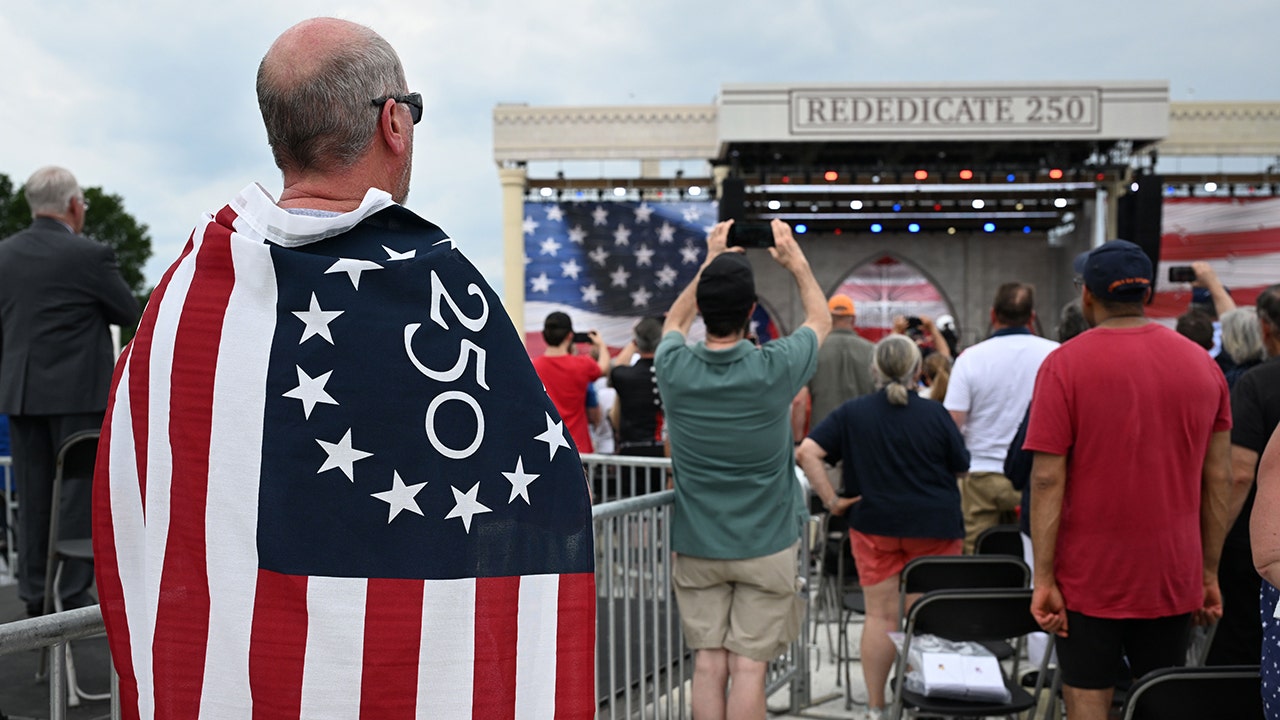
A Fox News national survey of 1,002 registered voters conducted May 15–18, 2026 (margin of sampling error ±3 percentage points) found that about two-thirds of voters offered a negative one-word description of the United States (words like "failing," "divided," "struggling," or "corrupt"). Roughly one-quarter used a positive word (examples given: "freedom," "great," "powerful," "strong"). Fifty-eight percent of respondents said Americans are mostly separated by different values, while 42% said Americans are bound by shared values. Large majorities said it is important to emphasize national unity and shared values (85%) and U.S. democratic principles (83%); 77% prioritized highlighting multiculturalism and diversity, with a 21-point partisan gap between Democrats (88%) and Republicans (67%) on that item. The poll reports that 81% of respondents would rather live in the U.S. than another country, down from 93% about two decades earlier; 19% said they would rather live elsewhere, with higher shares among voters under 30 and among Democrats (about 3 in 10 each). Enthusiasm for the nation's 250th anniversary showed a partisan split: 74% of Republicans and 35% of Democrats said they were excited; 84% of self-identified MAGA Republicans reported excitement. The report characterizes the results, quoting Republican pollster Daron Shaw, as reflecting a national mood of "resilient discontent." The poll was conducted under the direction of Beacon Research (D) and Shaw & Company Research (R), with interviews by landline, cellphone, and an online text-to-survey option; Fox News notes that question wording, order, and weighting can affect results.
Biblical Reflection
This article reports poll results rather than advancing a policy argument, but the framing and selected highlights still reflect choices that shape readers' impressions. The headline phrase quoted from a Republican pollster—"resilient discontent"—summarizes a tension shown in the data: attachment to the nation coexists with significant dissatisfaction and partisan divergence about what the nation is and should be. Christians should recognize a few realities here: polls capture perceptions at a moment in time and depend on question wording, sampling, and partisan identity; media outlets and pollsters choose which comparisons and subgroups to highlight, which can emphasize division. Spiritually, the findings call Christians to resist cynicism and to practice truthful self-examination, humility, and neighbor-love. When nationality becomes “conditional” for many, the church is called to embody a loyal-but-critical love for country—affirming what is good (democratic principles, unity, care for neighbors) and working patiently to repair what is broken, rather than retreating into tribalism or unreflective praise. Finally, be cautious about treating poll language as the final account of reality: statistics show trends in attitudes, not immutable facts about a society’s moral condition.
Scripture in context
This outlook does not yet include contextual Scripture citations. Do not treat a general biblical theme as an exegetical conclusion.
Faithful Response
No prescribed response is offered. Consider the reflection prompts below in your own church context.
Reflection and Discussion
- 1How might question wording, sampling methods, or the choice of subgroup comparisons shape the impression that Americans are more divided now than in the past?
- 2What does it mean for patriotism to be "conditional," and how should churches respond when civic loyalty is uneven across generations and political groups?
- 3Are we letting public mood polls determine our spiritual posture toward the nation, or are we using them as catalysts for prayerful service and bridge-building?
Sources
Reporting links are evidence inputs; Sanctuary News' biblical reflection is commentary.
This outlook currently relies on fewer than two linked sources. Broaden verification before teaching from it.
- 1.Original reportprimary