News Summary
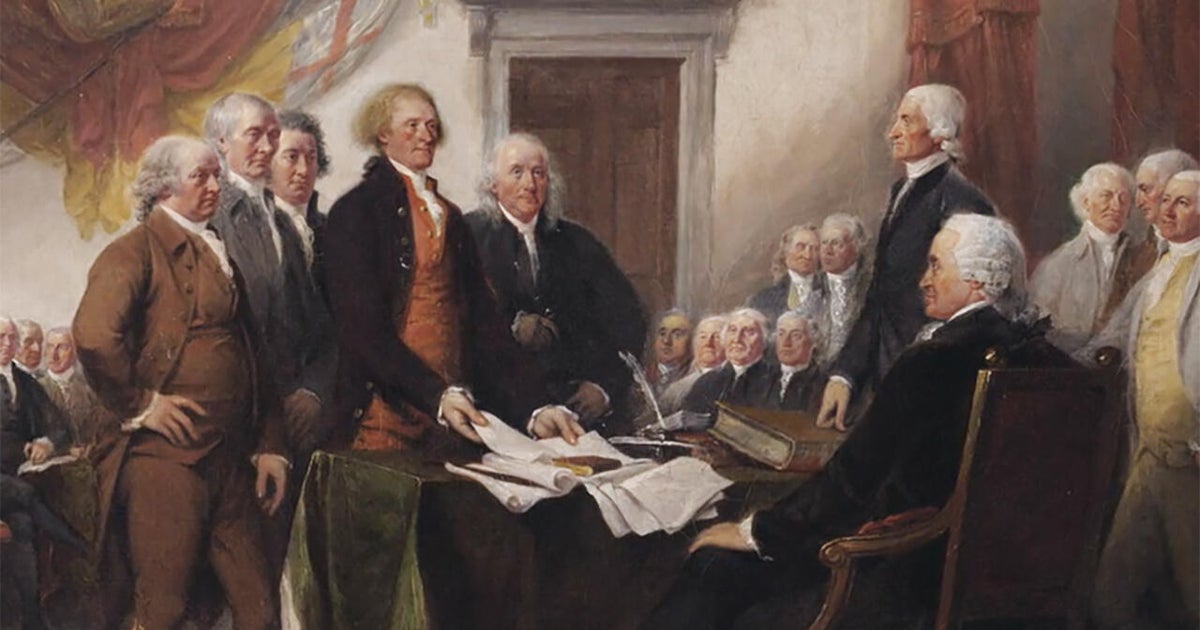
A CBS News piece marking America's 250th anniversary reflects on the Founding Fathers and the Declaration of Independence. The story notes that Thomas Jefferson drafted the first Declaration, which included the phrase 'All men are created equal.' Scholars quoted—Harvard's Danielle Allen and University of Florida's Allen Guelzo—said the Declaration's ideas have lasting importance despite the founders' personal flaws, including slaveholding. Allen observed that an anti-slavery paragraph originally in Jefferson's draft was removed during compromises in 1776. The article highlights the risk taken by the 56 signers, acknowledges the roles of women and Black Americans in the founding era (for example Abigail Adams and Black soldiers), and urges celebrating America's promise while recognizing shortcomings. The piece also promotes CBS's July 4 programming tied to the 250th anniversary.
Biblical Reflection
The article presents a measured view: it affirms the historical significance of the founders' political ideas while acknowledging their moral failings. From a Christian perspective, the truth claim that all people bear equal dignity echoes the biblical conviction that every person is made in God's image, so the Declaration's language is worth taking seriously even when its authors failed to live up to it. The piece tends toward a celebratory but reflective posture—appropriate for a commemoration—but it risks minimizing the long-term consequences of slavery and exclusion unless readers press beyond the brief treatment to reckon honestly with that history. Christian virtues call us to hold the tension of gratitude for good gifts (self-government, rule of law) and repentance for sins (slavery, injustice), seeking to steward the nation's ideals toward greater justice, mercy, and humility.
Scripture in context
This outlook does not yet include contextual Scripture citations. Do not treat a general biblical theme as an exegetical conclusion.
Faithful Response
No prescribed response is offered. Consider the reflection prompts below in your own church context.
Reflection and Discussion
- 1Does celebrating the Declaration's language allow us to excuse the moral failures of its authors, or should it compel deeper repentance and reform?
- 2How does the claim that 'all people are equal' align with Christian convictions about human dignity, and what does that demand of our civic life?
- 3Are we treating the nation's founding as an inheritance to be stewarded toward greater justice, or as a finished ideal immune from correction?
Sources
Reporting links are evidence inputs; Sanctuary News' biblical reflection is commentary.
This outlook currently relies on fewer than two linked sources. Broaden verification before teaching from it.
- 1.Original reportprimary