News Summary
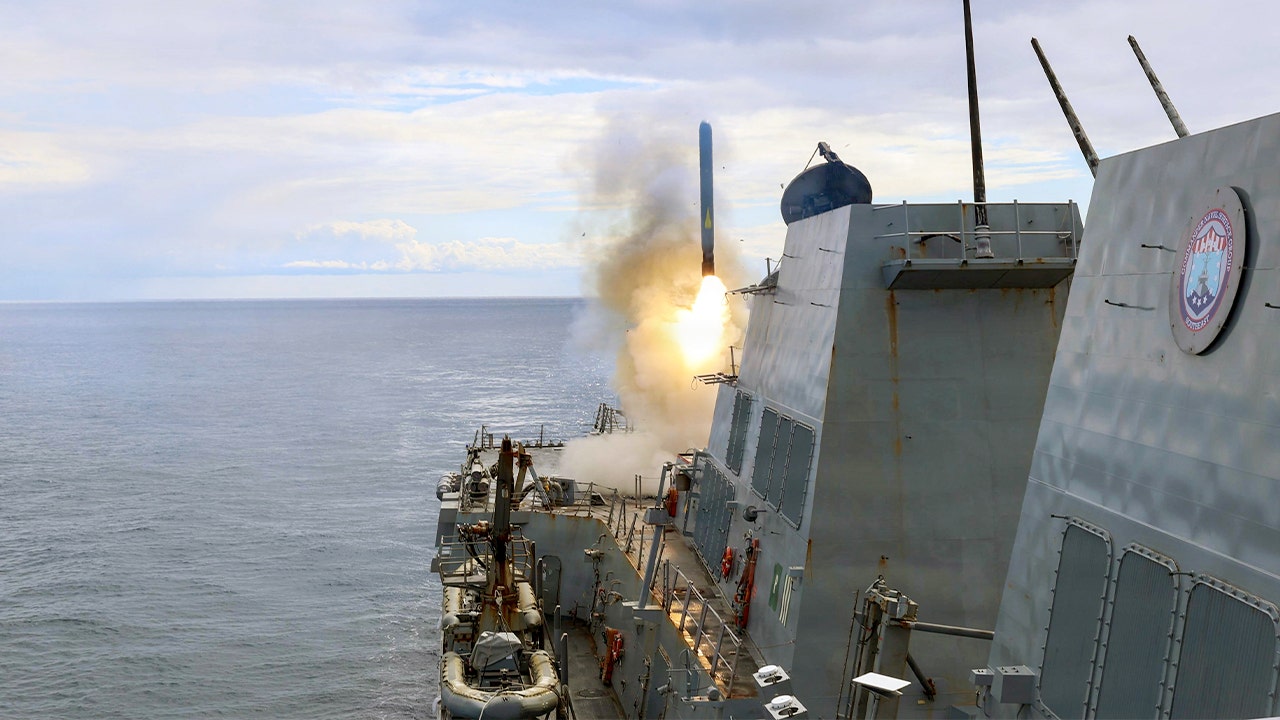
Former CIA station chief Dan Hoffman told Fox News that deploying U.S. troops to Iran's Kharg Island would be "extremely risky," because the island lies roughly 10–15 miles from the Iranian mainland and would expose forces to potential ballistic missile, drone, and other attacks. Hoffman said troops might be tasked to recover about 1,000 pounds of enriched uranium or that a deployment could be a show of strength. He outlined three possible trajectories for the broader conflict: a negotiated settlement, a change in Iran's regime or behavior, or an "asymmetric" war of attrition, saying the situation appears increasingly like a war of attrition. The article notes U.S. forces are building up in the region, that peace talks are expected to resume (with possible talks in Islamabad), and that Hoffman believes internal Iranian opposition lacks the capacity to bring about change without U.S. ground forces. A U.S. Navy photo caption indicates the USS Thomas Hudner fired a Tomahawk missile in support of Operation Epic Fury on March 1.
Biblical Reflection
This article primarily reports a security assessment from an experienced intelligence officer about the tactical and strategic risks of sending troops to a contested location. The assessment that Kharg Island is vulnerable to missile and drone attack is a practical military judgment and not an ideological claim; it highlights the real cost and danger of kinetic action. At the same time, the piece relies on a single expert perspective and on a military-frame narrative (risk, objectives, force posture) without broadening the view to include diplomatic progress, Iranian civilian perspectives, or independent verification of specific objectives (for example, the exact quantity or location of enriched uranium). From a Christian lens we should value truth-telling and prudence: honest appraisals of risk are necessary to preserve life and to weigh the moral legitimacy of military action. Scripture calls believers to pursue peace when possible and to count the cost of violent action (e.g., seeking peaceful resolution and protecting the vulnerable). The article's focus on strategy and escalation invites readers to examine assumptions: that force is the feasible means to secure the material (uranium) or achieve regime change, and that internal opposition cannot succeed without foreign boots. Those assumptions shape public appetite for war and can devalue diplomacy and longer-term peacebuilding. Christians should neither reflexively romanticize pacifism nor uncritically endorse militarism. Instead we ought to demand sober assessment, transparent aims, protection of noncombatants, and sincere pursuit of diplomatic off-ramps. Finally, media framing that elevates expert alarm without context can increase public fear and pressure for hurried action; biblical wisdom calls for measured, prayerful discernment before supporting measures that risk life on a large scale.
Scripture in context
This outlook does not yet include contextual Scripture citations. Do not treat a general biblical theme as an exegetical conclusion.
Faithful Response
No prescribed response is offered. Consider the reflection prompts below in your own church context.
Reflection and Discussion
- 1What assumptions about the effectiveness of military force versus diplomacy underlie the article's focus, and who benefits from emphasizing risk and escalation?
- 2Does the reporting present multiple independent perspectives (diplomatic, civilian, regional) or primarily an intelligence/military frame—how does that shape our view of what is necessary or possible?
- 3How should Christians weigh the call to pursue peace with the responsibility to protect innocent life when public narratives push toward intervention?
Sources
Reporting links are evidence inputs; Sanctuary News' biblical reflection is commentary.
This outlook currently relies on fewer than two linked sources. Broaden verification before teaching from it.
- 1.Original reportprimary