News Summary
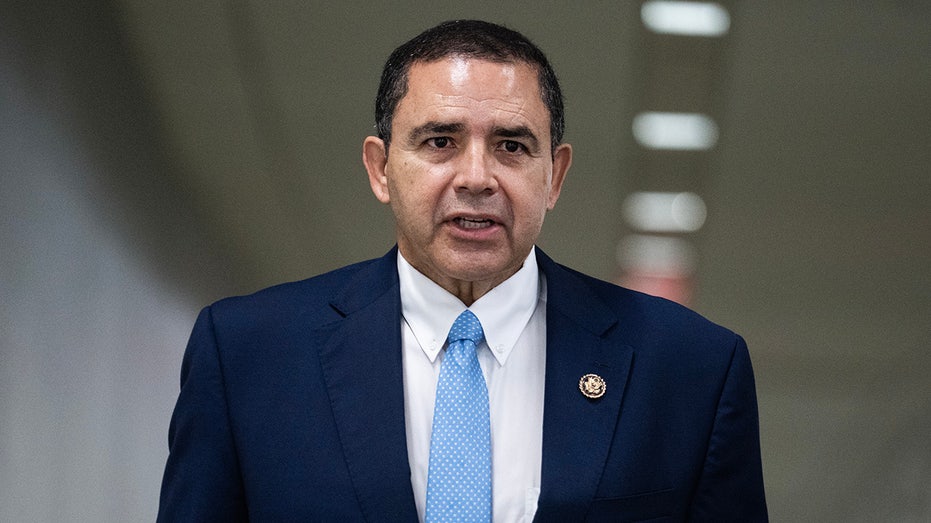
Reported facts: The article says five House Democrats voted with Republicans on an NDAA amendment affecting transgender participation in sports at military schools. Attributed claims: The story interprets the vote as evidence of a crack in Democratic unity. Uncertainty: The supplied article does not provide the amendment text, the names of the five Democrats, the vote tally, specific immediate legal effects, nor responses from affected communities or official congressional documents.
Source and Framing Analysis
The story is a single-item political report focused on the vote and party dynamics. Material uncertainties that affect understanding include the lack of the amendment’s exact language, absence of the names and stated reasons of the five Democrats, and no description of how the amendment would be implemented or enforced. Those missing details matter for judging legal effect, motives, and consequences; they also leave room for interpretive framing about party unity rather than concrete policy outcomes.
Biblical Reflection
This report sits at the intersection of two legitimate concerns for Christians: the faithful functioning of civic life and compassionate care for vulnerable people. Politically, a small number of cross-party votes can be newsworthy because they change legislative outcomes and reveal intra-party differences. Spiritually, however, headlines that highlight a 'break' in unity can tempt readers toward gossip, partisan triumphalism, or hardened attitudes rather than careful discernment.
Biblical faith calls for truth-telling and careful weighing of facts. We should ask what the amendment actually does and whom it affects before forming moral certainties. At the same time Scripture insists on showing mercy and protecting those who are vulnerable; policy debates about participation in sports involve real human dignity and pastoral care for transgender people as well as concerns about fairness and safety for others. Christians should resist reducing complex human beings to political symbols and instead seek policies that honor both justice and tenderness.
Practically, Christians in public life should pursue humility and courage: humility to admit uncertainty when facts are incomplete; courage to stand for rights and safety of neighbors even when politically costly. That means listening to those directly affected (service members, students at military schools, medical and legal experts) and advocating in ways that combine justice with mercy rather than amplifying partisan scoring.
Scripture in context
- 1Philippians 2:3-4 — Paul instructs the Philippian church to value others above themselves and to look not only to their own interests but also to the interests of others, written to encourage unity and humility amid social and interpersonal tensions. — This passage challenges Christians to avoid partisan self-advancement and to evaluate policy and public discourse through humility and concern for neighbors—especially those whose lives are directly affected by legislation.
Faithful Response
1) Seek fuller information: read the amendment text and congressional record before forming policy judgments. 2) Pray and listen to voices directly affected (students, service members, families, chaplains). 3) Advocate with both truth and compassion—ask how proposed rules protect safety and fairness while upholding human dignity. 4) Practice charitable conversation in civic spaces: avoid personal attacks, prioritize facts, and model humility.
Reflection and Discussion
- 1Who benefits and who bears cost from this amendment, and have I sought out those perspectives?
- 2Am I speaking and voting from principled conviction or from tribal loyalty?
- 3How does my faith require me to treat people whose identities or experiences differ from mine in policy debates?
Sources
Reporting links are evidence inputs; Sanctuary News' biblical reflection is commentary.
This outlook currently relies on fewer than two linked sources. Broaden verification before teaching from it.
- 1.House Dems hand GOP a win on trans sports as party unity cracksprimary_reporting