News Summary
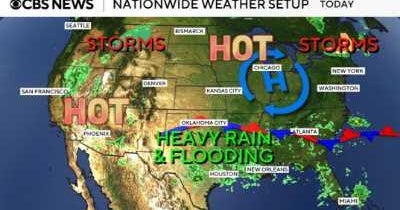
A widespread heat wave is affecting large areas of the United States as of July 14, 2026, with extreme heat warnings and advisories in northern states (Montana, the Dakotas, Minnesota, Wisconsin, Michigan) and across the Northeast, covering an area home to roughly 130 million people. Heat-index values in the northern Plains were forecast near 110°F; temperatures were expected to be 20–30°F above normal in many places, with some locations reaching triple digits and several cities potentially challenging or breaking multi-decade records (examples: Fargo, Rapid City, Syracuse). The West and parts of California from San Francisco to Los Angeles were also under extreme heat alerts, heightening wildfire and health risks. Separately, about 20 million people in Texas were under flood alerts as a stationary weather system produced multiple rounds of heavy rain and thunderstorms. Texas Hill Country faced the highest flash-flood risk, with possible rainfall rates of 2–3 inches per hour and localized amounts of 10–15 inches; wider areas were expected to receive 4–6 inches. Metropolitan Houston and San Antonio could experience impacts. The reporting cites meteorologists and weather service forecasts; no long-term climate attribution was provided in the article.
Biblical Reflection
The article presents concrete, forecast-based weather warnings and focuses on imminent, material risks to people and property. As Christians called to truth and care for our neighbors, we can affirm the factual reporting of imminent danger while noticing what the piece leaves unaddressed: the longer-term trends and policy choices that shape community vulnerability. The immediate pastoral priorities are clear—protecting the vulnerable (elderly, low-income households, outdoor workers), supporting evacuation and relief efforts, and mobilizing community resources. Ethically, Christians should resist minimizing the real physical risks or turning the story into partisan argument; instead, we are invited to practice both sober vigilance and compassionate action. The coverage largely avoids sensationalism and centers forecasts and official alerts; readers should nonetheless be attentive to the article’s implicit assumptions about preparedness and resilience—factors like infrastructure, affordable cooling, and floodplain management determine who suffers most. Faithful response includes praying for safety, amplifying accurate public-safety guidance, and advocating for long-term stewardship that reduces vulnerability without substituting political slogans for neighborly care.
Scripture in context
This outlook does not yet include contextual Scripture citations. Do not treat a general biblical theme as an exegetical conclusion.
Faithful Response
No prescribed response is offered. Consider the reflection prompts below in your own church context.
Reflection and Discussion
- 1Which communities are most exposed by extreme weather warnings, and how does coverage assume those vulnerabilities are acceptable or unavoidable?
- 2Does the article’s focus on immediate forecasts obscure longer-term causes and solutions that would reduce repeated suffering?
- 3How can Christians hold both God’s sovereignty and our responsibility for stewardship and neighbor-care when responding to natural hazards?
Sources
Reporting links are evidence inputs; Sanctuary News' biblical reflection is commentary.
This outlook currently relies on fewer than two linked sources. Broaden verification before teaching from it.
- 1.Original reportprimary