News Summary
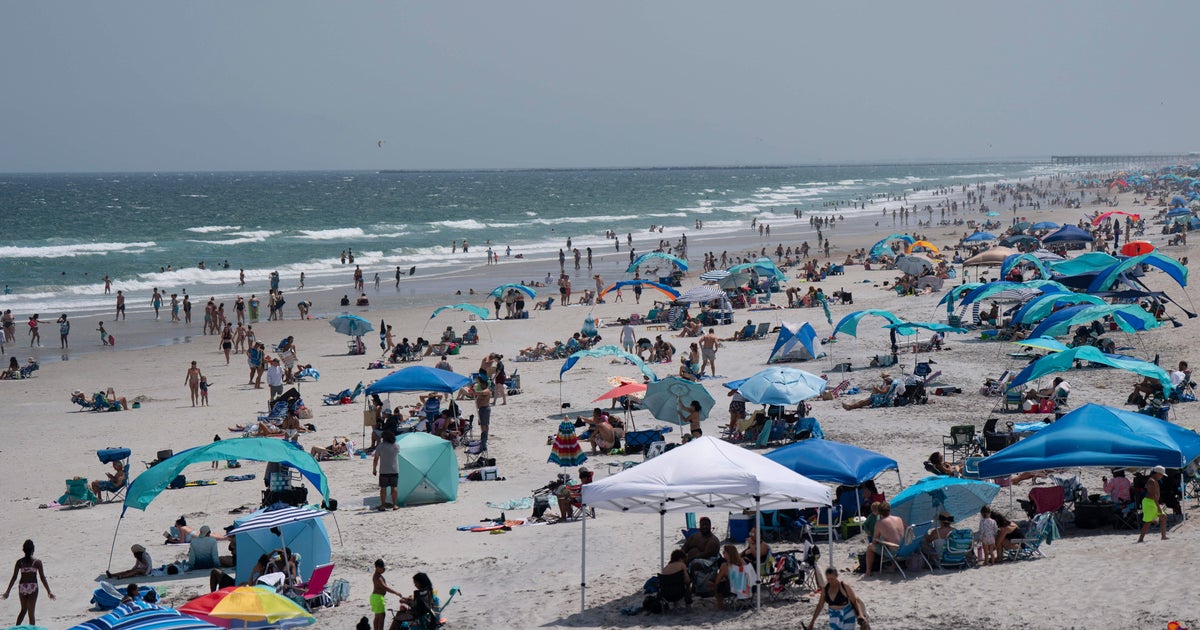
With a widespread heat wave pushing many Americans to beaches and pools over the Fourth of July weekend, CBS News reported experts warning about rip currents and other water hazards. The Centers for Disease Control and Prevention statistic cited in the piece states more than 4,000 drownings occur annually in the U.S., and drowning is the leading cause of death for children ages 1–4. The National Weather Service (NWS) mid-Atlantic office publishes rip-current forecasts twice daily; NWS offices number 122 across all 50 states. The article explains rip currents form when waves interact with beach topography (low spots in sandbars, piers) and says a rip can pull people away from shore much faster than a swimmer can move, giving a speed range reported in the story as 1 to 8 miles per second. Lifeguards advise that swimmers who are caught should stay calm, tread water, control breathing, and signal for help by facing the beach and raising one arm. Beach safety recommendations include swimming near lifeguards, checking warning flags (noting a green flag is low hazard, not no hazard), and asking lifeguards about conditions on arrival. Pool safety advice includes installing four-sided fencing and considering gate alarms (noted price range $150–$300). The Red Cross-recommended basic swimming skills and properly rated life vests are also mentioned.
Biblical Reflection
The article is practical and well-intentioned: its purpose is to protect life by giving simple, actionable safety guidance during a predictable seasonal risk. Reporting that cites CDC drowning statistics and NWS forecasting points readers to public-health and public-safety institutions, which is responsible journalism. Two cautionary notes: first, the article contains a highly implausible numeric claim about rip-current speed (1 to 8 miles per second) that undermines precision and should prompt readers to verify technical details with authoritative sources; second, the piece assumes access to lifeguards, fencing, alarms, and swimming lessons, which many communities and households lack—so the burden of safety can fall unevenly on vulnerable families. From a Christian pastoral perspective, this story calls us to love our neighbor through both personal prudence and communal action: teach children to swim, follow posted warnings, and support public resources (lifeguards, community swim lessons, safe pool standards) that protect those who cannot protect themselves. The underlying worldview of the article is pragmatic stewardship of human life—valuing prevention and institutional support—rather than sensational fear. Christians should receive the guidance, correct factual errors when present, advocate for equitable access to safety measures, and respond with compassion where systemic gaps leave children and the poor more exposed.
Scripture in context
This outlook does not yet include contextual Scripture citations. Do not treat a general biblical theme as an exegetical conclusion.
Faithful Response
No prescribed response is offered. Consider the reflection prompts below in your own church context.
Reflection and Discussion
- 1Are the safety recommendations in this report realistically accessible to all communities, or do some people lack the resources (lessons, lifeguards, fencing) needed to follow them?
- 2Where did the article rely on technical claims that should be double-checked with official sources, and how does that affect the trustworthiness of the guidance?
- 3How can local churches and Christian communities practically support drowning prevention—through teaching, funding swim programs, or partnering with public safety agencies?
Sources
Reporting links are evidence inputs; Sanctuary News' biblical reflection is commentary.
This outlook currently relies on fewer than two linked sources. Broaden verification before teaching from it.
- 1.Original reportprimary