A little more detail
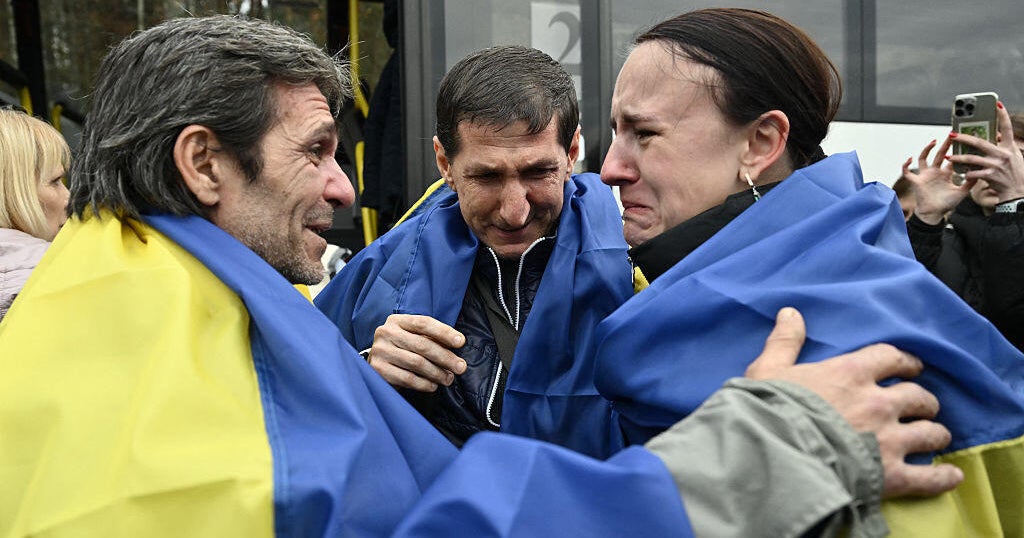
Civilians who had been living under Russian occupation in the southern Ukrainian city of Oleshky have reached Ukrainian territory after an evacuation that used buses and planes transiting through Russia and Belarus. Reporting says the movement followed a localized, temporary ceasefire and an evacuation arrangement described as brokered by the United States. BBC names U.S. First Lady Melania Trump as the broker and describes Oleshky as a 'devastated city'; CBS and PBS corroborate the route and modes of transport but do not name an individual U.S. actor. Key operational details — numbers evacuated, precise timeline, security arrangements during transit, and independent verification — were not specified in the supplied reporting excerpts.
Source and Framing Analysis
CBS News and PBS NewsHour present closely aligned, matter-of-fact accounts emphasizing logistics: evacuees traveled by bus and plane through Russia and Belarus and arrived in Ukrainian territory after a U.S.-brokered evacuation deal. BBC corroborates the basic outcome and route but adds distinct details and a stronger humanitarian framing: it names Melania Trump as the broker, notes evacuees 'left on Friday' in the supplied excerpt, and calls Oleshky 'devastated.' The difference between outlets is one of specificity and emphasis rather than a direct factual contradiction: BBC supplies a named U.S. actor where CBS and PBS attribute the deal generally to the United States. Across all three sources, operative gaps remain — numbers of people evacuated, the detailed timetable, the roles and guarantees provided by Russian and Belarusian authorities during transit, and whether independent monitors or humanitarian agencies verified the operation — and these gaps limit independent verification of full operational circumstances. The BBC piece foregrounds civilian suffering, which is important for humanitarian attention but also shapes emotional response; CBS and PBS focus on corroborating the movement and route, strengthening the logistical account.
How sources covered this story
Sanctuary separately assesses reporting quality and alignment with Christian virtues. The virtues assessment considers truthfulness, dignity, compassion, justice, peacemaking, humility, and care for vulnerable people. It does not assess a publisher's faith or reward religious language.
Compare 3 reports
Reporting 75/100Virtues 72/100
- Distinctive contribution
- Names Melania Trump (U.S. First Lady) as the broker of the ceasefire and notes the evacuees left a 'devastated city' on a specific day ('Friday').
- Framing
- Concise, dramatic framing ('devastated city') that centers the humanitarian condition and highlights the role of a named high-profile individual in brokering the ceasefire.
- Omissions or uncertainty
- No details on number of evacuees, their condition, the exact mechanism of the ceasefire, who provided the information, verification of Melania Trump's role, or follow-on arrangements.
- Why these scores
- The excerpt is concise and makes a clear, specific claim. It names an identified actor (Melania Trump), which is useful, but it provides no sourcing or context for that claim in the supplied text and omits many operational details; these limitations justify a solid-but-not-exceptional score. Language ('devastated city') conveys concern for human suffering and implicitly treats evacuees as victims deserving help. The excerpt is not dehumanizing and points to humanitarian action, but it lacks deeper contextualization of affected civilians or explicit attention to justice/longer-term care.
Reporting 72/100Virtues 70/100
- Distinctive contribution
- Specifies the travel route and modes (bus and plane) and that the journey passed through Russia and Belarus before returning to Ukraine.
- Framing
- Practical/logistical framing emphasizing transit and the role of a U.S.-brokered deal; neutral, fact-focused tone in the excerpt.
- Omissions or uncertainty
- No numbers, dates, who organized transport, security conditions during transit, sources for the claim, or statements from evacuees or officials in the excerpt.
- Why these scores
- The excerpt conveys concrete logistics and attributes the return to a U.S. deal, which is informative. However, it lacks sourcing, specificity on scale/timing, and human detail in the supplied text, so it is competent but limited. The language is neutral and non-exploitative, conveying movement of vulnerable people without sensationalism. It neither dehumanizes nor provides extended context on suffering or needs, so it shows basic respect and restraint.
Reporting 70/100Virtues 70/100
- Distinctive contribution
- Provides corroboration that the civilians 'traveled by bus and plane through Russia and Belarus' and that this movement followed a U.S.-brokered deal.
- Framing
- Straightforward, factual framing emphasizing transit and diplomatic facilitation (U.S. deal). Tone is neutral and reportorial in the excerpt.
- Omissions or uncertainty
- No sourcing or attribution in the excerpt, no details on timing, numbers, evacuees' conditions, or verification from independent actors; repeats what other excerpts state without adding new specifics in the supplied text.
- Why these scores
- The excerpt performs the basic journalistic function of reporting key facts clearly, but it offers limited sourcing, context, and human detail in the supplied text. That makes it adequate and reliable for a brief report but not deeply informative on its own. The excerpt is factual and non-inflammatory, which respects dignity and avoids exploitation. It does not, however, include explicit attention to suffering, justice, or humanitarian needs, yielding a moderate alignment score.
Biblical Reflection
Christians should receive the immediate safe return of civilians with gratitude and relief while holding soberly to the long view of justice and ongoing care. Scripture calls communities to concrete mercy that crosses ethnic and political lines, to defend the vulnerable, and to seek peace with justice. Practically this means: celebrate lives spared and thank those who enabled safe passage; protect human dignity in how stories and images are shared; listen first to evacuees about their needs; provide trauma-aware pastoral care and material support; and press for accountable, sustained assistance, safe humanitarian access, and mechanisms that pursue restoration and accountability for harm. Maintain humility in public judgment where facts remain incomplete, and avoid triumphalist or politicized portrayals that dehumanize people who have suffered.
Scripture in context
- 1 (Parable of the Good Samaritan) — Jesus tells this parable in response to a question about 'who is my neighbor,' contrasting religious leaders' distance with the Samaritan's active compassion toward someone in need across social and ethnic divides. — The parable calls Christians to concrete mercy that crosses political and cultural boundaries: to aid and welcome those fleeing violence, even when that requires contact with unfamiliar partners or travel across borders, while also pursuing broader justice and protection for the vulnerable.
Faithful Response
Pray for the evacuees, those who negotiated the localized ceasefire, humanitarian workers, and local churches responding to needs.
Support vetted humanitarian organizations providing food, shelter, medical care, and trauma‑informed pastoral support for evacuees and displaced families.
Listen to survivors and prioritize their expressed needs and dignity; avoid using personal trauma for publicity.
Coordinate with local resettlement and relief partners to provide language-appropriate pastoral visits, specific supplies requested by relief actors, and long-term accompaniment for resettlement and recovery.
Advocate with policymakers and denominational bodies for independent verification, accountability mechanisms, safe humanitarian access, and durable solutions that protect civilians and pursue justice.
Reflection and Discussion
- 1How can our congregation celebrate lives saved while also naming and lamenting the ongoing losses and injustices that accompany occupation and forced displacement?
- 2What practical steps should Christian organizations take to ensure evacuees receive trauma-aware, dignity-preserving care beyond immediate relief?
- 3How do we hold public leaders and negotiators accountable for transparency and follow-through when humanitarian arrangements involve transit through third countries?
- 4In what ways can Christians make space for both gratitude and insistence on justice and accountability toward those harmed by occupation?
Sources
Reporting links are evidence inputs; Sanctuary News' biblical reflection is commentary.
- 1.Residents evacuated from Russian-occupied Oleshky reach Ukraine after localized ceasefireadditional_reporting
- 2.Residents evacuated from Russia-occupied city back in Ukraineprimary_reporting
- 3.Evacuees from Russia-occupied city where residents ate weeds arrive in Ukraineadditional_reporting