News Summary
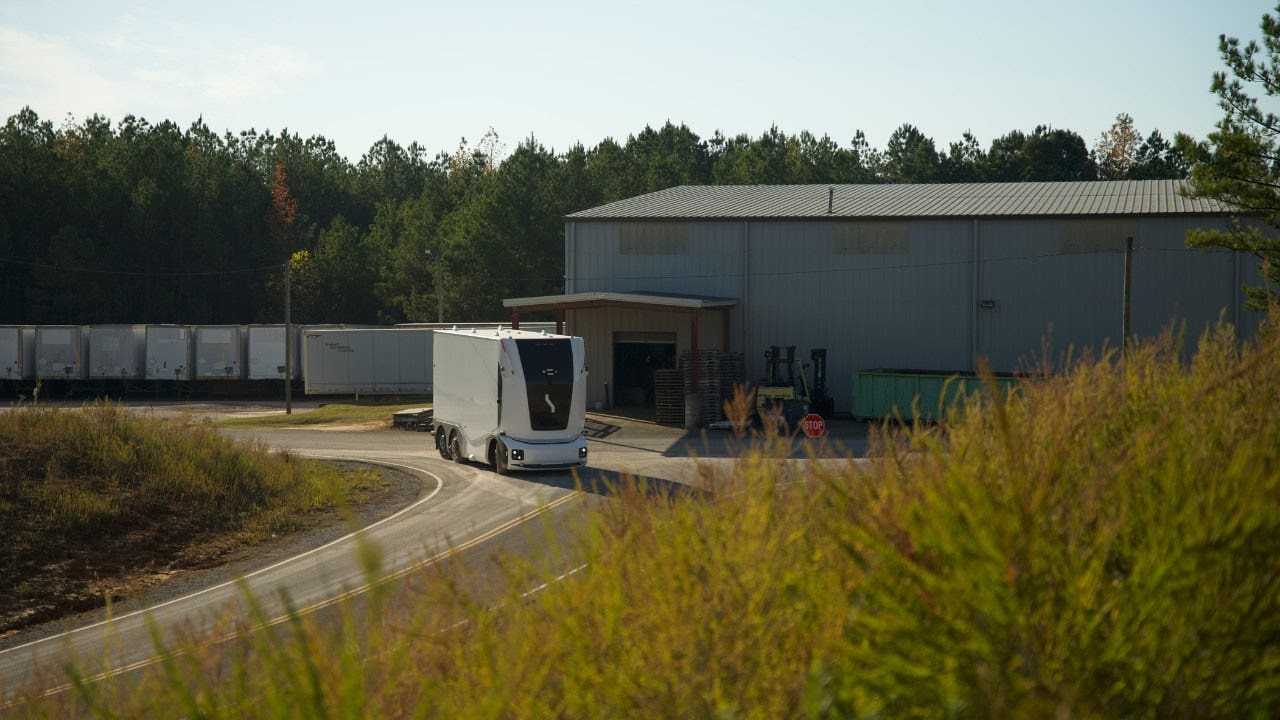
EASE Logistics and autonomous trucking company Einride have launched a proof‑of‑concept deployment of two cab‑less, battery‑electric semitrucks in Marysville, Ohio, scheduled to operate in the summer of 2026. The vehicles are cab‑less and use SAE Level 4 autonomy, meaning they are designed to drive themselves under specific approved conditions without a human seated in a driver’s position; remote operators will monitor and can intervene off‑site. The trucks will move freight between EASE warehouse locations and will operate on both private property and local public roads as part of the Ohio Department of Transportation and DriveOhio Truck Automation Corridor Project, in partnership with the Indiana Department of Transportation. The stated aims are to collect operational data on warehousing, distribution timing, freight efficiency, and safety in a near‑real‑world setting rather than a fully controlled test environment. Company leaders emphasized safety and validation; the project represents EASE’s third autonomous trucking deployment with DriveOhio. The article notes public concerns about safety, transparency, emergency response, and potential impacts on workers, and says the pilot could inform whether similar short, warehouse‑to‑warehouse autonomous freight operations expand in the future.
Biblical Reflection
From a Christian perspective this story raises both legitimate hope and serious questions. Technological innovation can be a good stewarding of creation when it reduces emissions and improves efficiency, but the article also points to risks — public safety, transparency, and the livelihoods of workers facing change. The companies frame the project as cautious and safety‑centered, yet corporate statements can understate uncertainties; independent oversight, clear incident protocols, and public accountability matter for truth and neighbor protection. Christians should welcome progress that serves the common good while insisting that human dignity not be sacrificed to efficiency: displaced workers need honest plans for retraining and care, and communities deserve clear information about routes, oversight, and emergency response. Practically, the underlying worldview of this deployment leans technocratic optimism — trust in systems and data to solve problems — which must be balanced by humility, prudence, and love for our neighbors who might bear the costs. In short, innovation is not morally neutral: ask who benefits, who is vulnerable, and whether decision‑makers are pursuing justice as they pursue efficiency.
Scripture in context
This outlook does not yet include contextual Scripture citations. Do not treat a general biblical theme as an exegetical conclusion.
Faithful Response
No prescribed response is offered. Consider the reflection prompts below in your own church context.
Reflection and Discussion
- 1Whose safety and dignity are prioritized in pilot programs like this — the companies', the communities', or someone else’s?
- 2What independent oversight and transparency would give the public confidence that these vehicles are safe to operate on public roads?
- 3If autonomous freight reduces demand for traditional driving work, what concrete plans do local employers and policymakers have to care for and retrain affected workers?
Sources
Reporting links are evidence inputs; Sanctuary News' biblical reflection is commentary.
This outlook currently relies on fewer than two linked sources. Broaden verification before teaching from it.
- 1.Original reportprimary